NZ Catchment Groups Thrive with ‘Source to Sea’ Approach
The most successful catchment groups in NZ are those that have 'a source to sea' approach.
 increase font size
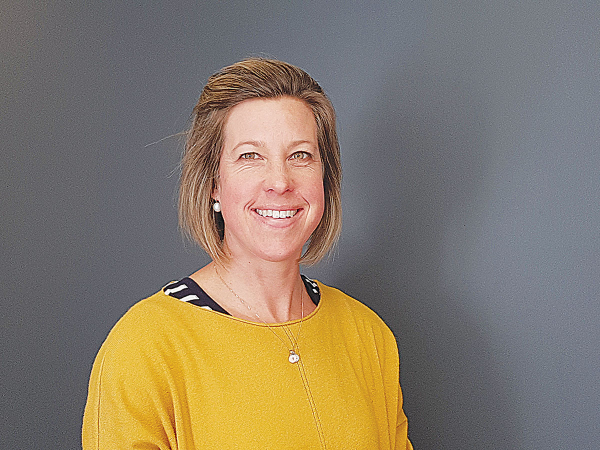 The Rangitikei Catchment Collective is an umbrella for 17 sub-catchment groups, says coordinator Louise Totman.
Catchment projects need to be farmerled, according to Louise Totman, who coordinates the Rangitikei Rivers Catchment Collective.
Totman says the decision to join the collective needs to be a farmer-led initiative on behalf of the sub-catchment group.
The Rangitikei collective is an umbrella for 17 sub-catchment groups, covering 700,000ha across the Rangitikei, Turakina, and Whangaehu river catchments. Recently it received $910,000 in Government funding.
“We don’t do a big push to get these groups up and running,” she told Dairy News.
“Obviously, we’ve had a few that have been going for two to three years. So, we’ve only started off with a small number and it’s probably only through word of mouth that other groups have jumped on board.
“We support and we encourage them but we don’t run their group. So, it needs to have that enthusiasm of a leader or two leaders that are going to get that ball rolling and keep it rolling,” she says.
“You can’t get everybody,” she says. “You can’t make them but hopefully they’ll catch wind of the opportunities that the members are having within that group and they might realise that they’re missing out on something.”
Totman says the collective work on several projects but the biggest one is monthly water testing.
So far, she says the collective has spent approximately $60,000 on the water testing alone.
“We’re undertaking that every month and every month we’re doing about 64 different sites across that area.”
Totman says the funding will go towards creating workshops at field days and getting experts in to talk to catchment group members.
“We’re sort of building up towards the next two and a half years of spending that money that we’ve been allocated.
“So, up until now, it’s all just been sub-catchment projects but probably not on a catchment scale,” she says.
Totman says that all of the farmers within the sub-catchment groups have a goal of ensuring that no cattle find their way into waterways.
“Up here we’re really lucky that we do have the SLUI [Sustainable Land Use Initiative] plans, they are all funded by Horizons if you’re on the right country for it.
“It’s that most at risk erodible hill country, but we’re really lucky that most of the farmers in these sub-catchment groups… have already got these plans.”
The most successful catchment groups in NZ are those that have 'a source to sea' approach.
The quest to find innovative practical, scientific solutions to deal with water-related issues at a catchment level has been the theme of an important conference at Massey University last week.
Rangitikei Rivers Catchment Collective (RRCC) chairperson Roger Dalrymple says farmers in his region are taking a national lead in water quality awareness and monitoring.
Environment Southland's catchment improvement funding is once again available for innovative landowners in need of a boost to get their project going.
From nitrogen limits to ecosystem restoration –farmers and catchment groups are leading a new wave of environmental care, says DairyNZ.


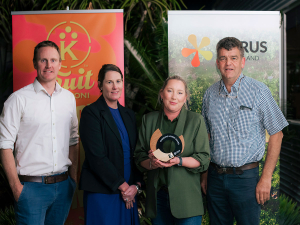
New Zealand's citrus growers were challenged to build their future on the value embedded in their fruit rather than the volume they produce, at Citrus New Zealand's annual gathering in Gisborne on 17 September.
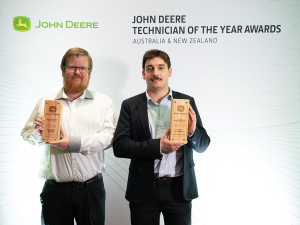
Leading John Deere technicians and apprentices from New Zealand and Australians were recognised at the recent sixth annual JD Technician of the Year Awards, held in Brisbane.
In Dacre, near Invercargill in New Zealand’s South Island, Bruce Dinnington is running a dairy operation unlike any other.
A free online platform aggregating governance vacancies across rural and regional New Zealand has been launched.
Environment Minister Nicola Grigg has announced details of a new rural plastics recycling scheme.
Agricultural drone operators say that a government decision to allow lower-risk drone work without certification won’t lower standards but drive innovation and efficiency.