Fonterra FY26 Results: $9.69 Milk Price, $3.4bn Profit
Fonterra has unveiled its annual results for the 2026 financial year, posting $27 billion in revenue and close to $20 billion returned to New Zealand farmer owners and unit holders.
 increase font size
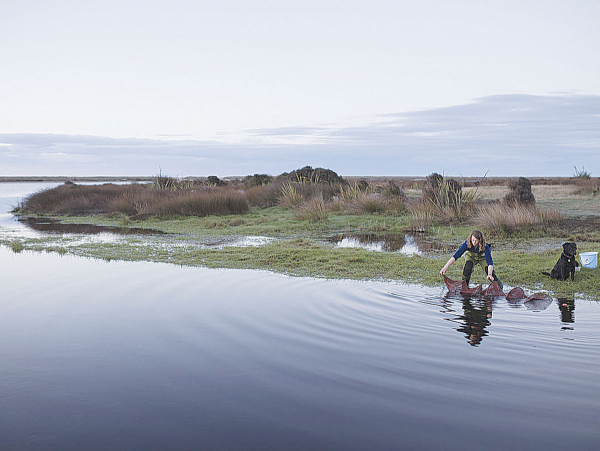 Fonterra hopes the project will help farmers adopt biodiversity objectives into their Farm Environmental Plans and support wider catchment biodiversity goals in the process.
A new project supported by Fonterra's Living Water Partnership with the Department of Conservation will help on-farm advisors grow their understanding of biodiversity, with a view to further building biodiversity objectives into Farm Environment Plans.
'Farming with Native Biodiversity' is a 20-month project coordinated by the NZ Landcare Trust and funded by the National Bioheritage Science Challenge, Living Water, Silver Fern Farms and the Ministry for Primary Industries (MPI).
Protecting and restoring native biodiversity on farms provides clean water, shelter, shade, carbon sequestration, drought resilience and other benefits of a healthy ecosystem.
The Living Water partnership has identified that the biggest barriers to the protection and restoration of biodiversity on farms is limited access to advice and ecological expertise, along with the cost of preparing restoration plans.
"There is widespred interest from farming communities and farm advisors to protect and restore native biodiversity on farms, though expert advice is hard to come by and costly," says Trish Kirkland-Smith, Fonterra's head of environmental partnerships.
Development of a farm biodiversity restoration and management plan can cost between $5,000 - $10,000, with additional costs for monitoring.
Across 25,000 pastoral farms in New Zealand, this is over $125 million for the planning alone.
"This new partnership project trials a more cost-effective way of providing expert advice to the sector, working with over 60 sheep and beef and dairy farms to develop biodiversity plans and implement biodiversity management, then sharing the results with 6,000 more sheep and beef farms and 9,000 dairy farms.
"There is widespread interest from farming communities and farm advisors to protect and restore native biodiversity on farms, though expert advice is hard to come by and costly."
The expected outcome of the project is that farmers adopt biodiversity objectives into their Farm Environment Plans and support wider catchment biodiversity goals in the process.
For Fonterra suppliers, these biodiversity plans will become a part of their existing Farm Environmental Plans, which Fonterra provides to farmer owners free of charge.
Fonterra has unveiled its annual results for the 2026 financial year, posting $27 billion in revenue and close to $20 billion returned to New Zealand farmer owners and unit holders.
Fonterra Co-operative Group has confirmed the independently assessed candidates standing for election to its board in 2026.
Fonterra has revised its Farmgate Milk Price forecast for the 2026/27 season, lifting the midpoint and narrowing the range on the back of improving global dairy commodity prices.
Outgoing Fonterra Co-operative Council chair John Stevenson says that it has been a privilege to represent the co-op's farmer shareholders.
OPINION: It seems Canterbury processor Synlait is still in the doldrums.



National’s much-touted free trade deal with India featured in the Rural Issues Debate at Mystery Creek, Hamilton on Wednesday night.

New Zealand's 2026-27 freshwater fishing season has opened, with anglers encouraged to head to rivers and lakes over the coming days as conditions look favourable across much of the country.
Central Otago District Council (CODC) has voted against a plan to spread treated sewage sludge from Cromwell and Alexandra on farmland near Lauder, a decision Federated Farmers says reflects strong opposition from rural residents.
Pāmu has released its FY26 Integrated Annual Report, reporting a Net Operating Profit of $113 million, more than double the $49 million recorded in FY25.
Meat Industry Association data, released alongside the Red Meat Sector conference in Wellington, shows export value climbing across the US, China, UK and Canada.
Applications are set to open for the 2027 Zanda McDonald Award, a trans-Tasman award recognised for identifying and fast-tracking talented young leaders in agriculture and agribusiness.