
Sensible Choices About Water
OPINION: Rivers never sit still. They start as snowmelt and rain in the high country, pick up a creek here and a stream there, and carry all of it down to where it's needed.
 increase font size
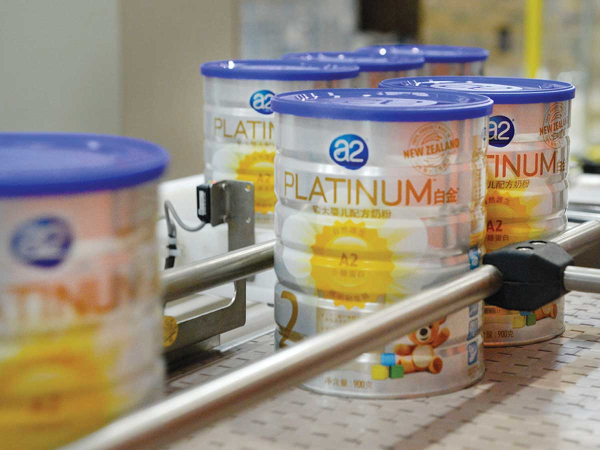 Some NZ manufacturers are unhappy with proposals to change the standards for how infant formula is labelled, marketed and sold to consumers.
A trans-Tasman battle is brewing over a proposal to introduce changes to packaging and labelling regulations for infant formula.
Earlier this year, Food Standards Australia New Zealand (FSANZ) issued several proposals to change the standards for how infant formula is marketed and sold to consumers.
Several NZ infant formula manufacturers oppose the proposed changes: they come after a review of the standards, which according to FSANZ’s 445-page approval report, were “functioning adequately”, however there was room to clarify some standards and improve alignment with newer international benchmarks.
The proposed new and altered standards include the introduction of new restrictions on the labelling of ingredients within infant formulas.
FSANZ claims in its Decision Regulation Impact Statement that, currently, the labelling and packaging of infant formula are misleading for parents and caregivers.
“For example, consumer research has shown that the marketing of formulas for colic and reflux can suggest to some caregivers that what the infant is eating must be causing the problem and can imply that changing (either from another infant formula or from breastfeeding) to a specialised formula for the condition will solve the problem,” the statement says.
The statement also claims that the similarities between packaging for toddler formula and infant formula – which are often displayed next to each other in supermarkets – have led some parents and caregivers to provide their infants with toddler formula.
It also states that “the majority of caregivers find reading the nutrition information panel on infant formula different”.
However, according to Infant Nutrition Council chief executive, Jonathan Chew, the proposed standards would undermine the ability of parents to make informed choices regarding the food they give their children.
“Several New Zealand manufacturers of infant formula believed this would have significant unintended consequences for their businesses, both domestically and overseas,” Chew told Dairy News.
Thus, late last month, at the trans-Tasman Food Ministers meeting in Adelaide, New Zealand Food Safety Minister Andrew Hoggard voted to reject the standards, something the industry supports.
However, the Australian Ministers – who outnumber Hoggard nine to one – blocked that move, meaning New Zealand will be left to come up with a modified standard.
“It is unfortunate that the Australians believed that in order to protect breastfeeding, you need to make formula as unappealing and complicated to use as possible,” says Chew.
According to Chew, the new standards put Australia out of alignment not only with New Zealand, but also the European Union, the US, and other regions.
“The Infant Nutrition Council believes you can promote breastfeeding without creating confusion and chaos for parents who – for whatever reason – need to use infant formula as the only safe and healthy alternative to breastmilk,” he adds.
Questions emailed to Hoggard’s office remain unanswered when we went to print.
OPINION: Rivers never sit still. They start as snowmelt and rain in the high country, pick up a creek here and a stream there, and carry all of it down to where it's needed.

OPINION: Well, the silly season is upon us and all us politicians are running around shaking babies and kissing hands, or maybe the other way around.
It was billed as a chance for all the political parties to woo the rural vote, but question marks hang over just how effective this was.
There's been widespread support from the primary sector for the Government's announcement on changes to freshwater farm plans that come under the Natural Environment Bill, which is now set to replace the existing RMA.
A pause on Waikato Regional Council's (WRC) plan change that sets new freshwater rules for farming could be announced in the coming weeks.



National’s pledge to introduce 19 new national standards shows the party is serious about getting Wellington out of farming, Federated Farmers says.
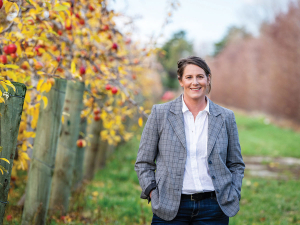
The National Party’s policies to make it easier to grow fresh vegetables, secure reliable water and energy and simplify farm planning are practical changes that will give growers the confidence to invest, according to Horticulture New Zealand (HortNZ).
Fonterra Co-operative Group chief financial officer Andrew Murray has resigned to take up a role outside the dairy giant.
A major move is about to get underway to improve the quality and viability of dairy beef and cattle in NZ.
Veterinarians say changes to the code of welfare for dairy cattle provides a positive foundation for improved cattle welfare across the country.
Today, 15 October, is the International Day of Rural Women, which recognises rural women’s contribution to farming, communities and the environment.