
Mark Hooper Joins NZPork Board as Independent Director
Rural leader Mark Hooper has been appointed as an independent director to the NZPork board, bringing extensive farming, governance and advocacy experience to the role.
 increase font size
 NZVA president Steve Merchant.
The Animal Welfare Amendment Bill, passed by Parliament last week, further strengthens New Zealand’s excellent reputation for animal welfare, say vets.
The New Zealand Veterinary Association (NZVA), which played a key role in helping to shape the bill, says some of the key changes include the legal recognition of animal sentience – sensation or feeling in animals – for the first time in New Zealand law.
The bill’s passage follows the first major review in 15 years of New Zealand’s Animal Welfare Act 1999, which defines animal welfare standards; it was passed unanimously by parliament.
NZVA president Dr Steve Merchant says veterinarians are at the vanguard of animal welfare advocacy and public support is behind us in the call for greater clarity on issues concerning animal welfare and increased sanctions for animal cruelty.
Expectations on animal welfare have been rapidly changing, and practices once commonplace for pets and farm stock are no longer acceptable or tolerated. The bill brings legislation in line with our nation’s changing attitude on the status of animals in society.”
He says the inclusion of sentience strongly reinforces that people are obliged to meet their animals’ physical, health and behavioural needs, and places New Zealand at the “forefront of progressive animal welfare legislation.”
Primary Industries Minister Nathan Guy says the bill will strengthen the protection of animals in New Zealand by improving the enforceability, clarity and transparency of the Animal Welfare Act 1999.
“New Zealanders care deeply about how animals are treated. 68% of New Zealand households have at least one pet, and we earn around $25 billion a year by exporting animal products such as meat, milk and wool. How we treat animals matters not just to animals, but to ourselves and overseas markets.”
Merchant says that the bill also includes a clearer definition of significant surgical procedures for animals and the policy has been retained that these procedures only be performed by veterinarians or veterinary students under veterinary oversight. “Veterinarians will play a key role in developing regulations on these procedures which will be enforceable by law.”
The ability to effectively enforce animal codes of welfare has been a longstanding issue and the veterinary profession welcomes changes to enhance the protection of animals. “The codes will now provide a clearer benchmark for compliance, rather than just being guidelines.”
Merchant says mandatory standards for the export of live animals are also strongly supported and were a central issue in the NZVA’s submission on the bill.
The bill’s passage follows the first major review in 15 years of New Zealand’s Animal Welfare Act 1999, which defines animal welfare standards.
Better treatment of animals
The bill provides for a penalty scheme to enable low-to-medium level offending to be dealt with more effectively, and gives animal welfare inspectors the power to issue compliance notices.
It also bans the use of animals to test finished cosmetic products or ingredients intended for use exclusively in cosmetics.
Rural leader Mark Hooper has been appointed as an independent director to the NZPork board, bringing extensive farming, governance and advocacy experience to the role.
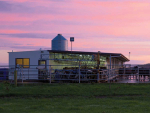
Climate, nature and animal wellbeing make up Fonterra's refreshed sustainability roadmap released last week.
B+LNZ's Wormwise veterinarian Mary Bowron has won the Best Sheep and Beef Vet of the Year Award in recognition of her outstanding contribution to New Zealand’s sheep and beef sector.
With lambing underway in many regions, Beef + Lamb New Zealand is encouraging farmers to put together a wellequipped lambing kit to help minimise lamb losses, particularly in bad weather.
OPINION: Dairy farmers know better than anyone that change is constant.



A free online platform aggregating governance vacancies across rural and regional New Zealand has been launched.
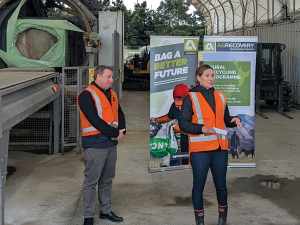
Environment Minister Nicola Grigg has announced details of a new rural plastics recycling scheme.
Agricultural drone operators say that a government decision to allow lower-risk drone work without certification won’t lower standards but drive innovation and efficiency.
OPINION: Warning bells are ringing in the arable sector.
Farmgate lamb prices are down by 8%, beef cattle by 4.5% and farm expenditure up by 4.2%.
Kiwifruit growers are watchful but remain optimistic as concerns around the potential effects of the El Niño weather pattern this season.