Pāmu FY26 Report: Profit More Than Doubles to $113m
Pāmu has released its FY26 Integrated Annual Report, reporting a Net Operating Profit of $113 million, more than double the $49 million recorded in FY25.
 increase font size
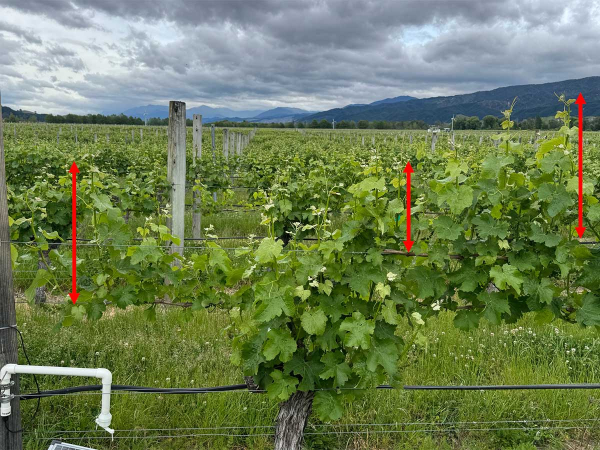 Spore traps in Marlborough
Winegrowers are constantly being pushed to reduce farming costs, cut carbon emissions and improve vineyard sustainability. Recent work conducted by Thoughtful Viticulture, in collaboration with the United States Department of Agriculture (USDA) and the South Australian Research and Development Institute (SARDI), shows promise to achieve all three.
Currently, most winegrowers start spraying soon after budburst, and continue every 7–14 days until veraison. It’s thought that cover sprays need to be applied as soon as there is infectable tissue, even if temperatures in spring are often below the minimum for powdery mildew growth. In addition to chemical use, these early season passes tie up labour, put time on machinery, burn diesel and do some of the most damage to mid-row soils, which are often at field capacity and most prone to compaction from heavy equipment at this time.
For any plant disease to become established there needs to be what pathologists call the ‘disease triangle’: infectable tissue, permissive environmental conditions, and pathogen spore presence. Without all three, there is no disease.
There are temperature-based models (for example the Gubler model) for powdery mildew growth and infection, which are used by growers as decision support tools (Thomas et al., 1994). Work in Oregon Pinot Noir looked at using simple-to-make and inexpensive rotorod spore traps to measure airborne spores as a decision support tool for growers to spray only when needed. In this work, initiating sprays based on spore load in the vineyard gave full disease control with 3.3 fewer sprays than the ‘grower standard’ spray programme (Thiessen et al., 2016). The aim of the current research project is to develop a similar New Zealand-based decision support tool for growers to make the most efficient and effective use of their resources.
In the 2025–26 season, trial vineyards in Hawke’s Bay, Marlborough and Central Otago took part in a pilot study. Since spore samples had to be sent to United States collaborators for analysis, this trial relied on Gubler risk to initiate sprays in a trial area, while the rest of the block was started at the manager’s discretion. For the trial in Hawke’s Bay this meant skipping the first three sprays before Gubler started to trigger. In Marlborough Sauvignon Blanc and Central Otago vineyards, two rounds were skipped. Subsequent visual disease scouting and canopy spore loads showed no differences between treatments, indicating that delaying spray initiation had no negative effects. Spore traps in the reduced spray areas did not show airborne spore presence until substantial Gubler risk had been achieved, suggesting further reductions in spray rounds can be achieved by initiating sprays based on spores rather than just modelled risk. A spore trap next to a mothballed block, which received no sprays, didn’t start to register high spore numbers until mid- November, when most Sauvignon Blanc vineyards would be applying their third or fourth spray rounds.
In the 2026–27 season, with financial support from Bragato Research Institute and the Marlborough Research Centre, we will initiate sprays in trial areas of three Marlborough Sauvignon Blanc vineyards based on spore load and weather forecasts, with the rest of the block started as normal, just like the Oregon work. Regular canopy spore load testing and visual scouting will be done in the control and trial areas to quantify any differences in inoculum or disease incidence/severity over time. A detailed financial assessment, taking into account any crop losses, will also be undertaken – allowing growers to make informed decisions for their unique situations. Given the promising results from the initial trials, we are optimistic this work will provide a practical and widely adoptable tool for growers moving forward – and build upon New Zealand’s legacy of sustainability.
Viticulturists Dr Mark Krasnow and Karen Peterson run Thoughtful Viticulture in Marlborough: thoughtfulviticulture.com
Pāmu has released its FY26 Integrated Annual Report, reporting a Net Operating Profit of $113 million, more than double the $49 million recorded in FY25.
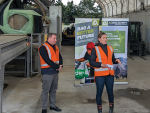
Environment Minister Nicola Grigg has announced details of a new rural plastics recycling scheme.
Almond hulls sourced from Australian orchards may have the potential to help New Zealand cows reduce emissions, boost milk yield and lower input costs.
The Government is introducing a new nationwide rural recycling scheme that will significantly increase the recovery of farm plastics from March next year, Minister for the Environment Nicola Grigg announced today.
Climate, nature and animal wellbeing make up Fonterra's refreshed sustainability roadmap released last week.