
China No Longer Just A Commodity Story - Luxon
China remains New Zealand’s biggest market, taking $23 billion of our exports, but it’s no longer a commodity story, says Prime Minister Christopher Luxon.
 increase font size

BNZ senior economist Craig Ebert says he doubts the crisis on the Chinese sharemarket will trigger a wholesale collapse of the Chinese economy.
But he says there could problems if the present situation continues long term. Ebert says the Chinese sharemarket rose quickly earlier in the year and has now fallen back to what it was.
"In many ways it's a healthy correction, but we are watching to see if it has any ramifications and any effect on the wider Asian region. We have noticed that it's starting to affect some of the other Asian equity markets, dragging them down and knocking confidence. But it is still a moot point as to how economically important this is," he told Rural News.
Ebert says the boom on the Chinese sharemarket was caused by officials promoting it, prompting a "collective rush to the door" and people going crazy and investing on the market.
Some of the rules for trading on the Chinese sharemarket are immature by western standards, he says.
Ebert doubts whether this crisis will cause the wheels to fall off the Chinese economy. But he says with China being NZ's major market the turmoil in the market is clearly not good news.
China remains New Zealand’s biggest market, taking $23 billion of our exports, but it’s no longer a commodity story, says Prime Minister Christopher Luxon.

Fonterra is strengthening its foodservice presence in China with the launch of a new cream for professional bakeries at Bakery China 2026 in Shanghai.
OPINION: What does the birth rate in China have to do with stock trading? Just ask a2 Milk Company.
Additional tariffs introduced by the Chinese Government last month on beef imports should favour New Zealand farmers and exporters.
One of the most galling aspects of the tariffs whacked on our farm exports to the US is the fact that, now more than ever, US farmers are being propped up by government welfare – a direct result of Trump’s hardline on its trading partners.


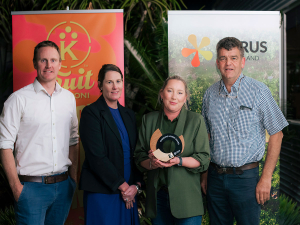
New Zealand's citrus growers were challenged to build their future on the value embedded in their fruit rather than the volume they produce, at Citrus New Zealand's annual gathering in Gisborne on 17 September.

Leading John Deere technicians and apprentices from New Zealand and Australians were recognised at the recent sixth annual JD Technician of the Year Awards, held in Brisbane.
In Dacre, near Invercargill in New Zealand’s South Island, Bruce Dinnington is running a dairy operation unlike any other.
A free online platform aggregating governance vacancies across rural and regional New Zealand has been launched.
Environment Minister Nicola Grigg has announced details of a new rural plastics recycling scheme.
Agricultural drone operators say that a government decision to allow lower-risk drone work without certification won’t lower standards but drive innovation and efficiency.
