Diplomatic Incident
OPINION: Your old mate hears an international incident is threatening to blow up the long-standing Anzac alliance as Kiwis and Aussies argue over who wants new Australian resident and former NZ Prime Minister Jacinda Ardern.
 increase font size

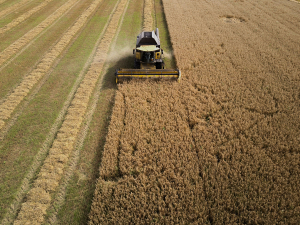
Australian farmers are hearing that good times are coming: a top economic researcher predicts farm production will increase 5.3% to about A$54.4 billion next financial year.
The Australian Bureau of Agricultural and Resource Economics and Sciences (ABARES) says the gross value of livestock production is expected to rise about 5.6% to A$25.9 billion in 2015–16, after a forecast increase of 5.9% in 2014–15.
The value of crop production is seen rising 5.1% in 2015–16 to A$28.5 billion, after falling 9.6% in 2013–14.
ABARES executive director Karen Schneider told the organisation’s annual Outlook conference in Canberra that the rise in the value of farm production is likely to continue in the medium term.
“In 2019–20, the gross value of Australian farm production is projected to be around A$55.3 billion in 2014-15 dollars, around 9% higher than the five year average to 2013-14,” Schneider says.
A modest rise in Australian farm commodity export earnings is forecast in 2015–16, with total exports of about A$40.5 billion compared with a forecast A$40.3 billion in 2014–15.
Export earners forecast to rise in 2015-16 include wheat (up by 12%), sugar (11%), canola (10%), dairy products (8%) and beef and veal (2%).
Schneider says these increases are expected to be largely offset by forecast falls in export earnings for mutton (39%), cotton (35%), barley (11%) and lamb (8%). “By 2019–20, the value of farm exports is projected to be around A$41.2 billion in 2014–15 dollars, also 9% higher than the average over the five years to 2013–14.”
OPINION: Your old mate hears an international incident is threatening to blow up the long-standing Anzac alliance as Kiwis and Aussies argue over who wants new Australian resident and former NZ Prime Minister Jacinda Ardern.

OPINION: Your old mate hears that at a recent China Business Summit, PM Christopher Luxon delivered a none-too-subtle "could try harder" report card on the red meat industry regarding its exports to China - particularly when compared to Australia.
More Australian states are embracing virtual fencing technology, opening growth opportunities for Kiwi companies like Halter.
OPINION: Over the past month, people up and down the country have been asking me what I think is in store for the Agri sector.
Fonterra says its ongoing legal battle with Australian processor Bega Cheese won’t change its divestment plans.


Farmgate lamb prices are down by 8%, beef cattle by 4.5% and farm expenditure up by 4.2%.
Kiwifruit growers are watchful but remain optimistic as concerns around the potential effects of the El Niño weather pattern this season.
Almond hulls sourced from Australian orchards may have the potential to help New Zealand cows reduce emissions, boost milk yield and lower input costs.
Striking a balance between meeting the needs of industry to speed up approval time for products but on the other hand ensuring that risks are properly assessed.
Surprised, humbled and quite thrilled. That’s the reaction of James Allen, one of the founding partners and now chief executive of AgFirst, on being made a life member of the Institute of Rural Professionals.