It's The Margins That Matter
OPINION: It appears to be difficult for people who haven’t tried to run a business to understand the difference between assets and cash.
 increase font size
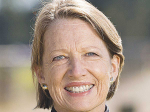
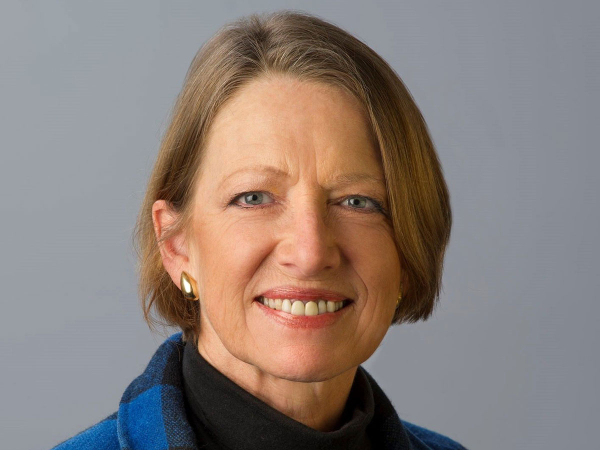 Jacqueline Rowarth.
OPINION: In the 2023 election, 77.5% of the 3.69 million people eligible to vote took the privilege of making their wishes known about the governance of New Zealand.
The 2.86 million people who voted might or might not be experiencing what they thought they had voted for. This is because the previous decisions in New Zealand and ongoing global issues continue to affect activities here. But whatever we in the rural communities think, it will be very difficult to achieve what we want if we don't have the support of the 2.9-3.7 million people who might vote in the next election - now less than two years away.
Of course, one might continue to ask questions about the three-year electoral term in New Zealand, noting that most other developed countries operate on a four- (like US, Germany) or five- (like UK, France) year cycle. But an apolitical agreement on electoral term is unlikely when ruling parties want longer in leadership and opposition wants the chance to knock them from their position of control as soon as possible. For the rural sector, maintaining social license to operate remains the key. Whatever we do in the next few months will allow the voters to support attempts from Wellington to enable economic redevelopment, or not.
There are few people in economics and banking that have not acknowledged the importance of the primary sector in stiumlating growth. The current Government's goal of doubling the value of the export economy has been reiterated on many occasions, and the positive news of the Global Dairy Trade increases has been greeted with delight by economists predicting what it will mean for New Zealand.
Immediately there have been negative comments from other groups about environmental impact. The announcement of the new greenhouse gas targets (Nationally Determined Contributions) reinvigorated the concern. This vocal minority has potential to gain traction, but we know from many surveys that people are far more concerned about the cost of living and impact on their own back pocket than either climate change or the state of the environment.
We also know that most people appreciate the work the rural sector does in producing food and managing the environment. This means that reiterating the statements that "we are doing everything we can while the science and technology advances" is the best route forward.
We have the Paris Agreement that says, 'do everything you can do reduce greenhouse gases without impacting food production'.
We have the data suggesting that we are (mostly) at best practice and doing our best to do ever better.
We have active research in many areas to do with productivity (more product per hour, per hectare and per agricultural input). Further, our track record through StatsNZ shows that we have been more successful in productivity gains than other sectors in the past.
But we will have to overcome the disruption in the science sector that might lead to a hiatus in what we need for the future. Research is continuing through the levy bodies, Agricultural Greenhouse Gas Research Centre and AgriZero, but the general disruption in science is not good for scientists, nor for future scientists.
We can make that point when talking at gatherings.
We can also answer the cost-of-living questions about 'food being so expensive in NZ despite production of surplus...'.
GST is on all products at 15%. We are unique in this. The UK, for instance, has VAT ranging from 0% on pharmaceuticals and 'certain foodstuffs' to 20% on TV cable subscriptions, admission to sporting events, pharmaceuticals, and 'certain foodstuffs, restaurants and catering'. Further digging reveals that 'food and drink that is designed for human consumption is usually zero rated'.
Another point for New Zealand is the amount of food we import - tropical (including bananas and out of season fruit), chocolate, cereals, rice, lentils, beans, coffee, tea, sugar... some of which are staples and some of which can be grown here, but at greater costs than imports.
The major take-home message remains: we are doing everything we can and coping with interest rates that are higher than those they pay for mortgages. Keeping society with us will enable the social licence to operate to continue. The alternative does not bear contemplation, but maybe is part of the discussion. What would New Zealand look like without the primary sector? Export economy decimated and the Department of Conservation unable to cope? It wouldn't be a pretty sight.
Dr Jacqueline Rowarth, CNZM HFNZIAHS, Ajdunct Professor Lincoln University, is on the board of directors of DairyNZ, Deer Industry NZ and Ravensdown, and of the World Farmers' Organisation Scientific Council.
OPINION: It appears to be difficult for people who haven’t tried to run a business to understand the difference between assets and cash.
OPINION: In the 1980s, concern was expressed in West Germany about the falling birth rate. Some simple analysis was performed by Professor Helmut Sies, physician and biochemist at Dusseldorf University. His letter ‘A new parameter for sex education’ was published in Nature in 1988:
OPINION: Humans are resilient. We are part of nature and have evolved for survival.
OPINION: Is New Zealand ‘Godzown’ or the ‘Last bus stop on the planet’?
OPINION: "The worst thing that agriculture does is take land from nature."

Most dairy regions around the country have had a pretty good season so far says Tracy Brown.
Rural leader Mark Hooper has been appointed as an independent director to the NZPork board, bringing extensive farming, governance and advocacy experience to the role.
Opportunity says its land value tax (LVT) is unlikely to force farmers into a position where asset sales or increased debt are required.
Milk powder prices are keeping farmgate prices up, helping processors offset the dip in milk fat prices.
Climate, nature and animal wellbeing make up Fonterra's refreshed sustainability roadmap released last week.
The Government is introducing a new nationwide rural recycling scheme that will significantly increase the recovery of farm plastics from March next year, Minister for the Environment Nicola Grigg announced today.