India FTA Unites NZ First, Greens
National’s much-touted free trade deal with India featured in the Rural Issues Debate at Mystery Creek, Hamilton on Wednesday night.
 increase font size
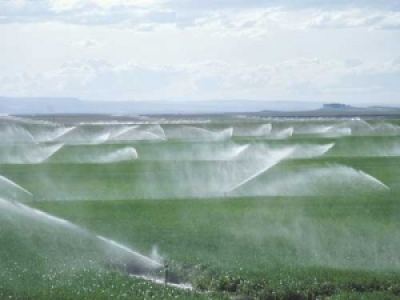 These anti-irrigation groups share a false belief that irrigation schemes only benefit farmers and provide no economic or environmental benefits to the wider community.
It has begun a communications offensive, first by inviting journalists – many from outside the rural media – to attend its annual conference in Oamaru earlier this month.
Many presentations during the two days suggested ways to communicate the benefits of irrigation schemes to farmers, communities and the general public.
The biggest criticism the irrigators face is the environmental objection to intensified farming and the consequent increase in nutrients flowing back to waterways. Then there's the criticism that allowing this farm intensification is destroying natural landscapes.
Just last week, the Green Party called on ACC not to invest public money in the proposed Ruataniwha Dam, which it claimed "could be a disaster for the Hawkes' Bay environment". The Greens water spokesperson goes on to sneeringly add, "Private irrigation schemes should be privately funded, not out of New Zealanders' pockets."
These anti-irrigation groups share a false belief that irrigation schemes only benefit farmers and provide no economic or environmental benefits to the wider community. This proposition is demonstrably false and it is good to see the irrigation sector go on the front foot to refute it.
Irrigation provides an economic boost, particularly to regions traditionally hit often by long droughts. It was no coincidence that the irrigators' conference was held in the North Otago region. The area was once a notorious drought zone. But the establishment of the North Otago Irrigation Company (NOIC) to take water from the Waitaki River has saved the district and brought many economic, environmental and recreational benefits to the region.
A study released by NOIC at the conference shows that the irrigation has added $45 million to the district's GDP and led to the creation of 274 full time-equivalent jobs. And that sort of economic gain is why both the Government and the irrigators support irrigation.
But as Irrigation NZ chair Nicky Hyslop says, irrigators need to keep telling their story if they are to gain and maintain public support.
And without that public support, they will not persuade an already-gunshy Government to move on with legislation.
National’s much-touted free trade deal with India featured in the Rural Issues Debate at Mystery Creek, Hamilton on Wednesday night.
OPINION: The stats speak for themselves.
OPINION: David Seymour and James Meager's plan to make it easier for farmers and orchardists to operate drones can best be described a 'courageous' move.
OPINION: The time has come for the Government to back the organic sector.


Farmer-owned fertiliser company, Ballance Agri Nutrients is welcoming National’s plan to negotiate security agreements with key supplier countries to protect New Zealand-bound products from export restrictions and greater supply chain certainty.

Carrfields has announced the appointment of Stu Hall to the newly created role of chief operating officer, Carrfields Ltd, reflecting the continued growth of their agribusinesses and the need to ensure the company has the leadership capacity and support in place as it pursues the emerging opportunities ahead.
New Zealand's role is not to compete with Indian growers, according to NZ Apples and Pears.
The potato industry is celebrating the success of two rising stars - James Blair, the 2026 Young Grower of the Year and runner-up and innovation award winner, Amber Davy.
Twenty-eight emerging leaders from across the horticulture sector spent two days last month learning valuable skills and connecting with industry experts.
There are five entrants in this year’s Young Horticulturist of the Year, competing in a series of technical, practical, business and leadership challenges.