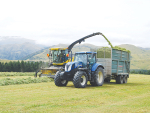
NZ/UK contractor exchange scheme
A new partnership to try and help solve the labour shortage gap for rural contractors in both NZ and the UK has recently been established.
 increase font size
WELCOME TO the first of a monthly column I will write in Rural News to update readers on news and views of rural contractors and Rural Contractors New Zealand (RCNZ).
RCNZ is the only national association of rural contractors. We have about 450 member companies and represent 2500-3000 workers. We are a powerful, effective and influential advocate for our members and the sector.
Agriculture remains the economic ‘engine’ of New Zealand’s economy and rural contractors play a vital part in keeping that engine running. But there is a brake on this engine: the lack of good, talented people being attracted to working in the wider agri-sector.
With the end of the school year looming, and a new batch of young people thinking about career options, we must debunk a few myths about working in farming
I question why more young New Zealanders are not being encouraged to work in the farming sector. The agri-sector ranks as New Zealand’s most productive and innovative; it offers a wide variety of career opportunities for young people. Yet, despite relatively high unemployment nationally, many rural contractors struggle to recruit skilled, motivated staff. Many have to bring in overseas workers to fill the gap.
It’s astounding that schools and other educators are not more active in encouraging youngsters to look at farming and related industries. And it worries me to hear feedback that some educators still see farming as a second-class career option, and that they encourage only ‘less academic’ students to study agricultural subjects.
This is last-century thinking! Many working in agriculture will take upwards progress for granted, and, because there is a worldwide shortage of talent in the sector, they can end up enjoying a global career.
RCNZ offers a career path for young people entering our industry, and qualifications to diploma level may be studied for. Plenty of evidence suggests workers in the agri sector are better paid than peers in other sectors. The recent Federated Farmers/Rabobank 2013 Farm Employee Remuneration survey found pay levels for most pastoral farm positions have kept rising: the average farm worker now earns $5500 more than the New Zealand average annual wage.
Agriculture is the backbone of New Zealand’s economy and has massive growth potential, so we need our best and brightest working in the sector. Schools and educators have an important role in encouraging quality people into agriculture. RCNZ is happy to help any schools and other educators to better understand that the sector.
• Steve Levet, of Wellsford, is an agricultural contractor and president of Rural Contractors New Zealand (RCNZ).
A new partnership to try and help solve the labour shortage gap for rural contractors in both NZ and the UK has recently been established.

A recent round of countrywide roadshows, organised by the Rural Contractors of New Zealand (RCNZ), set out to brief members on the challenges that lie ahead in these volatile times – as well as discuss strategies to deal with these issues.
Rural contractors will gather at five roadshows during August to focus on cost volatility and drivers.
Rural Contractors New Zealand (RCNZ) has launched a new reward and recognition programme for trainee contractors.
The shortage of skilled agricultural machinery operators is reaching a crisis point.



Three men have been sentenced in District Courts after Ministry for Primary Industries prosecutions over animal welfare, food safety and cattle tracing offences.
Fonterra’s 2026 financial year was a year of delivery, with record volumes of milk collected, processed and shipped by the co-op.
OPINION: The Government's decision to reinstate agriculture and horticultural science as a standalone subject from Year 11 is the right one.
Dairy farmers, still holding onto their Fonterra shares despite switching milk supply elsewhere or exiting the industry, now face a stricter share sell-down requirement.
Hamilton-based agritech company Aimer Farming has completed a $3 million capital raise to support its next stage of growth, including a beef farming product due to launch in 2027.
When dairy manager Miriam Lauridsen learned the farm, she was joining held weekly health and safety meetings, she initially thought that was “a bit over the top”. Experiencing that culture changed her mind.