Editorial: Drones Are Not Toys
OPINION: David Seymour and James Meager's plan to make it easier for farmers and orchardists to operate drones can best be described a 'courageous' move.
 increase font size
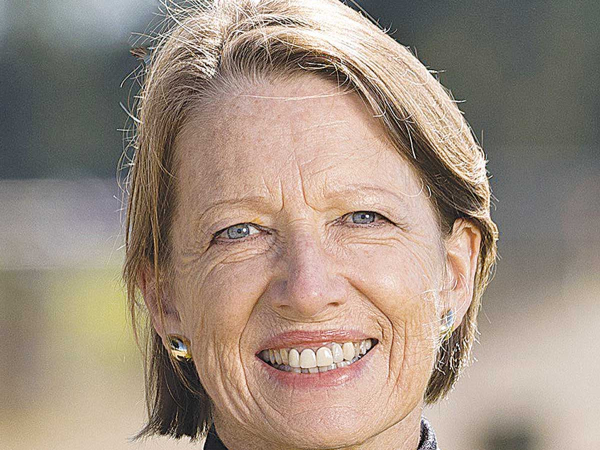 Dr Jacqueline Rowarth
OPINION: It appears to be difficult for people who haven’t tried to run a business to understand the difference between assets and cash.
Nor do they understand that record payouts and schedules aren’t the same thing as record profits – it is the margins that matter. Or that the risk in farming is such that interest rates are higher than for housing, and that if something goes wrong, it is the house as well as the business that might be lost.
Farmers and growers understand all these factors, but somehow the message is not getting through to society in general and some groups in particular.
Economists have tried to explain that farming is hard work with variable returns on the investment – and that the payoff isn’t in farming, it is when the farm is sold and capital gains banked that the farmer benefits. But strangely, the capital gains that are expected to be part of selling the family home are considered to be ‘unfair’ in farming.
Even more strange is the adoption of the phrase ‘farming is a lifestyle’ by those outside the industry. Although farmers use the phrase to justify the challenges of working in the industry, and to try and encourage the young to consider that they might have a future in farming, when people outside of the industry start using the phrase it tends to be in justifying why farms aren’t businesses.
New Zealand is not unique in the lack of understanding.
UK farmers are battling the Inheritance Tax. Many farm businesses are marginal or loss-making, with families surviving on subsidies (which are reducing) and off farm income. Despite this they will soon be hit with unaffordable inheritance tax bills, which in many cases will dwarf their annual profit. The television programme, Clarkson’s Farm, has been helpful in bringing the issues to the fore, but the ever-changing UK government leadership has not indicated any relief. Although Andy Burnham has pledged to “safeguard” farming and declared it a “critical sector”, the statement appears to be more about national manufacturing and food security than assistance for farmers.
Food security has also been in the news here, with statements that ‘food should be cheaper’. These statements overlook the costs of production.
Margins matter.
percentage of revenue) help pump the economy for the benefit of everybody as the money goes round. It is the rising tide floating all boats, and the tax paid to the government by profitable businesses is invested in education, health, infrastructure and other public services.
These good messages are lost in the hype about the ‘crisis’ in the cost of living.
A crisis is something that is short lived; inflation escalated during 2021 and although it has reduced at various stages since then, various weather events and global disruptions have combined to continue uncertainty and price fluctuations.
The reality with the cost of living, at least according to the Reserve Bank Inflation Calculator, is that in the last year to Q1, wages and food increased by 4%.
And despite the ongoing gloom about crises, public happiness, safety and ‘being surrounded by such diverse, breathtaking scenery’ all help to improve the country’s score.
Despite this, ‘crisis’ continues to be top of mind for people living here and food is considered to be part of the problem.
Whose job is it to explain that when the minimum wage goes up, everything increases in price at every stage?
Whose job is it to explain that record prices do not equal record margins? And who should try and explain the difference between assets and cash?
Should NZ on Air consider the equivalent of Clarkson’s Farm to raise issues while providing information and education? Some of our kiwi farming personalities could be hosts. Perhaps different episodes could be presented by past presidents of Federated farmers of New Zealand, interspersed with past Young Farmers of the Year?
Whatever the solution, kiwi ingenuity should be able to think of something to assist general understanding.
Margins matter, cashflow is important, and food inflation matches wage increases. Everybody has a part to play in getting the message through.
Dr Jacqueline Rowarth, Adjunct Professor Lincoln University, is a director of DairyNZ and Ravensdown. She is also a member of the Scientific Council of the World Farmers’ Organisation. This email address is being protected from spambots. You need JavaScript enabled to view it.
OPINION: David Seymour and James Meager's plan to make it easier for farmers and orchardists to operate drones can best be described a 'courageous' move.

The Opportunity Party has faced criticism during the election campaign that its policies are too urban-focused and offer little for rural communities.
The arable sector losing good people and land is a major concern for the 2026 Arable Farmers of the Year, Mid Canterbury seed growers John and Mel McCaw.
As the cost-of-living crisis continues to put pressure on household grocery budgets, new figures show pork remains one of the most affordable fresh meat options for New Zealand families.
OPINION: In politics, credibility is and should be big. It must surely rank higher than charisma, which is quite trite and superficial. Yet, voters nowadays are often wooed and influenced by how someone looks or talks at a superficial level. TV plays a huge role in this.
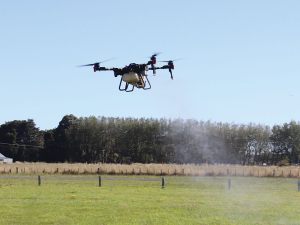
OPINION: David Seymour and James Meager's plan to make it easier for farmers and orchardists to operate drones can best be described a 'courageous' move.
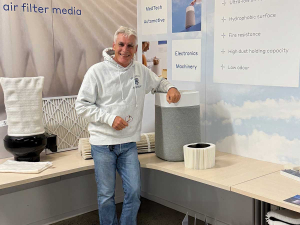
New Zealand wool is reaching new heights as air filtration companies move away from synthetic products to biodegradable alternatives.
Opuha Dam's ability to protect South Canterbury communities from major flooding has taken a significant step forward, with Opuha Water Limited (OWL) successfully commissioning a new outlet valve capable of releasing record volumes of water from the dam ahead of a weather event.
There's been widespread support from the primary sector for the Government's announcement on changes to freshwater farm plans that come under the Natural Environment Bill, which is now set to replace the existing RMA.
A partnership between state-owned enterprise Pāmu (Landcorp Farming Limited) and charity Meet the Need is putting more than quality New Zealand beef into food bank parcels this year.
The Opportunity Party has faced criticism during the election campaign that its policies are too urban-focused and offer little for rural communities.