PC1 Pause Looms as Coalition Targets Waikato Farm Rules
A pause on Waikato Regional Council's (WRC) plan change that sets new freshwater rules for farming could be announced in the coming weeks.
 increase font size
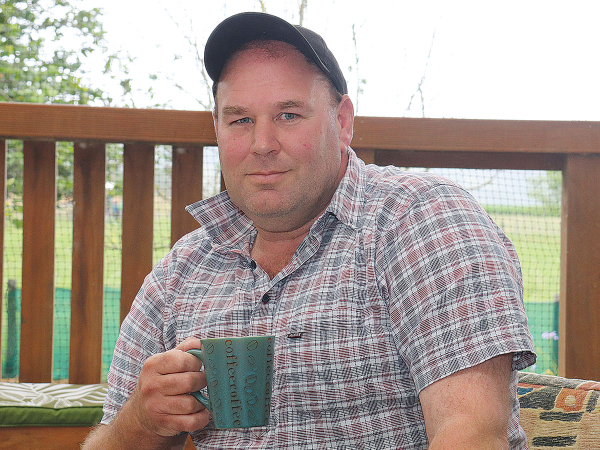 Associate Agriculture Minister Andrew Hoggard.
OPINION: Pre-Parliament, I was involved with the International Dairy Federation. I attended firstly business meetings at the annual conference, then later, board meetings as a sitting board member.
Unlike meetings in various parts of New Zealand, we didn't have a karakia at the start of the meeting, or introductory prayer. What we did have was the reading of an anti-trust statement and us all accepting it - or leaving the room.
That statement basically said that we wouldn't discuss anything that could influence milk prices by discussing any sort of managing of supply. This was taken extremely seriously by the organisation; we wanted to ensure there was no perceived cartel-like behaviour.
Given that experience, I understand where Federated Farmers were coming from when they asked the question of the Commerce Commission: is the Net Zero Banking Alliance not market collusion?
On the surface of it you have a grouping of companies who have come together, and it could be viewed as having started talking about reducing supply of their products to a segment of the market. You reduce supply; well, the law of supply and demand says quite clearly prices go up. The Net Zero Banking Alliance is a subset of the United Nations Environment Program Finance Initiative. It would be a stretch to think that Net Zero banking is solely responsible for the difference between rural and urban bank margins, but it’s a fair question to ask – does it play a part? I look forward to my colleague Mark Cameron and his primary production select committee reporting back on their findings on the wider subject of that difference between rural and urban margins with the banking inquiry.
One of the banks did come out and say there was no proof of any collusion. Here’s the question I have for them: What are the steps that Net Zero Banking Alliance is taking to ensure that they are on the right side of antitrust laws? Do they have procedures in place to ensure that such behaviour shouldn’t occur? Is there no undue pressure placed on any bank to be a part of this program? What’s to stop any bank from deciding they quite like lending to farmers, so rather than reduce the amount of lending to farmers, they might increase it?
Now, they may well do so on the basis that those farmers have a lower intensity impact. But these are the questions that should be asked and answered.
Some discussion has been around whether the banks or others should even be operating in this space. Quite simply, every business should be free to choose who it does business with - with the obvious caveat that decision isn’t based around discriminating on race, gender, religion, or in the case of Canterbury, where you went to school.
Jokes aside, the decision should be an individual company’s decision, not a collective. Otherwise, this has major impacts on how the market functions. If one company wants to act like the superior moral voice of humanity, then as long as other companies who just want to provide a legal good or service are free to do so, then I don’t see the problem.
We seem to see lots of organisations feeling they have a role in combating climate change, in some cases applying what I feel is rather narrowly focused thinking to a global issue.
A great example of this that thankfully never saw the light of day, was in the previous government, where every government department was required to reduce its footprint.
Can you believe that Corrections were looking at whether they should shut down their farms because owning those farms, in theory, was a considerable amount of their departmental emissions?
No thought given to prisoner rehabilitation, or the fact if they sold the farms, someone else just buys them and keeps farming, or that farms produce fresh, locally-grown food.
Frankly, I back our farmers, because New Zealand farmers do it better than anyone else.
Andrew Hoggard is the Associate Minister for Agriculture.
A pause on Waikato Regional Council's (WRC) plan change that sets new freshwater rules for farming could be announced in the coming weeks.
New Zealanders are being urged to be alert following a confirmed positive case of H5 bird flu this week.
OPINION: Farmers are being put on notice by the Green Party.
Retiring MP and dairy farmer Mark Cameron is blasting the Green Party for proposing to ban the use of synthetic fertiliser and cutting cow numbers.
OPINION: While we're on the topic of lumberjacks, Biosecurity Minister Andrew Hoggard has no doubt used a chainsaw hundreds of times, but your old mate reckons he would’ve still been sweating on getting it right when cutting down a pine in front of the cameras, as he did above Queenstown during a recent pre-Budget announcement around extra funding for wilding pine control efforts.



Celebrating 50 years in the rural landscape of Central Canterbury and beyond, Ashburton-based Carrfields, has been the exemplar for all aspects of modern agriculture via its extensive range of services including supply, growing, agronomic advice and marketing.
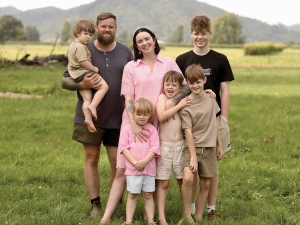
For Taupiri dairy farmers Logan and Sian Dawson, their involvement in the NZ Dairy Industry Awards has been a key catalyst in the growth of their business - the experience helping shape how they approach the farm ownership pathway they are pursuing today.
West Otago dairy farmer Luke Kane has been awarded the 2026 Rabobank Dr John Morris Business Development Prize.
OPINION: As the general election approaches, political parties are churning out policies in the hope of attracting more votes.
An LIC bull, Tronnoco AR Sadio-ET S3F, bred by Tony and Keri O'Connor of Tronnoco Farming Co Ltd near Timaru, has won the 2026 Mahoe Trophy.
With forecasters advising El Niño conditions will develop through winter and strengthen into spring and summer, Ballance Agri-Nutrients is encouraging farmers and growers to think ahead about nutrient planning and be prepared to work around challenging weather conditions.