
It's The Margins That Matter
OPINION: It appears to be difficult for people who haven’t tried to run a business to understand the difference between assets and cash.
 increase font size
 Dr Jacqueline Rowarth
OPINION: Humans are resilient. We are part of nature and have evolved for survival.
Increasingly over the millennia we have managed and modified our surroundings to suit our perceived needs. Land management often aims to prevent degradation by keeping ecosystems in their desired state, especially when managing for climate change. Some modifications are made to provide resistance and protection (sea walls, flood banks).
Management is under debate because of different perspectives about what is desired. Modifications are under debate because sometimes they fail. What happens then depends on the resilience of what remains. Annual plants (maize, for instance) might never recover; perennial plants (orchards and pastures) will probably recover, depending on the severity of the disruption.
Biologically, resilience is the ability to recover and reorganise after experiencing losses from a disturbance, whereas resistance is the capacity of an ecosystem to withstand a disturbance without changing.
Resilience is ‘getting back to normal’.
Resistance is staying normal for as long as you can.
In both concepts, if a disturbance is too strong, it can exceed an ecosystem’s resistance and resilience, pushing it over a threshold and into a new, totally different state.
Each time there is a crisis, whether earthquake, flood or fire, we hear that the community is resilient. And it is generally true. Being resilient does, however, take energy – energy to recover, adapt and get on with an improved future. Some people have more energy than others, and some communities are more resilient than others. At some point, we might have to think that rebuilding is not the sensible route – a threshold has been exceeded and adapting to the new reality means considering a different future.
Farmers and growers do this all the time. A changing climate changes what is appropriate management for the land and they consider the options (market demand, labour, infrastructure), plus the requirements embodied in change. These include not just the physical and mental energy, but also the financial support.
Psychology assists with understanding what is involved.
Commitment, Control and Challenge form the framework for psychological resilience - staying dedicated to goals, focusing on influencing outcomes, and viewing difficulties as opportunities for growth rather than threats.
This mindset helps turn setbacks into learning experiences, fostering endurance and adaptability. Anybody who heard the interview with a primary school student after Cyclone Gabrielle will remember the interviewer asking, “was it very frightening?” and the child responding, “No, Mum said it was an adventure”.
Well done to the mother. That child has a good chance of becoming a resilient adult. It will be a leader in times of crisis because it will have the opportunity mentality.
Crises aren’t going to go away, and we aren’t good at anticipating the real ones – that is part of the definition of a crisis. They are ‘unexpected, unstable, or dangerous situations requiring immediate action. They often involve intense difficulty or danger in personal, economic, or political contexts’.
Covid, Cyclones Hale and Gabrielle, and the closure of the Straits of Hormuz close were all unexpected.
Given the unknown, it is important to consider whether some things are a crisis, or whether the threshold has been reached, tipping us into a new normal.
The cost of living could be one such example.
We might also consider how much some of the crisis concern is due to advertising (media) hype or reality. Wages have been increasing more than the cost of food (in most years), but not as much as the cost of housing. Recently hikes in power and rates have been causing stress. But overall, wages have continued to increase… the minimum wage increases are designed to cover inflation and while some families are certainly struggling, calling the cost of living ‘a crisis’ detracts from the reality of a real crisis where resilience and recovery are needed.
The ecosystem context of resilience is appropriate given that humans are part of nature and that farmers and growers are working with it. In addition, many of the disturbances are ‘natural’. But maybe the term for humans in the future is fortitude – the strength of mind that enables us to encounter danger or to bear pain or adversity with courage. Grit might also be appropriate.
Dr Jacqueline Rowarth, Adjunct Professor Lincoln University, is a farmer-elected director on Ravensdown and DairyNZ and a member of the Scientific Council of the World Farmers’ Organisation. This column is in response to a request from a farmer reader.
OPINION: It appears to be difficult for people who haven’t tried to run a business to understand the difference between assets and cash.
OPINION: In the 1980s, concern was expressed in West Germany about the falling birth rate. Some simple analysis was performed by Professor Helmut Sies, physician and biochemist at Dusseldorf University. His letter ‘A new parameter for sex education’ was published in Nature in 1988:
OPINION: Is New Zealand ‘Godzown’ or the ‘Last bus stop on the planet’?
OPINION: "The worst thing that agriculture does is take land from nature."
OPINION: Every vintage has it’s vagaries, and every season I am struck by how nimble viticulturists, winemakers and grape growers have to be, catching, or at least dodging, the curveballs nature throws.


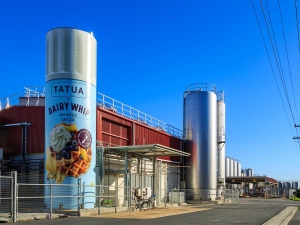
Waikato milk processor Tatua has again declared a record milk payout to farmer shareholders, leaving other processors in the dust.
A Labour-led Government won’t be bringing back the controversial freshwater rules of 2020.
National’s much-touted free trade deal with India featured in the Rural Issues Debate at Mystery Creek, Hamilton on Wednesday night.
New Zealand's 2026-27 freshwater fishing season has opened, with anglers encouraged to head to rivers and lakes over the coming days as conditions look favourable across much of the country.
Central Otago District Council (CODC) has voted against a plan to spread treated sewage sludge from Cromwell and Alexandra on farmland near Lauder, a decision Federated Farmers says reflects strong opposition from rural residents.
Pāmu has released its FY26 Integrated Annual Report, reporting a Net Operating Profit of $113 million, more than double the $49 million recorded in FY25.