It's The Margins That Matter
OPINION: It appears to be difficult for people who haven’t tried to run a business to understand the difference between assets and cash.
 increase font size
 Dr Jacqueline Rowarth is an Adjunct Professor at Lincoln University and a farmer-elected director of DairyNZ and Ravensdown.
OPINION: The marketers are telling us that they have no choice – but to pursue it.
Big names like Danone, Cargill and Walmart are all trying to show they are being environmentally responsible by sourcing regenerative agriculture (RA) products. Danone is planting trees to offset activities. Cargill is encouraging farmers to move from permanent cropping monocultures in areas bigger than most New Zealand farms to no-till rotations. Walmart is aiming for ‘beyond sustainability’ across its supply chain – including agriculture, forestry and fisheries.
To support the move, environmental auditors are growing in number.
The goal is undoubtedly positive. However, if everybody is embracing RA, how does that assist New Zealand farmers attract the fabled premium? The analogy is organic production systems, which underpin and align with regenerative agriculture principles.
Research suggests that if more than 15% of the production area is labelled organic, the premium evaporates. (Note that in Europe extra subsidies are being paid by governments to switch to organic, hence the growing area of organics in some countries.)
An additional factor, often not understood by well-meaning environmentalists, is that most organic producers are buffered from pests and diseases by surrounding conventional farmers and growers. A move to wholly organic and regenerative agriculture, where synthetic chemicals are either prohibited or minimised, would decrease yields considerably – experts estimate another 20-30% -- with no compensation through increased price paid.
The challenge becomes how to brand RA for New Zealand. If RA is the platform, how do we leverage more without creating extra cost?
The answer could lie in new consumer trends, stimulated by Covid-19, for attributes. In July, FoodNavigator.com reported that “People don’t search for brands anymore; attributes are king”. Spoon Guru software developer co-founder and co-CEO Markus Stripf has reported that “health is the number one driver, and top searches are for low sugar, organic, seasonal, local and high protein”.
The latter fits unadulterated meat and milk from pasture. Bord Bia is already differentiating Irish beef from competitors in an attempt to maximise the returns from the marketplace to the benefit of Irish beef farmers. Thirteen thousand people surveyed indicated recognition of ‘grass-fed’ and ‘associated it with premium, natural and healthy’.
‘Natural’ continues to be the most influential term in consumer attraction. The International Food Information Council reported in the 2020 Food & Health Survey that ‘natural’ is more important (over 40% of people) than non-GMO (approximately 32%) or organic (approximately 28%).
But taste is still number one (88%), followed by price (70%), health (60%) and convenience (52%). The order has not changed over the decade of the research. Sustainability was at 34%. Although the proportion of people looking for sustainability had increased since last year, it is still not as high as in 2011 (over 50%).
New Zealand could still aim at ‘pampering the palates of the privileged’. But these desirable attributes require verification; the question remains how the auditing would occur and whether the consumer would cover the costs.
Most challenging is how to increase carbon sequestration without planting more agricultural land in trees. Especially when our soils already contain considerably more carbon than most other countries can manage.
Maintaining carbon, as in tropical forests, could be recognised if we get the marketing right. This is what the Beef + Lamb NZ report on carbon neutrality proposes. If the concept could be accepted, the marketers could get going.
Markus Stripf has echoed the big companies such as Walmart, stating that “People are looking for sustainability claims and environmentally-friendly products – carbon footprint, provenance and farm-to-fork stories”.
We have the data; we have the farm-to-fork stories; and we have the trust of consumers in other countries.
Branding RA with them would not give a marketing advantage; branding grass-fed would not differentiate us from the Irish.
New Zealand’s Generative agriculture is Beyond Regen – New Gen is even better…
Dr Jacqueline Rowarth has a PhD in soil science and is an Adjunct Professor at Lincoln University. She is also a farmer-elected director of DairyNZ and Ravensdown. The analysis and conclusions above are her own.
OPINION: It appears to be difficult for people who haven’t tried to run a business to understand the difference between assets and cash.
OPINION: In the 1980s, concern was expressed in West Germany about the falling birth rate. Some simple analysis was performed by Professor Helmut Sies, physician and biochemist at Dusseldorf University. His letter ‘A new parameter for sex education’ was published in Nature in 1988:
OPINION: Proponents of regenerative agriculture tend to be naturally aligned with a 'green mindset', so they will be nonplussed with their new mates in the US of A.
Wayne and Ange Moxham of Horowhenua have just been named as Fonterra's top organic performer for milksolids. As well as providing organic milk to Fonterra, the couple also sell Udderly Organic milk to more than 100 outlets in the region and are embarking on another exciting venture producing organic gelato. Reporter Peter Burke went along to see their farming operation.
OPINION: Humans are resilient. We are part of nature and have evolved for survival.


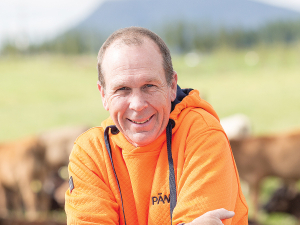
Pāmu has released its FY26 Integrated Annual Report, reporting a Net Operating Profit of $113 million, more than double the $49 million recorded in FY25.

Meat Industry Association data, released alongside the Red Meat Sector conference in Wellington, shows export value climbing across the US, China, UK and Canada.
Applications are set to open for the 2027 Zanda McDonald Award, a trans-Tasman award recognised for identifying and fast-tracking talented young leaders in agriculture and agribusiness.
The Royal New Zealand College of General Practitioners (the College) and Hauora Taiwhenua Rural Health Network are calling for investment in a proposed new training pathway for rural GPs, warning that many rural practices are struggling to recruit while a large share of the existing workforce nears retirement.
Federated Farmers has called on Central Otago District Council (CODC) to drop or vote down a plan to truck sludge from Alexandra and Cromwell to farmland near Lauder, warning it would compound an "outrageous" situation created by a separate council's decision weeks earlier.
Synlait has swung to second-half profit as operations stabilise, but the dairy processor still posted a $75.4m annual loss.