Beef + Lamb NZ's Lambing Kit Checklist for a Tough Season
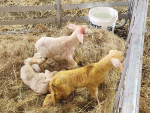
With lambing underway in many regions, Beef + Lamb New Zealand is encouraging farmers to put together a wellequipped lambing kit to help minimise lamb losses, particularly in bad weather.
 increase font size
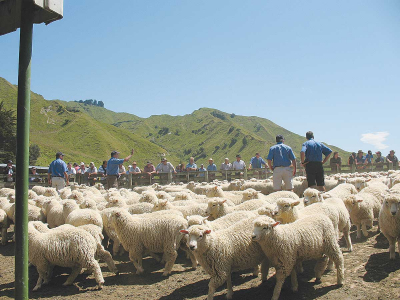 Different management systems are needed for lambing at 150% compared with 110%.
Cold spring weather is keeping a lid on pasture and lamb growth rates, so early weaning some lamb crop may be a good option.
Farm systems scientist Tom Fraser says despite plentiful rainfall, cold spring temperatures mean pasture growth rates in most regions are well below normal for this time of year and this is impacting on lactation and pre-weaning lamb growth rates.
He says given the time of the year, when ryegrass comes way it will quickly go to seed, as it is day length rather than soil temperatures that determine when it goes reproductive.
“So rather than being long and seedy it will be short and seedy.”
Farmers are reporting tight feed supplies and this builds a strong case for weaning – at least a proportion of the lamb crop – early so whatever high-quality feed is available can be partitioned into lambs.
On a positive note, Fraser says the cold spring will favour clover production as competition from ryegrass is reduced. This should help drive strong post-weaning growth rates.
“Pre-weaning growth rates are back but we should see some good post-weaning lamb growth rates.”
While early weaning gives farmers the option of selling annual draft ewes before the end of the year, Fraser says given strong ewe prices, farmers might consider using the ewes to groom pastures and put extra weight on them post-weaning.
Trials at Massey University found lambs over 20kg liveweight (LW) coped best with early weaning (minimum weaning weight was 16kg LW). However, it was the quality of the forages on offer that was the greatest determinant of how well lambs grew post-weaning.
Massey University’s professor Paul Kenyon, who led the early-weaning trials, says early-weaned lambs should be given unrestricted access to legume-based forages such as a herb clover mix at a minimum cover of 7cm in height.
If lambs are weaned onto the crop, they should be given time to adjust to a change in feed. Running the ewe and lambs onto the crop a few days before weaning, then running the lambs back onto the crop after weaning, will help minimise the weaning check.
Kenyon says in late lactation all lambs -- but especially multiples -- are receiving very little nutrition from the ewe.
Therefore, when grass growth is limited the ewes are competing with their lambs for feed and compromising the performance of both.
Early weaning can also be particularly useful in hoggets as it will give them more time to recover body condition between lambing and mating again as a two-tooth.
Partitioning high quality feed into lambs in the late spring/early summer period will benefit the whole farm system. It means more lambs can be sold prime before the height of summer, making more feed available for capital stock, and ewe lambs can be grown out to heavier weights early.
This allows more flexibility to hold them back later when feed resources are more limited.
With lambing underway in many regions, Beef + Lamb New Zealand is encouraging farmers to put together a wellequipped lambing kit to help minimise lamb losses, particularly in bad weather.
Will a stronger, more coordinated voice help rebuild confidence and improve returns in the wool sector?
It’s official, lamb will take centre stage on Kiwi Christmas tables this year.
The vineyards at Pyramid Farm in Marlborough’s Avon Valley have never been run of the mill, with plantings that follow the natural contours of the land, 250 metres above sea level.
Alliance Group has secured greater access for chilled beef exports to China, following approval for two of its processing plants to supply the market.


Now in its fourth year, the 2026 Fencing Industry Awards, formed part of the proceedings of the FCANZ Conference, held in Nelson during August.
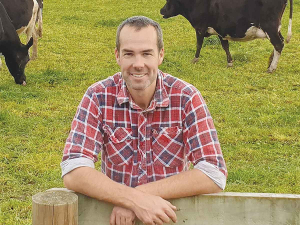
DairyNZ deputy chair Cameron Henderson has been re-appointed unopposed for another term.
OPINION: The stats speak for themselves.
Farms across the upper North Island are trialling different pasture mixes as part of a research programme that aims to build greater resilience into farming systems.
Election years are always a concerning time for farmers, according to DairyNZ chair Tracy Brown.
The Ballance Farm Environment Awards are coming to the West Coast of the South Island.