Krone XDisc 710 Now Fits John Deere, New Holland Foragers
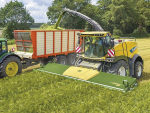
Krone's XDisc 710 direct-cut header can now be used by John Deere and New Holland forage harvesters, as well as the Krone Big X it was originally designed for.
 increase font size
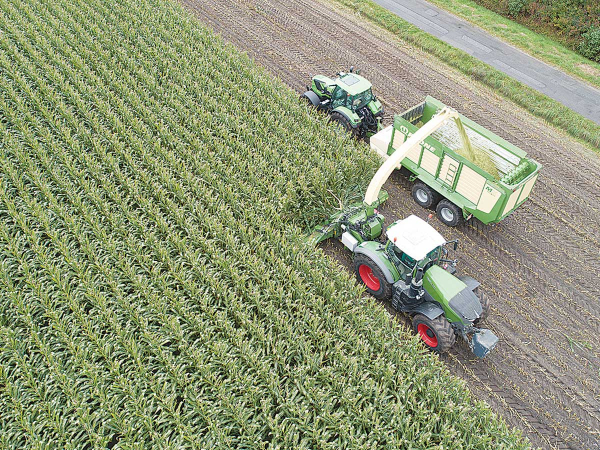 Krone has developed a prototype reverse-drive forage harvester that has been undergoing testing in maize.
Anyone familiar with precision grass harvesting will remember the domination of the drum-type trailed harvesters of the 1980s and ‘90s.
This was overtaken by the popularity of flywheel type machines, which delivered more output, less fuel consumption and a better chance of surviving foreign object ingestion.
Those flywheel-based machines evolved from rear-linkage mounted, reverse drive machines that were the norm when forage maize became popular in northern Europe. This was at a time when self-propelled units were only just starting to appear.
German harvesting specialist Krone is now looking to turn the clock back and creating a sense of déjà vu with its latest development project – a prototype reverse-drive forage harvester that has been undergoing testing in maize.
Designed to be mounted on prime mowers like the Claas Xerion 5000 or the Fendt 1050, the prototype weighs over six tonnes and can be equipped with Krone’s six to 10 row maize, conventional grass pick-up or direct-cut, whole-crop headers.
It features a chopping cylinder from the Big-X harvester range, and hydraulically-driven header and feed rollers.
The prototype is said to be a match for Krone’s Big-X 480 cousin in terms of output and chop quality, with reduced fuel consumption and a significantly lower capital cost.
Krone's XDisc 710 direct-cut header can now be used by John Deere and New Holland forage harvesters, as well as the Krone Big X it was originally designed for.
Fifty Eight years ago, on the 16th of August 1968, August Claas, the founder of the harvesting company and father of Helmut Claas, personally presented a Claas Senator combine harvester to Scottish farmer John Steven.
Case IH has unveiled its redesigned next generation Puma Series tractors, said to offer improvements in connectivity, operator comfort, fuel efficiency and drivability.
Founded in Cologne, Germany, in 1864, Deutz AG is the world’s oldest engine company, with its engines and systems used in construction equipment, agricultural machinery, material handling equipment, such as forklift and telehandlers, as well as stationary equipment such as gen-sets.
Founded in Cologne, Germany, in 1864, Deutz AG is the world’s oldest engine company, with its engines and systems used in construction equipment, agricultural machinery, material handling equipment, such as forklift and telehandlers, as well as stationary equipment such as gen-sets.


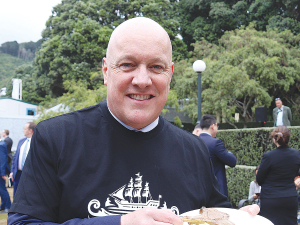
OPINION: In politics, credibility is and should be big. It must surely rank higher than charisma, which is quite trite and superficial. Yet, voters nowadays are often wooed and influenced by how someone looks or talks at a superficial level. TV plays a huge role in this.

Farmers can spend less time on paperwork, thanks to a new data sharing agreement between DairyNZ’s DairyBase and LIC’s MINDA software.
Kaikōura families affected by July's severe storm have found a practical solution to a problem that's kept some children away from regular schooling for weeks: a washed-out section of Inland Kaikōura Road, which has stopped the local school bus from running its usual route.
Rural New Zealand is welcoming the Government’s recent package of rural healthcare initiatives.
Interest in agritech and production animal systems has prompted Massey University's School of Agriculture and the Environment to new majors to its popular animal science degree.
Ballance Agrinutrients chief executive Kelvin Wickham says despite a tough year, he is pleased the business has returned to profit.