NZ Apples Head to India: Apple Action Plan Gets a Leader
A seasoned horticulturist has been appointed to deliver the Apple Action Plan, a key initiative of the India-New Zealand Free Trade Agreement.
 increase font size
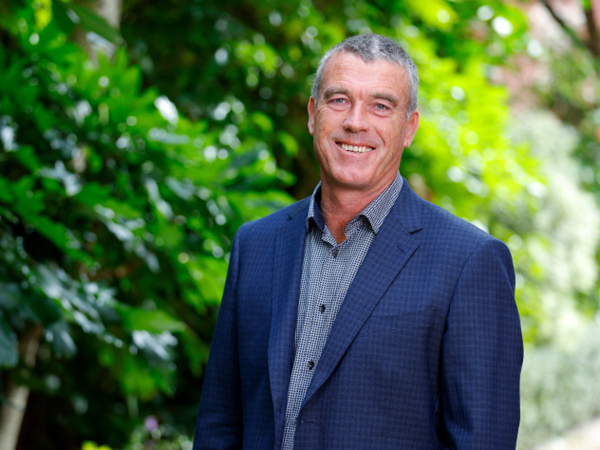 Waitaki MP and former sheep farmer Miles Anderson.
Beef+Lamb New Zealand (B+LNZ) has welcomed the New Zealand Government's announcement that comprehensive free trade agreement (FTA) negotiations have formally commenced with India.
Since the current Government took office in November 2023, Minister for Trade Todd McClay has visited India five times for eight meetings with his Indian counterpart. Prime Minister Christopher Luxon went to India in mid-March to begin negotiations with Prime Minister of India, Narendra Modi.
B+LNZ chair Kate Acland says this marks a significant step forward for New Zealand's red meat sector, presenting an abundance of new opportunities for exporters.
"A comprehensive, commercially meaningful FTA could be one of the most important trade agremeents we've secured since China. It would unlock an important market that had previously been somewhat closed to us due to the current 30% tariff on sheepmeat."
With an FTA with India proving elusive over several previous governments, Waitaki MP and former sheep farmer Miles Anderson said that knowing the market and the needs of Indian consumers would be key.
"When I was farming and supplying Alliance, I did a few tours through the meatworks when my stock was killed. The bulk of NZ red meat has been going into China, the US and then Europe over the last few years.
"India is a large market for lamb and mutton. Not so much in the way of beef or dairy. India already has the world's biggest cattle herd and cattle are sacred to a big chunk of the Indian population.
"But there are only small sheep volumes going into India comparative to other markets, due to tariffs. That's a good indicator that export companies find it difficult to extract much profit."
Beyond sheepmeat, India offers huge market opportunities for New Zealand co-products, including pharmaceuticals, wool and pet food.
In return, Indian industrial machinery and electronics and produce such as rice, jute and mangoes could have significant impacts on New Zealand customers and producers.
Acland says that there is immense potential of strengthening trade ties with India, which is set to become the world's third-largest economy within the next five years.
"A comprehensive and commercially meaningful FTA must deliver tariff liberalisation for these products and reduce non-tariff barriers to ensure increased access for New Zealand exporters.
"By 2030, India is projected to have an additional 140 million middle-class households and 21 million high-income households. With rising demand for high-quality, nutritious sheepmeat and domestic production unable to meet this demand, New Zealand is well-placed to supply premium products to this growing market."
Anderson says that while India's rise is certainly the most visible, it would be foolish to overlook the greater Southeast Asia region. "New Zealand produces enough food to feed hundreds of millions of people. Opening up new markets helps New Zealanders; we can sell to the higher value consumers in all those markets and increase the returns that farmers are getting here in New Zealand.
"You can't pick and choose who you sell to if you have fewer markets, whereas if you've got a larger number of markets interested in your product you can extract a good price for it."
As the rest of Southeast Asia emerges and becomes wealthier, China and India will be in increasing competition to supply them with food and services. Anderson sees this potential as a healthy thing.
"Since the Second World War the freeing up of trade around the world has led to the biggest drop in poverty ever, lifting people into the middle or upper class."
He points to recent agreements between Gulf states in the Middle East and Luxon's latest visit to Vietnam as signs of the impacts of global trade uplifting effects.
A seasoned horticulturist has been appointed to deliver the Apple Action Plan, a key initiative of the India-New Zealand Free Trade Agreement.
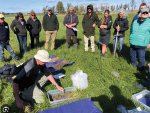
Beef + Lamb NZ funded research has shown that some simple changes to pasture management could help farmers make better use of rainfall and build resilience before dry conditions hit.
A Labour-led Government won’t be bringing back the controversial freshwater rules of 2020.
National’s much-touted free trade deal with India featured in the Rural Issues Debate at Mystery Creek, Hamilton on Wednesday night.
Ravensdown shareholders have elected Jane Montgomery and Kate Acland to the Ravensdown Board for three-year terms, following a closely contested director election.

Farmer-owned fertiliser company, Ballance Agri Nutrients is welcoming National’s plan to negotiate security agreements with key supplier countries to protect New Zealand-bound products from export restrictions and greater supply chain certainty.

Carrfields has announced the appointment of Stu Hall to the newly created role of chief operating officer, Carrfields Ltd, reflecting the continued growth of their agribusinesses and the need to ensure the company has the leadership capacity and support in place as it pursues the emerging opportunities ahead.
New Zealand's role is not to compete with Indian growers, according to NZ Apples and Pears.
The potato industry is celebrating the success of two rising stars - James Blair, the 2026 Young Grower of the Year and runner-up and innovation award winner, Amber Davy.
Twenty-eight emerging leaders from across the horticulture sector spent two days last month learning valuable skills and connecting with industry experts.
There are five entrants in this year’s Young Horticulturist of the Year, competing in a series of technical, practical, business and leadership challenges.