Federated Farmers Backs Year 11 Agricultural Science
Federated Farmers is backing Feilding High School’s call to keep Agriculture and Horticultural Science as a standalone subject in Year 11.
 increase font size
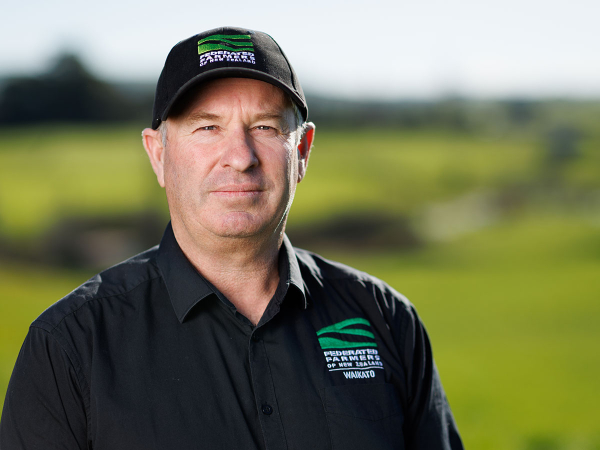 Waikato Federated Farmers president Chris Woolerton.
The Government has announced it will pause key parts of Waikato Plan Change 1 (PC1) in a decision that is set to give Waikato farmers a reprieve from new consenting and farm-planning requirements while the wider resource management system is overhauled.
Farmer lobby group Federated Farmers says it welcomes the move, claiming it directly addresses concerns the organisation has been raising for months.
"This is a really positive step for Waikato farmers and a direct response to the concerns we've been raising," says Waikato Federated Farmers president Chris Woolerton.
Federated Farmers repeatedly called for the Government to put PC1 on pause, including at a public meeting at Mystery Creek.
The lobby group has argued it made little sense for farmers to face a new set of regional rules when the Government is reworking the Resource Management Act (RMA), freshwater regulations and the national farm planning system.
Woolerton says the intervention gives farmers "breathing room" at a time when regulatory uncertainty is already high.
One of the most significant changes affects more than 400 farmers in the Whangamarino Wetland catchment, who faced the prospect of needing a restricted discretionary resource consent simply to continue their existing farming activities.
Under the pause, that consenting requirement has been removed for the next five years.
Woolerton describes the previous requirement as creating a "huge amount of uncertainty and compliance cost" for farmers who were not proposing to change how they farm, only to keep operating as they were.
Removing it, he says, frees farmers to focus on production rather than navigating a consenting process that was set to be superseded by the Government's new national system regardless.
The Government has also delayed new farm-planning requirements in the Waikato region for five years, giving time for a national farm plan system to be developed.
Federated Farmers says this addresses a long-standing concern: that Waikato farmers risked being required to comply with a regional farm-planning framework only to then have to adapt to a separate national system shortly after.
Woolerton calls the delay "a common sense and pragmatic approach" that avoids duplication and confusion for farmers.
Despite welcoming the consenting and farm-planning changes, Federated Farmers says the announcement does not resolve a key issue at the centre of PC1: restrictions on farmers' ability to change land use.
Woolerton says farmers need to be able to respond to market conditions rather than remain locked into a particular farming system under rules set years earlier.
He points to potential implications for vegetable growers in the Waikato, arguing that restricting land-use change could work against efforts to keep vegetables affordable and locally grown at a time when cost of living remains a pressing concern for many New Zealanders.
The same principle, he says, applies to livestock farmers, including dairy farmers who may want to shift to another productive land use in response to changing market conditions.
Federated Farmers says it will continue working through the detail of the Government's announcement to understand how the changes will apply in practice.
"We've got a lot of detail to work through, and we'll be looking closely at exactly how these changes will work in practice, but the direction is right," Woolerton says.
The organisation says it will continue to advocate for a resource management system that gives farmers flexibility to farm productively while still supporting environmental improvements.
Federated Farmers is backing Feilding High School’s call to keep Agriculture and Horticultural Science as a standalone subject in Year 11.

National’s pledge to introduce 19 new national standards shows the party is serious about getting Wellington out of farming, Federated Farmers says.
Mobile phone coverage and reliability are deteriorating in rural areas, and farming families are bearing the cost, according to a Federated Farmers survey.
Central Otago District Council (CODC) has voted against a plan to spread treated sewage sludge from Cromwell and Alexandra on farmland near Lauder, a decision Federated Farmers says reflects strong opposition from rural residents.
The Royal New Zealand College of General Practitioners (the College) and Hauora Taiwhenua Rural Health Network are calling for investment in a proposed new training pathway for rural GPs, warning that many rural practices are struggling to recruit while a large share of the existing workforce nears retirement.


Decades piloting planes has ensured vet and farmer David Hayes is focused on safety. So, after a serious accident while welding on farm, he is sharing his experience so others can learn from it.
Canterbury milk processor, Synlait Milk has confirmed Leon Fung as its chief executive officer.
OPINION: Making it easier to collect rainwater and use it to grow crops and livestock is a no brainer.
As part of its Election 2026 coverage, Rural News asked political parties how they would help pull the arable sector out of the doldrums. Here's what they said:
Farmers are being encouraged to rethink how they manage waste on farm with the launch of ruralwastesorted.co.nz, a new website bringing together practical tips, real farmer experiences and resources.
New Zealand Winegrowers (NZW) is celebrating the India-New Zealand Free Trade Agreement (FTA) coming into force today, bringing New Zealand wine improved access to one of the world’s fastest-growing economies.