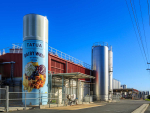
Ah Tatua, You've Done It Again!
Waikato milk processor Tatua has again declared a record milk payout to farmer shareholders, leaving other processors in the dust.
 increase font size
 John Wilson.
Fonterra and its global peers believe future prices will show that the dairy market is not as imbalanced as the current prices indicate, John Wilson says.
The Fonterra chairman – in referring to the global situation – said there was, frankly, no certainty.
World milk production is responding to the price signal everywhere, but Europe, he told about 160 dairy farmers at the Northland Dairy Development Trust annual general meeting in Whangarei, in February.
"Virtually all farmers in Europe are not making money on a cash basis but they have invested significantly in facilities and are using them."
The view is that European production will decline
"We are not just sure when and frankly I think it will require a weather event to give a sharp signal to the market."
Fonterra does see strong demand globally, but is concerned about the world economies. The current low milk prices have been created by an excess amount of supply in the market, the customers are aware of that and therefore, the price point is dropping.
"We don't believe, and neither do our peers globally, that the market is as imbalanced as the price is indicating right now. The prices are also an indication of global financial fragility generally... also reflected in oil."
An influence on the market is New Zealand milk supply.
Fonterra had previously forecast 5-6% down earlier in the season based on cow cull and weather predictions.
"What we have seen is farmers producing a lot of milk even with a lower stocking rate which is good because it has been relatively low cost milk and reasonable weather conditions," he said.
"There have been pockets of dryness around the country but general speaking we've seen relatively favourable conditions over the last 3-4 months.
"My personal view is that we will see quite different autumn production this year. There is clearly lower stocking rates, there will most likely be a lot less supplement fed so I think it is likely we will see an autumn that will drop down lower than it has historically. But so much will depend on the weather."
Currently Fonterra is forecasting 4-6% down; now tracking at 4% down.
Commenting on the latest GlobalDairyTrade event – which saw the price index drop 2.8% and whole milkpowder down about 3.7% -- Wilson said: "It is clearly near a floor or at a floor because of where intervention pricing is in Europe.
"However, we can't be 100% sure as to when the market is going to get the very clear understanding and signal that over the coming six months it will be demand driven rather than supply driven."
Wilson conceded that global dairy prices prices are unlikely to start lifting until last this year.
"The general view is that while we had thought that prices would be moving north over the next three or four months as you heard us talk in January, unfortunately we think that will be later in 2016."
"It is impossible to put a day on it, let alone a month so the reality is, we will continue to update you," he told the farmers.
Waikato milk processor Tatua has again declared a record milk payout to farmer shareholders, leaving other processors in the dust.
Fonterra has unveiled its annual results for the 2026 financial year, posting $27 billion in revenue and close to $20 billion returned to New Zealand farmer owners and unit holders.
Fonterra Co-operative Group has confirmed the independently assessed candidates standing for election to its board in 2026.
Fonterra has revised its Farmgate Milk Price forecast for the 2026/27 season, lifting the midpoint and narrowing the range on the back of improving global dairy commodity prices.
Outgoing Fonterra Co-operative Council chair John Stevenson says that it has been a privilege to represent the co-op's farmer shareholders.


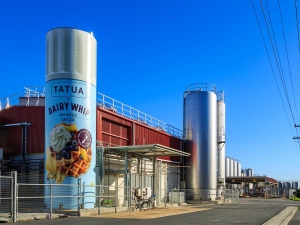
Waikato milk processor Tatua has again declared a record milk payout to farmer shareholders, leaving other processors in the dust.

A Labour-led Government won’t be bringing back the controversial freshwater rules of 2020.
National’s much-touted free trade deal with India featured in the Rural Issues Debate at Mystery Creek, Hamilton on Wednesday night.
New Zealand's 2026-27 freshwater fishing season has opened, with anglers encouraged to head to rivers and lakes over the coming days as conditions look favourable across much of the country.
Central Otago District Council (CODC) has voted against a plan to spread treated sewage sludge from Cromwell and Alexandra on farmland near Lauder, a decision Federated Farmers says reflects strong opposition from rural residents.
Pāmu has released its FY26 Integrated Annual Report, reporting a Net Operating Profit of $113 million, more than double the $49 million recorded in FY25.