Beef + Lamb NZ's Lambing Kit Checklist for a Tough Season
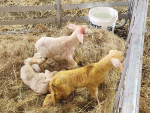
With lambing underway in many regions, Beef + Lamb New Zealand is encouraging farmers to put together a wellequipped lambing kit to help minimise lamb losses, particularly in bad weather.
 increase font size
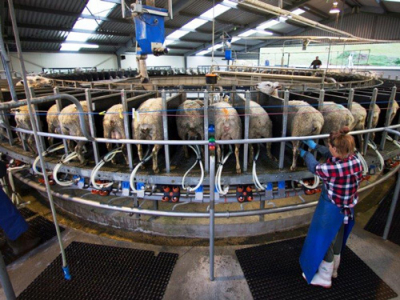 Farmers interested in milking sheep need to take a “watching brief” on the Government's new Primary Growth Partnership programme.
It's not the time yet for farmers to start getting into dairy sheep, but those interested need to keep a “watching brief” on the Government's new Primary Growth Partnership programme.
So says Spring Sheep Milk chief executive Scottie Chapman.
“In the first instance we have to get the model to work,” he told Rural News.
“New Zealand has been doing this for about 10-15 years and we are still well behind best practice and ability to actually make this work commercially.”
Chapman says the whole purpose of the Primary Growth Partnership programme, in the short term, is to get a model which works, builds interest and gets people involved to come and see it.
“In time, once we’ve got a model that works, we will look at extending it and encouraging other farmers to get involved,” he says. “It is still a few years before they can make it work.”
But Chapman is convinced that long term it is an opportunity for farmers.
“I would suggest to farmers, keep a watching brief, keep an eye on it, follow the numbers, follow what we are doing; it will all be public.”
He believes the most logical places for farms will be near processing, mostly around Waikato.
“Logic says in the short term that is where the opportunities will be. How it plays out in the long term remains to be seen.”
The PGP has several parts to it, he says.
“One is getting the market insight so we are getting consumer demand; the next is research and development to produce those products the consumer wants; the other part is onfarm management and the genetics.”
Chapman believes that NZ has a sensational ability to convert sheep milk into products of value.
“So there is no point in replicating the stainless steel that exists in the dairy industry. It is incredibly well run and looked after so we will continue the current dairy processes; we don’t need to reinvent that wheel.”
Spring Sheep Milk currently uses Waikato Innovation Park’s dryer for the bulk powder then it moves on to processing and canning plants.
“That’s only the powder; we also have gelato and other products. We can use existing NZ players and we will. It is another great advantage for NZ Inc.”
Chapman says they can pick and choose what processing facilities they need, according to what consumers say they want, instead of building a factory and having to process the product.
“It’s global, it’s in the Western world as well. There just happens to be a bigger prevalence in Asia. For them goat or sheep milk are a lot more digestible.
“So the three factors we are selling on are taste, digestibility and nutrition.
“Sheep milk products provide an alternative for those who potentially have a bovine intolerance. Bovine milk is a very good healthy product for most people but if you have an intolerance, there’s an alternative that has the calcium and protein without the digestive issues.”
With lambing underway in many regions, Beef + Lamb New Zealand is encouraging farmers to put together a wellequipped lambing kit to help minimise lamb losses, particularly in bad weather.
Will a stronger, more coordinated voice help rebuild confidence and improve returns in the wool sector?
Sheep infant nutrition maker Blue River Dairy is hoping to use its success in China as a springboard into other markets in future.
Sheep milk processor Maui Milk is on track to record average ewe production of 500 litres by 2030, says outgoing chief executive Greg Hamill.
The vineyards at Pyramid Farm in Marlborough’s Avon Valley have never been run of the mill, with plantings that follow the natural contours of the land, 250 metres above sea level.


Farmer-owned fertiliser company, Ballance Agri Nutrients is welcoming National’s plan to negotiate security agreements with key supplier countries to protect New Zealand-bound products from export restrictions and greater supply chain certainty.

Carrfields has announced the appointment of Stu Hall to the newly created role of chief operating officer, Carrfields Ltd, reflecting the continued growth of their agribusinesses and the need to ensure the company has the leadership capacity and support in place as it pursues the emerging opportunities ahead.
New Zealand's role is not to compete with Indian growers, according to NZ Apples and Pears.
The potato industry is celebrating the success of two rising stars - James Blair, the 2026 Young Grower of the Year and runner-up and innovation award winner, Amber Davy.
Twenty-eight emerging leaders from across the horticulture sector spent two days last month learning valuable skills and connecting with industry experts.
There are five entrants in this year’s Young Horticulturist of the Year, competing in a series of technical, practical, business and leadership challenges.