Cyclone Gabrielle: Hawke's Bay Orchardists Still Recovering
Three and a half years on from when Cyclone Gabrielle hit Hawke's Bay, some orchardists in the region are still receiving counselling to help them deal with the trauma they suffered.
 increase font size
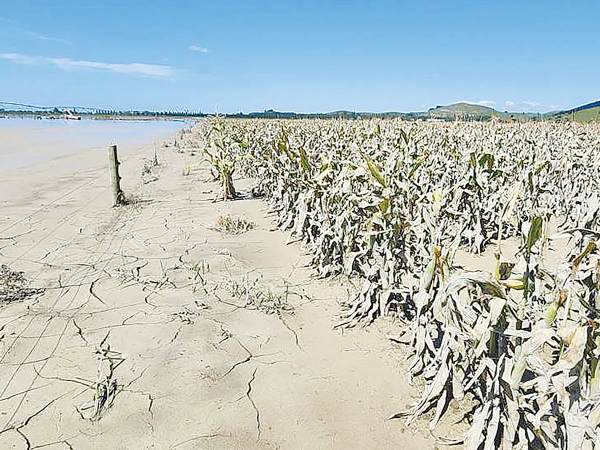 Land covered by clay-based silt could grow good vegetable and arable crops in the next season, according to a new study.
A study examining the recovery of land covered by silt during Cyclone Gabrielle last year could provide critical insights on how to manage recovery from the storm.
Hawke’s Bay researcher Alan Kale says the study was aimed at growers and supporting their recovery as well as the recovery of the land.
“We found that land covered by sludgy clay-based silt could grow good vegetable and arable crops in the next season, with minimal additional effort,” Kale says. “However, the story was considerably different for land covered by sandy silt. Crops grown on this land did not thrive.”
He says the idea of the study was to create a body of knowledge that could be used both immediately and in the aftermath of a future, similar flooding event.
“We believe we have achieved this outcome,” Kale says. “However, we also believe that there is more work we could do to aid understanding, if there was funding to extend the study for another couple of years.”
The study, which Kale worked on with colleague Diana Mathers, looked at the recovery of silt-covered land at 34 different sites in Hawke’s Bay, Wairoa, Gisborne and Tolaga Bay.
It was managed by the Foundation for Arable Research (FAR) with funding from the Ministry for Primary Industries’ (MPI) North Island Weather Event Fund, and Vegetable Research and Innovation (VR&I).
“We’d like to thank all participating growers for their openness and willingness to give freely of their time and knowledge, at a time when they and their families were enduring extreme physical, financial and emotional impact,” says Kale.
Three and a half years on from when Cyclone Gabrielle hit Hawke's Bay, some orchardists in the region are still receiving counselling to help them deal with the trauma they suffered.
The chief executive of Apples and Pears New Zealand, Danielle Adsett, says fruit quality this year is phenomenal and the sector is hitting crop estimates, which is great for growers.
Nearly three years on from Cyclone Gabrielle, Hawke's Bay apple orchardist Paul Paynter says they are still doing remedial work around their orchards and facing financial challenges.
If there was a silver lining in the tragedy that was Cyclone Gabrielle, for New Zealand Young Grower of the Year, Grace Fulford, it was the tremendous sense of community and seeing first-hand what good leadership looks like.
Listed carpet manufacturer, Bremworth is undertaking a $6 million expansion at its Napier plant more than two years after the site was heavily damaged by Cyclone Gabrielle.


National’s pledge to introduce 19 new national standards shows the party is serious about getting Wellington out of farming, Federated Farmers says.
The National Party’s policies to make it easier to grow fresh vegetables, secure reliable water and energy and simplify farm planning are practical changes that will give growers the confidence to invest, according to Horticulture New Zealand (HortNZ).
Fonterra Co-operative Group chief financial officer Andrew Murray has resigned to take up a role outside the dairy giant.
A major move is about to get underway to improve the quality and viability of dairy beef and cattle in NZ.
Veterinarians say changes to the code of welfare for dairy cattle provides a positive foundation for improved cattle welfare across the country.
Today, 15 October, is the International Day of Rural Women, which recognises rural women’s contribution to farming, communities and the environment.