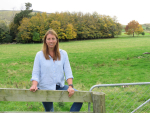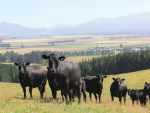
BVD Control Begins Long Before You See A Problem
Bovine Viral Diarrhoea (BVD) is sometimes viewed as a dairy industry issue, but the reality is that the disease can have serious consequences for beef breeding herds as well.
 increase font size

Nine new floppy-eared labrador puppies are about to take their first big step to becoming biosecurity detectors dogs, says the Ministry for Primary Industries (MPI).
They will soon leave the MPI Detector Dog Breeding Centre in Auckland for private homes, where for the next year they will learn how to conduct themselves in public.
The F-Litter was born on December 4 to proud parents Demi, an existing MPI detector dog, and Guiding Light RJ, a breeding stud for the Royal New Zealand Foundation for the Blind
Guide Dog Services that has sired a number of successful guide dogs.
"It is the first time that MPI has used a breeding stud from another service. Given Guiding Light RJ's previous results, we are really confident of getting some strong detector dogs," says Roger Cook, MPI's manager detection technology.
The puppies will be named this week. In reference to the name of the litter, all individual puppy names will begin with "F", says Mr Cook.
F-litter is the second litter under a new MPI breeding programme for labrador detector dogs.
Labradors provide the flexibility of being able to work with both passengers and mail. MPI has traditionally used beagles with passengers and mixed breed dogs with mail. The ministry is continuing to breed beagles.
Detector dog teams are very useful for detecting biosecurity risks when used with other checks at the border, says Mr Cook.
"No single border intervention is sufficient to manage biosecurity by itself. Dogs are good at picking up seeds and plants that can be hard to detect by x-ray. They also screen people faster than x-ray, and their visual presence is a significant factor," he says.
Bovine Viral Diarrhoea (BVD) is sometimes viewed as a dairy industry issue, but the reality is that the disease can have serious consequences for beef breeding herds as well.

Election years are always a concerning time for farmers, according to DairyNZ chair Tracy Brown.
Testing confirms H5 bird flu in a single northern giant petrel, found dead on a remote Cape Palliser beach in the Wairarapa, says Dr Mary van Andel, the Ministry for Primary Industries' (MPI) Chief Veterinary Officer.
Bovine Viral Diarrhoea (BVD) is sometimes viewed as a dairy industry issue, but the reality is that the disease can have serious consequences for beef breeding herds as well.
Four years since it was first detected in New Zealand, researchers and growers now know much more about management of maize pest fall armyworm (FAW).



Ravensdown shareholders have elected Jane Montgomery and Kate Acland to the Ravensdown Board for three-year terms, following a closely contested director election.
Federated Farmers says new legislation replacing the Resource Management Act will cut red tape, unlock investment and help grow New Zealand's export-led economy, after the Planning Bill and Natural Environment Bill passed their third reading in Parliament yesterday.
Leading figures from the major political parties will be questioned on their primary sector policies at the Rural Issues Debate at Mystery Creek Events Centre, Hamilton, on 30 September.
OPINION: Have a plan in place now!
Beef + Lamb New Zealand (B+LNZ) says it welcomes the passage of the Natural Environment Bill and Planning Bill, calling the bills a positive step for sheep and beef farmers.
A spate of southerly winds bringing cold temperatures has presented challenges for Taranaki dairy farmers.