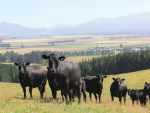
BVD Control Begins Long Before You See A Problem
Bovine Viral Diarrhoea (BVD) is sometimes viewed as a dairy industry issue, but the reality is that the disease can have serious consequences for beef breeding herds as well.
 increase font size

The Ministry for Primary Industries (MPI) is making good progress in implementing the recommendations of the recent independent review of imports of kiwifruit plant material.
Director-General Wayne McNee says the ministry has now completed the 10 actions set to be carried out by the end of August 2012.
In February 2012, McNee commissioned the independent review of import requirements and border processes associated with imports of kiwifruit plant material in light of the outbreak of the bacterial vine disease Psa.
"In commissioning the report, I wanted assurance that the ministry is doing absolutely everything it can to manage biosecurity risk around products imported to New Zealand. If there were improvements to be made, I wanted to identify and implement them," McNee says.
The review report made six recommendations, five of which focused on improving systems at the Ministry. MPI accepted all six recommendations and identified 16 specific actions to implement these recommendations.
The recommendations, the actions to address those recommendations and the progress made is in a Management Action Plan available here:
http://www.biosecurity.govt.nz/files/pests/psa/progress-update-psa-management-action-plan.pdf
"In addition to the 10 actions we have completed, four of the remaining tasks were to be started by today and I can confirm all have been initiated and partially completed. They are on track for delivery by the specified dates in 2012 and 2013," McNee says.
The remaining two actions have longer time frames as they involve the creation of IT tools to establish information sharing with other agencies.
Five of the six recommendations by the independent reviewers proposed changes to processes and procedures to better identify, study and manage biosecurity risks around the border. The report's first recommendation is, however, different.
"This recommendation suggests the ministry consider reprioritising its resources to better manage the risks to economically significant industries," McNee says.
"MPI's decision-making and prioritisation processes include the consideration of a range of factors, including the costs and benefits of actions to protect primary industries, the natural environment and human, health and cultural values.
"As our existing assessments already recognise the scale of industries and their potential biosecurity risks, we believe the current MPI processes already deliver significant benefit to the higher value industries," McNee says.
"However, in line with Government priorities and the Ministry's Strategy 2030, the relative weighting of resourcing toward economic outcomes has been increased."
For further information, contact: Lesley Patston, senior communications adviser, ph 029 8940163
Bovine Viral Diarrhoea (BVD) is sometimes viewed as a dairy industry issue, but the reality is that the disease can have serious consequences for beef breeding herds as well.

Election years are always a concerning time for farmers, according to DairyNZ chair Tracy Brown.
Testing confirms H5 bird flu in a single northern giant petrel, found dead on a remote Cape Palliser beach in the Wairarapa, says Dr Mary van Andel, the Ministry for Primary Industries' (MPI) Chief Veterinary Officer.
Bovine Viral Diarrhoea (BVD) is sometimes viewed as a dairy industry issue, but the reality is that the disease can have serious consequences for beef breeding herds as well.
Four years since it was first detected in New Zealand, researchers and growers now know much more about management of maize pest fall armyworm (FAW).



LIC shareholders have elected a new North Island representative to the co-operative's Board, along with five representatives to its Shareholder Reference Group (SRG), following the company's Annual Meeting held in Invercargill.
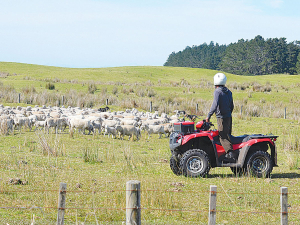
Farmers across parts of Southland and South Otago are continuing to deal with difficult conditions after a prolonged run of wet weather, with pressure building around feed supply, stock management, pasture damage, farm infrastructure and everyday workloads.
Federated Farmers says it welcomes Labour's commitment to reviewing the Sharemilking Agreements Act, calling on other major parties to do the same.
For Canterbury dairy farmers Sian Meijer and Rick Wobben, wearable technology has become one of their most valuable on-farm tools - helping manage 1850 cows across an expansive, high-performing dairy operation while improving efficiency, mating outcomes and day-to-day decision making.
Fonterra has unveiled its annual results for the 2026 financial year, posting $27 billion in revenue and close to $20 billion returned to New Zealand farmer owners and unit holders.
The first major update to the Dairy Cattle Code of Welfare in more than a decade has been released, marking what DairyNZ describes as an important step in ensuring animal welfare standards continue to evolve alongside scientific evidence and on-farm realities.