Damien O’Connor Criticises Budget 2026 as ‘Miserable’ for Rural New Zealand
A miserable budget that didn’t deliver much for anyone.
 increase font size
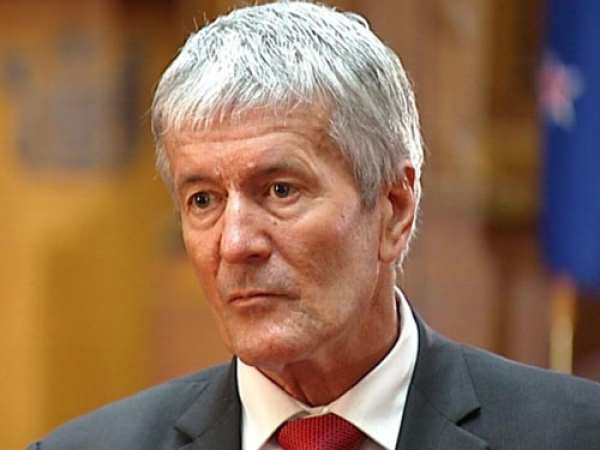 Agriculture minister Damien O'Connor says that prospects for the primary sector are bright despite the challenges of the pandemic.
Economic prospects for the primary sector are bright despite the significant challenges from Covid-19, says Agriculture Minister Damien O’Connor.
The latest Situation and Outlook for Primary Industries (SOPI) report forecasts food and fibre export revenue of more than $47.5 billion for the year ending June 2021, and a record $49.2 billion the following year.
“This strong performance is testament to the sector’s ability to adapt to keep businesses operating and workers in jobs,” O’Connor says.
“Producers are working to keep staff and communities safe from Covid and provide the food and fibre products needed at home and abroad. Our primary sector can be proud of the way it has responded as part of our broader community,” he said.
He adds that the ‘star performers’ for 2020 were the horticulture sector.
O’Connor says the sector’s export revenue is set to hit close to $7.1 billion, an increase of 8.9% from the previous year.
“It’s driven by successful harvests in early 2020 and continued strong demand for our fresh fruit and wine.”
He says that increases in export revenue are also expected for the arable sector for the year ending June 2021, on the back of a 23% increase from 2019.
O’Connor says export revenue for some sectors are forecast to drop for the year to June 2021 but are expected to bounce back even stronger for the year ending June 2022.
“Dairy export revenue is forecasted to decrease 4.6% to $19.2 billion for the year to June 2021, driven by weaker global dairy prices, as markets continue to deal with the impacts from Covid-19,” he said.
He says this should be offset by high demand for dairy products, particularly from China, to support strong sector profitability over the medium-term, with export revenue expected to reach $20.1 billion in the year ending June 2022.
O’Connor adds that meat and wool export revenue is expected to decrease 8% to $9.8 billion for the year ending June 2021.
He says this would mostly be due to food service closures from Covid-19, and competition from poultry and other lower priced proteins.
He adds that it’s expected to rebound to almost $10.1 billion the following year.
O’Connor says that while the impacts from Covid-19 will be seen for some time, New Zealand is well placed to recover.
“The government is committed to continuing its work with the food and fibres sector to tackle challenges brought about by Covid-19 and seize opportunities to help drive New Zealand’s economy.”
A miserable budget that didn’t deliver much for anyone.

National's decision to ‘dribble’ information about the NZ/India to Labour contributed to the delay in it deciding to supported the FTA.
New Zealand's primary sector is set to reach a record $62 billion in food and fibre exports next year.
When it comes to international trade, politicians from all sides of the aisle are united, says Labour's trade spokesman Damien O'Connor.
OPINION: The previous government spent too much during the Covid-19 pandemic, despite warnings from officials, according to a briefing released by the Treasury.


Federated Farmers has welcomed new rural policies released by ACT, saying they align closely with its own election priorities.

Rural Contractors NZ says proposed changes to land transport rules for agricultural vehicles are a welcome response by the Government to out of date regulations which have seen members hit with huge fines.
Alliance is calling for final applications for its 2027 Graduate Programme, with applications closing on Sunday 25 October.
Decades piloting planes has ensured vet and farmer David Hayes is focused on safety. So, after a serious accident while welding on farm, he is sharing his experience so others can learn from it.
Canterbury milk processor, Synlait Milk has confirmed Leon Fung as its chief executive officer.
OPINION: Making it easier to collect rainwater and use it to grow crops and livestock is a no brainer.