What Would Synlait Be Worth to Fonterra or a2 Milk?
Speculation of a possible joint move by Fonterra and a2 Milk to buy Synlait raises a much bigger strategic question, says agribusiness expert Dr Nic Lees.
 increase font size
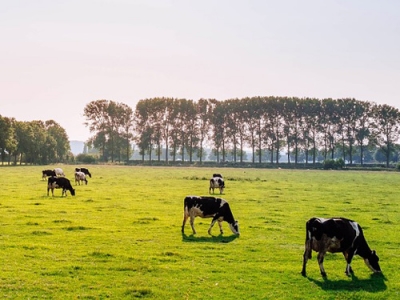 Research into improving phosphorus recovery and overall use efficiency remains urgent in the face ongoing and future supply and price volatility.
Research into improving phosphorus recovery and overall use efficiency remains urgent in the face ongoing and future supply and price volatility.
So says Lincoln University Professor of Biogeochemistry Leo Condron.
His work on recovering and recycling existing phosphorus addresses worldwide concern that finite reserves of readily accessible but non-renewable phosphate rock are being steadily exhausted as demand continues to increase.
He believes efforts to improve phosphorus use efficiency and recycling of phosphorus in waste will potentially benefit both phosphorus rich and phosphorus poor parts of the world.
Phosphorus fertiliser use has been concentrated in Europe, North America, India, China and parts of South America and Australasia, and consequent elevated levels of phosphorus in soil have contributed to declining water quality in many areas related to accelerated eutrophication.
On the other hand, large areas of Africa, Asia and South and Central America have had limited access to phosphorus fertilisers, and it is widely acknowledged that significant inputs of phosphorus and other nutrients are required to increase food production to meet ever increasing demand.
Only 10-50 percent of phosphorus applied as fertiliser is taken up by plants and removed in produce, while the rest remains in the soil. Professor Condron says mobilising this "legacy" phosphorus in soil could be achieved using new and novel combinations of plants and associated microbes in agricultural systems.
However this could have mixed results. While it may enhance plant uptake and reduce fertiliser requirement, it could also increase the risk of phosphorus loss in drainage. At least part of the increased pressure on phosphorus resources could also be alleviated by improved utilisation of fertiliser phosphorus and recycling of phosphorus contained in various agricultural and urban waste streams.
Prior to 2007 the price of phosphorus was relatively stable, but by 2008 the cost had increased four-fold due to a combination of factors related to supply and demand, and while the price has subsequently decreased it remains relatively high. This spike led to an urgent reassessment of phosphate rock reserves, and while some initial evaluations indicted that demand could exceed supply by 2030 (peak phosphorus), this has since been extended by at least 100 years.
Although phosphorus is found in many parts of the world, prior to the price increase it was not economic to mine many of the reserves. Professor Condron says that peak phosphorus won't happen anytime soon if new reserves are mined, but global supply and price are likely to be determined by the actions of Morocco, who control over 50 percent of known phosphate rock reserves.
Phosphorus plays an essential role in agriculture and global food production. Fertiliser was first made from phosphate rock in the mid-nineteenth century, and contributed to dramatic increases in crop productivity. The amounts of phosphorus in managed agricultural systems has changed significantly since then, with the benefits unevenly distributed around the world.
Speculation of a possible joint move by Fonterra and a2 Milk to buy Synlait raises a much bigger strategic question, says agribusiness expert Dr Nic Lees.

Lynnette Hudson's 30-year obsession with Pinot Noir was sparked working vintage in Burgundy, seeing how subtle changes in terroir were expressed in the glass. It was, she says, "an elightening moment in every way".
A four year trial has reaffirmed that mixing plantain into dairy pastures can help reduce nitrogen losses to freshwater while maintaining milk production and profitability, say researchers.
Twenty five secondary school students from around New Zealand recently completed a three day residential programme designed to explore career opportunities across the food and fibre production supply chain.
A Lincoln University student is set to become the first person to contest both the Young Viticulturist and the Young Winemaker national titles in one year.


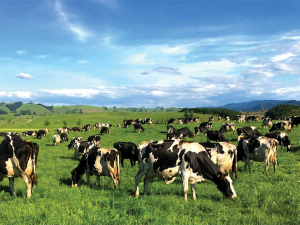
Most dairy regions around the country have had a pretty good season so far says Tracy Brown.
Rural leader Mark Hooper has been appointed as an independent director to the NZPork board, bringing extensive farming, governance and advocacy experience to the role.
Opportunity says its land value tax (LVT) is unlikely to force farmers into a position where asset sales or increased debt are required.
Milk powder prices are keeping farmgate prices up, helping processors offset the dip in milk fat prices.
Climate, nature and animal wellbeing make up Fonterra's refreshed sustainability roadmap released last week.
The Government is introducing a new nationwide rural recycling scheme that will significantly increase the recovery of farm plastics from March next year, Minister for the Environment Nicola Grigg announced today.