Paris Agreement: What Are the Costs and Returns to NZ?
OPINION: We are only weeks from the election, and my vote is looking for a home.
 increase font size
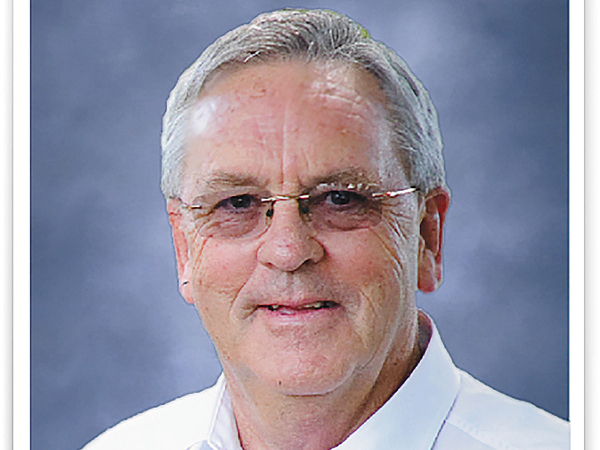 Owen Jennings
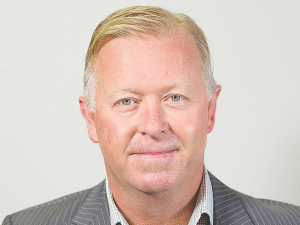
Farming leader and former MP Owen Jennings will represent New Zealand at the II Congreso Mundial de Ganadería Sostenible (II World Congress on Sustainable Livestock) in Spain next month.
The Congress will bring together farmers, scientists, policymakers, and industry leaders from across the globe to discuss how livestock farming can balance profitability with environmental stewardship and community well-being.
While the programme will feature world-renowned scientists such as Dr. Will Happer (Princeton University) and Dr Frank Mitloehner (University of California, Davis), Jennings' contribution is distinctive. He will present a farmer's perspective as a former farmer and founding member of the Methane Science Accord.
"International forums often lean heavily on theory and technical science," says Jennings.
"Much of the science relating to ruminant methane emissions is plain wrong. I will be pointing to IPCC claims that have been found to be outdated and erroneous. Curtailing methane is distracting, expensive and unnecessary. Farmers need to be central in shaping sustainable livestock policies."
Methane Science Accord chair, Global Farmer Roundtable representative and North Otago farmer Jane Smith says that Jennings' perspective is expected to resonate strongly.
"As farmers, we know naturally pasture-raised, free-range protein production is our strength. However, our sector is pushing for a costly matrix of chemical feed additives, boluses, and methane vaccines that risk both our naturally pasture-raised status and animal welfare codes - all in the name of preventing warming from methane that not even remotely possible to quantify.
"Expensive, intensive farming is not our competitive advantage.
"We will be seeking a global alliance of livestock producers to amend the Paris Accord much further than the inadequate Article 2.1.b by pushing for the removal of all biogenic methane reduction targets. This may well include rice growers in the future, which would be a powerful mandate indeed."
Smith and Jennings say they would be delighted if the coalition Government, Meat Industry Association, Beef+Lamb NZ, DairyNZ and Federated Farmers join them in this campaign, but will continue to forge on with or without their support, as time is of the essence.
"We won't be delayed by outcries of this affecting our trade. It is time to move on. Global food security, robust science and the protection of our naturally-raised protein systems outplay this, especially if we push for a global alliance.
"Livestock producers around the world need a much bolder position than going cap-in-hand asking for a split-gas approach. Food-producing stable biogenic methane emissions need to be acquitted or natural pasture-raised farming will be a thing of the past."
This Congress comes at a pivotal time, with debate intensifying both within New Zealand and worldwide about the diminutive role methane plays in climate change. Another significant event will be when Happer tours New Zealand in early December. The II World Congress on Sustainable Livestock take place in Extremadura, Spain, from 12-15 November 2025.
OPINION: We are only weeks from the election, and my vote is looking for a home.
OPINION: Back in April, the Intergovernmental Panel on Climate Change delivered an update that should have triggered an 8.5 magnitude earthquake in the world of climate change policy.
Centre right parties are backing policy positions pushed by three farmer lobby groups ahead of the general election.
Three farmer lobby groups are applying the blowtorch to political parties on key issues facing the primary sector ahead of the general elections.
A survey of 2000 farmers shows 94% of respondents believe that remaining in the Paris Agreement for climate change is not in the country's best interest.


Federated Farmers has welcomed new rural policies released by ACT, saying they align closely with its own election priorities.
Rural Contractors NZ says proposed changes to land transport rules for agricultural vehicles are a welcome response by the Government to out of date regulations which have seen members hit with huge fines.
Alliance is calling for final applications for its 2027 Graduate Programme, with applications closing on Sunday 25 October.
Decades piloting planes has ensured vet and farmer David Hayes is focused on safety. So, after a serious accident while welding on farm, he is sharing his experience so others can learn from it.
Canterbury milk processor, Synlait Milk has confirmed Leon Fung as its chief executive officer.
OPINION: Making it easier to collect rainwater and use it to grow crops and livestock is a no brainer.