Rural Mobile Coverage Worse After 3G Shutdown, Survey Finds
Mobile phone coverage and reliability are deteriorating in rural areas, and farming families are bearing the cost, according to a Federated Farmers survey.
 increase font size
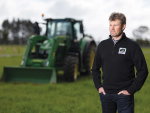
 Federated Farmers environment spokesman Colin Hurst.
Federated Farmers claims that the Otago Regional Council is charging ahead unnecessarily with piling more regulation on rural communities.
It says ORC councillors voted 7-5 yesterday to move forward with notifying its controversial draft Land and Water Plan on October 31.
It’s a poor decision that will result in even more regulation being piled onto Otago farmers in the coming months, Federated Farmers environment spokesman Colin Hurst says.
"The last thing farmers struggling through high interest rates, low payouts and drought conditions want to be waking up to is news that more red tape is likely on the way later this year."
A draft of the Regional Plan released last year included fertiliser caps, stock rate limits and new fencing requirements for most of the catchments in the Otago Region, according to the Feds.
Since that draft was released, central Government has made amendments to primary legislation, relaxing timeframes by which time new regional plans need to be developed.
The Government has also stated it intends to review the national direction councils must achieve, including the requirement to give effect to Te Mana o Te Wai.
ORC’s decision completely ignores the Government’s direction, Hurst says.
"Charging ahead with a draft plan will create a lot of uncertainty for Otago farmers.
"There is a strong chance it could be a big waste of ratepayer money. The Government is reviewing both the national freshwater direction and the entire RMA framework, so it could be that Otago is forced to go back to the drawing board in just a few short years to develop yet another regional rule set.
"Cabinet has extended the deadline for councils to implement freshwater plans until the end of 2027, so why on earth would ORC or other councils choose to push on?
"It’s extremely disappointing that ORC is galloping ahead, wasting ratepayers’ money and heightening farmer anxiety, when changes mean their plan will have a lifespan of barely two years."
Hurst is concerned other councils could also look to charge ahead in the same way as Otago.
"The Government has stated it wants to cut the red tape that’s choking farmers, including replacing the RMA with a framework more focused on property rights.
"It is clear the Government needs to do more to stop councils continuing to implement freshwater rules they themselves have stated they disagree with, and will soon change."
Mobile phone coverage and reliability are deteriorating in rural areas, and farming families are bearing the cost, according to a Federated Farmers survey.
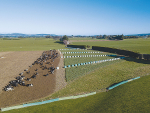
Central Otago District Council (CODC) has voted against a plan to spread treated sewage sludge from Cromwell and Alexandra on farmland near Lauder, a decision Federated Farmers says reflects strong opposition from rural residents.
Federated Farmers has called on Central Otago District Council (CODC) to drop or vote down a plan to truck sludge from Alexandra and Cromwell to farmland near Lauder, warning it would compound an "outrageous" situation created by a separate council's decision weeks earlier.
Federated Farmers says new legislation replacing the Resource Management Act will cut red tape, unlock investment and help grow New Zealand's export-led economy, after the Planning Bill and Natural Environment Bill passed their third reading in Parliament yesterday.
Leading figures from the major political parties will be questioned on their primary sector policies at the Rural Issues Debate at Mystery Creek Events Centre, Hamilton, on 30 September.

OPINION: New health and safety guidance unveiled by the Government recently provides farmers greater certainty about what is expected of them when managing risks on farm.

The National Animal Welfare Advisory Committee (NAWAC) is seeking public feedback on proposed changes to the Code of Welfare for Rodeos.
A New Zealand initiative supporting farmers to restore the health of grazing landscapes has received international backing through the Regenerative Fund for Nature, a global collaborative fund supporting regenerative agriculture and the communities that produce natural fibres for the fashion industry.
Combine premium New Zealand products, blend in a family ritual and what do you get? A world-class functional drink.
Entries are now open across eleven regions for the 2027 New Zealand Dairy Industry Awards (NZDIA).
Safer Farms is urging farmers to make sure everyone working on farm has safe, suitable footwear for the job.