Why Now Is the Time to Plan Farm Succession, Findex Says
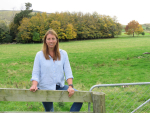
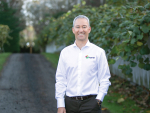
OPINION: Succession and long-term planning are perennial topics because it is perpetually sidelined on busy farms.
 increase font size

Singaporean conglomerate, Olam International has succeeded in a full takeover of New Zealand Farming Systems Uruguay.
Olam purchased 85.93% of NZFSU shares in July last year. However, the shareholding fell short of the 90% stake it needed to acquire to trigger a compulsory acquisition of the remaining shares.
On October 18 this year, the company made a full cash takeover offer for 75c/share for shares it did not own. The offer was accepted.
NZS was established in late 2006 with the objective of applying New Zealand's expertise in pastoral dairy farming to high quality, low cost and under-utilised farmland in Uruguay.
The company is the largest single producer of milk in Uruguay, accounting for approximately 6% of national production. The company's medium term plan projects it to be milking 48,000 cows and producing approximately 17% of the total milk currently produced in Uruguay by the 2013-14 season
It has completed the construction or upgrading of 30 dairy sheds, 62 farm workers' houses, 11 irrigation dams, 470km of roading, and reticulation of 65km of high tension wiring for electricity supply required for dairy shed and irrigation pump.
OPINION: Succession and long-term planning are perennial topics because it is perpetually sidelined on busy farms.
Farms across the upper North Island are trialling different pasture mixes as part of a research programme that aims to build greater resilience into farming systems.
Election years are always a concerning time for farmers, according to DairyNZ chair Tracy Brown.
Matt Collier, Probiotic Revolution, says calves will drink a lot of milk once-a-day with their probiotic Calf Xtreme.


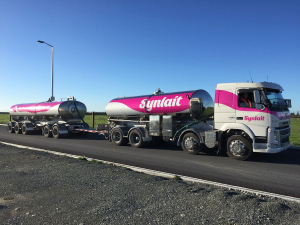
Synlait has swung to second-half profit as operations stabilise, but the dairy processor still posted a $75.4m annual loss.
LIC shareholders have elected a new North Island representative to the co-operative's Board, along with five representatives to its Shareholder Reference Group (SRG), following the company's Annual Meeting held in Invercargill.
Farmers across parts of Southland and South Otago are continuing to deal with difficult conditions after a prolonged run of wet weather, with pressure building around feed supply, stock management, pasture damage, farm infrastructure and everyday workloads.
Federated Farmers says it welcomes Labour's commitment to reviewing the Sharemilking Agreements Act, calling on other major parties to do the same.
For Canterbury dairy farmers Sian Meijer and Rick Wobben, wearable technology has become one of their most valuable on-farm tools - helping manage 1850 cows across an expansive, high-performing dairy operation while improving efficiency, mating outcomes and day-to-day decision making.
Fonterra has unveiled its annual results for the 2026 financial year, posting $27 billion in revenue and close to $20 billion returned to New Zealand farmer owners and unit holders.