
Red Meat Farmers Welcome Labour's Emissions Pricing Pledge
Red meat farmers are welcoming Labour’s plan to review the Emissions Trading Scheme and not to campaign on pricing agricultural emissions.
 increase font size
 Climate Change Commission Chief Executive Jo Hendy.
The Climate Change Commission has recommended maintaining the current New Zealand Emissions Trading System (NZ ETS) settings but warns of a potential unit shortfall as early as 2028.
The Commission says a shortfall would mean that more targets could need to be auctioned in the future to enable the NZ ETS to function well while remaining aligned with emissions targets.
Jo Hendy, chief executive of the Climate Change Commission, says the advice is designed to help the Government make regular updates as needed.
"We've identified a potential future unit shortfall, which is concerning but uncertain," Hendy says. "Our view is that the best option for now is to hold auction settings steady, get ready to act if needed, and reassess next year when better information is available."
She says the recommendations aim to avoid changes that could further unsettle the market.
"While this advice is focused on making the NZ ETS work as well as it can given its existing architecture, bigger reforms are needed for the NZ ETS to be an effective tool in the 2030s. We advise the Government to start developing these reforms carefully and transparently, and with consultation," says Hendy.
Hendy says that for an ETS to support an orderly transition to meet emissions targets, the emissions price needs to steadily rise over time to encourage the shift to low-emissions options.
"In contrast, a unit shortfall could cause volatile price spikes - which could force emissions reductions through lower production or factory closures rather than upgrading to lower emissions technologies and processes," she says.
"A shortfall could also put the Government under pressure to make ad hoc market interventions, which in the past has been bad for confidence. The Government can get ahead of that by publicly consulting on options to address a future shortfall."
These recommendations are conditional on the next settings advice and update being in 2027, which the Government has recently confirmed will go ahead.
NZ ETS auction settings shape expectations and market confidence, which matters for investment decisions, but they have limited reach. Auctioned units are a small share of total units in the system, and the NZ ETS covers less than half of Aotearoa New Zealand’s emissions. This means settings are important, but not decisive on their own.
"Annual auction settings can’t solve the bigger design challenges with the NZ ETS. The scheme covers around 40% of domestic emissions, and that share is declining," Hendy says.
"Under the current architecture, by the mid-2030s the NZ ETS will struggle to provide an investment signal for either decarbonisation or forestry," she adds.
"We’ve previously advised that the Government needs to start a transparent and consultative process to determine what an effective NZ ETS in the 2030s will look like.
"Investors need credible, well-signalled and consistent policies on the NZ ETS - and on climate change generally - to have confidence that investments in emissions reduction will generate returns."
Red meat farmers are welcoming Labour’s plan to review the Emissions Trading Scheme and not to campaign on pricing agricultural emissions.
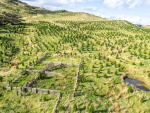
The New Zealand Institute of Forestry (NZIF) says unnecessary changes to New Zealand’s Emissions Trading Scheme (NZ ETS) will seriously erode investor confidence and result in significant reductions in forest planting rates.
New Zealand's Emissions Trading Scheme (NZ ETS) encourages afforestation while not achieving climate goals, says a new report released by the Parliamentary Commissioner for the Environment, Simon Upton.
Conversions of sheep and beef farms to forestry have slowed, however new research from Beef + Lamb New Zealand (B+LNZ) suggests land of value for food production remains at risk.
OPINION: I recently wrote an open letter to the Prime Minister because at a recent Federated Farmers meeting, Chris Luxon told me wind and solar generation is not subsidised.



Federated Farmers has welcomed new rural policies released by ACT, saying they align closely with its own election priorities.

Rural Contractors NZ says proposed changes to land transport rules for agricultural vehicles are a welcome response by the Government to out of date regulations which have seen members hit with huge fines.
Alliance is calling for final applications for its 2027 Graduate Programme, with applications closing on Sunday 25 October.
Decades piloting planes has ensured vet and farmer David Hayes is focused on safety. So, after a serious accident while welding on farm, he is sharing his experience so others can learn from it.
Canterbury milk processor, Synlait Milk has confirmed Leon Fung as its chief executive officer.
OPINION: Making it easier to collect rainwater and use it to grow crops and livestock is a no brainer.




