New pasture guide launched to support farmers in a changing climate
A new publication has been launched that offers a comprehensive and up-to-date resource on commercially available grazing pasture species in New Zealand.
 increase font size

Is it worth applying nitrogen fertiliser to speed pasture recovery post drought?
A Beef + Lamb New Zealand field day in North Otago, earlier this month, heard it’s a hard question to answer.
“The issue is how long has it been dry and whether there’s enough nitrogen [in the ground] to get that initial response,” AgResearch’s David Stephens said.
If there is enough N in the ground, grass will grow 450kgDM/ha from 15mm of rain, a 30:1 response. If there isn’t, the growth from that moisture may be halved.
Fellow speaker Graham Kerr said remember nitrogen is simply a growth multiplier. “If you’re growing zero, you’ll still get zero. If you’re growing a bit, you’ll get a bit more. If it’s growing well, then you’ll get a lot more.”
Whether the response to fertiliser would be economic would “depend on how desperate [for feed] you are,” he added.
“It’s a tricky one because you don’t know how much is going to be released from the soil. It really is quite variable. In general if you’re desperate for feed you put it on because by the time you see it’s needed it’s too late.”
If nitrogen fertiliser is applied it’s imperative to wait at least three weeks, preferably four, for pasture to use it. Grazing sooner risks nitrate poisoning and curtailing the plant’s growth response.
A new publication has been launched that offers a comprehensive and up-to-date resource on commercially available grazing pasture species in New Zealand.
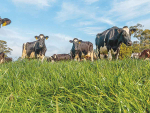
New Zealand farmers know that pastoral fortunes can shift rapidly once summer’s extreme dryness gives way to cooler, wetter autumn conditions.
Precision application of nitrogen can improve yields, but the costs of testing currently outweigh improved returns, according to new research from Plant and Food Research, MPI and Ravensdown.
Pasture renewal is the process of replacing older, less productive pastures with a completely new pasture.
A New Zealand developed and manufactured nitrogen efficiency booster is growing in popularity in China where it is used to improve potato crop production.



Now in its fourth year, the 2026 Fencing Industry Awards, formed part of the proceedings of the FCANZ Conference, held in Nelson during August.

DairyNZ deputy chair Cameron Henderson has been re-appointed unopposed for another term.
OPINION: The stats speak for themselves.
Farms across the upper North Island are trialling different pasture mixes as part of a research programme that aims to build greater resilience into farming systems.
Election years are always a concerning time for farmers, according to DairyNZ chair Tracy Brown.
The Ballance Farm Environment Awards are coming to the West Coast of the South Island.