
Fines For Velveting Without Pain Relief, Illegal Slaughter and NAIT Breaches
Three men have been sentenced in District Courts after Ministry for Primary Industries prosecutions over animal welfare, food safety and cattle tracing offences.
 increase font size
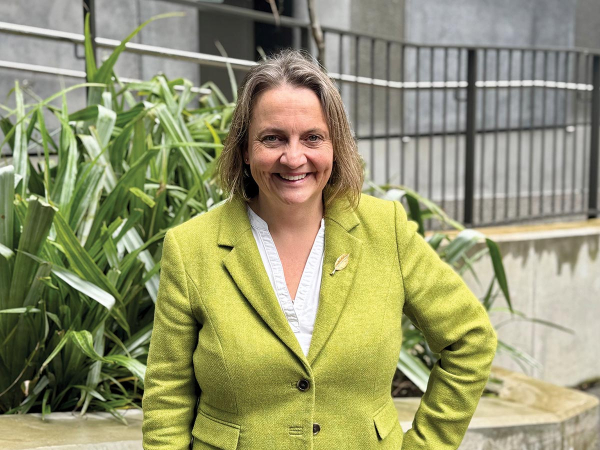 MPI’s top trade negotiator, Diana Reaich.
The head of the Ministry for Primary Industries (MPI) trade and international relations group says New Zealand is well-positioned to secure trade access and compete internationally as the world becomes more complicated, demanding and uncertain.
Diana Reaich is a highly experienced trade negotiator and led the team that helped secure a range of primary sector outcomes under the India FTA. Prior to that she spent more than 20 years with the Ministry of Foreign Affairs and Trade (MFAT), including a stint as NZ’s Ambassador to Belgium.
She told Rural News that, alongside helping secure FTAs, her team is focused on helping exporters make the most of those agreements by navigating market requirements and eliminating non-tariff trade barriers (NTBs).
She says the focus is to keep high-value trade flowing, reduce complexity for exporters and sustain the trust advantage New Zealand has built over many years.
One of the complexities is the rising numbers of non-tariff barriers (NTBs) our exporters face. She said that NTBs are really just another way of talking about other countries’ rules and those rules that can inhibit in various ways the quantity and flow of exports to a given country. It’s estimated that such rules or NTBs cost NZ around $10 billion annually.
Such NTBs include the need for apple orchards to manually check pest traps positioned in certain locations determined by markets, variations in chilled meat requirements, and different labelling for wine.
“NTBs are not new but they are getting more diverse and complicated and we are seeing, for example, countries in South-East Asia introducing more sophisticated rules or changing them for different reasons. Our work is to help exporters navigate that complexity and, where possible, negotiate alternative means of meeting them,” she says.
Reaich says it’s evident that food security is high on the agenda of many countries and some of the rules that impact on NZ are about securing domestic supply. But she points out that this is also an opportunity. NZ produces some of the highest quality primary products in the world, with our strategy demonstrating how our exports can complement export markets’ domestic production and support their food security.
“These are the sort of conversations that we are now having with many countries,” she says.
Longstanding trading relationships can provide a strong foundation for working through market access issues, but new requirements can arise in any market.
Recent Canadian rules that restricted NZ’s dairy exports illustrate this. Reaich says MPI invests heavily in developing strong relationships with overseas regulators which help NZ engage with trading partners to understand and work through new rules and rule changes.
“But with each new market, it means a different relationship and a different way of doing business, so we are having to learn to work in new ways in these markets,” she says.
Three men have been sentenced in District Courts after Ministry for Primary Industries prosecutions over animal welfare, food safety and cattle tracing offences.

OPINION: The United States wine market has changed forever, and companies cannot use same old playbook, said Erin Kirschenmann at the New Zealand Wine 2026 Wine Business Forum in August.
Chinese beef trade quotas and a looming suspension of Brazilian beef imports into the European Union are expected to reshape global beef trade flows over the remainder of 2026, with implications for New Zealand exporters, according to Rabobank's Q3 Global Beef Quarterly report.
Testing confirms H5 bird flu in a single northern giant petrel, found dead on a remote Cape Palliser beach in the Wairarapa, says Dr Mary van Andel, the Ministry for Primary Industries' (MPI) Chief Veterinary Officer.
The apple sector is working with the Government to unlock access to two key markets that could bring millions in revenue for apple growers.


The head of the Ministry for Primary Industries (MPI) trade and international relations group says New Zealand is well-positioned to secure trade access and compete internationally as the world becomes more complicated, demanding and uncertain.

Northland farmer Greg Collins has taken over as chair of the Fonterra Co-operative Council.
The head of global dairy organisation, International Dairy Federation (IDF) is calling for accurate use of ‘dairy' term.
Be alert but not alarmed about El Niño. That’s the message from Professor Danny Donaghy, deputy head of the Massey University’s school of agriculture and the environment.
Farmers opposing rural trader Farmlands’ investment in AgriZeroNZ are warning the co-operative board not to brush away their concerns.
Farmers will wait it out like the rest of the country as the composition of the incoming government remains up in the air.