Move over ham, here comes lamb
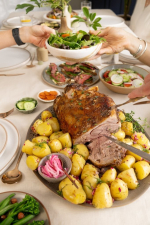
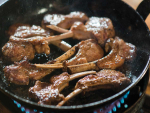
It’s official, lamb will take centre stage on Kiwi Christmas tables this year.
 increase font size

BEEF + LAMB says the number of lambs tailed across New Zealand is down by 4.7% compared with last spring.
A total of 25.5 million head were tailed – 1.3 million fewer than 2012 – making the current lamb crop the second smallest in nearly 60 years. Only 2010-11 was lower.
B+LNZ economic service chief economist Andrew Burtt says the lamb crop figure is actually higher than many may expect, given the impact of last season's drought on ewe numbers and ewe condition at mating. "But we're seeing good lamb thrift compared to last year – thanks to lower stocking rates and favourable pasture growth in most regions. If pasture continues growing at current rates, it could trigger early store sales from regions that are traditionally summer dry."
When analysed by island, the North Island lamb crop is down 7.4% and the South Island down by 2.3%.
The smaller lamb crop impacts on export processing numbers, which are expected to drop 6.8% to 19.5 million head, making 2013-14 the third lowest export lamb total since 1960.
"However, the average export lamb slaughter weight is expected to increase 2.3% to 18.4kg, due to lower stocking rates and more available feed. This per-head weight increase won't be enough to offset the drop in numbers and we still expect total lamb production to be down by approximately 5%," Burtt says.
The national ewe lambing percentage was 120.8%– down 3.8 percentage points on last year's record 124.6%. Again, the North Island took the biggest hit – down 5.8 percentage points to 117.6%. The South Island's 123.6% represented a fall of only 2.1 percentage points.
Burtt says a noteworthy feature of spring 2013 was the significant decrease in the number of hoggets mated. "Many farmers opted to limit the numbers of hoggets put to the ram, due to the tight feed situation at mating and hogget weights. The result is only 1.13 million lambs from hoggets – a 17% drop."
Unsurprisingly, mutton processing numbers are expected to be well back on last season, down 20% to 3.3 million. This reflects the drought-driven high cull of ewes during 2012-13.
The Lamb Crop survey covers about 500 commercial sheep and beef farms, which are statistically representative of New Zealand's commercial sheep and beef farms. The full report is on the B+LNZ website at: Lamb Crop 2013
It’s official, lamb will take centre stage on Kiwi Christmas tables this year.
Alliance Group has secured greater access for chilled beef exports to China, following approval for two of its processing plants to supply the market.
There's been a dramatic and larger than expected drop in the number of lambs produced in New Zealand.
Beef + Lamb New Zealand (B+LNZ) says recent criticism from the UK’s Secretary of State for Environment, Food and Rural Affairs regarding New Zealand’s animal welfare standards are unfounded.
After a tough 18-plus months, there is now an air of optimism in the sheepmeat market as we hit the start of the 2024-25 export season.


Now in its fourth year, the 2026 Fencing Industry Awards, formed part of the proceedings of the FCANZ Conference, held in Nelson during August.

DairyNZ deputy chair Cameron Henderson has been re-appointed unopposed for another term.
OPINION: The stats speak for themselves.
Farms across the upper North Island are trialling different pasture mixes as part of a research programme that aims to build greater resilience into farming systems.
Election years are always a concerning time for farmers, according to DairyNZ chair Tracy Brown.
The Ballance Farm Environment Awards are coming to the West Coast of the South Island.