"I'm not a high-tech farmer. I just concentrate on getting the basics right."
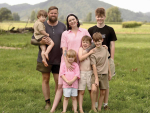
Dean and wife Lucy sharemilk 350 cows on 'Paatara', a 158ha farm situated northeast of Taumarunui and owned by the Te Uranga B2 Incorporation.
Good environmental stewardship is a crucial feature of Te Uranga's operations, and the incorporation and the Marshalls have always strived to improve sustainability on Paatara.
Judges of the 2013 Horizons Ballance Farm Environment Awards (BFEA) were clearly impressed with the operation, awarding it the LIC Dairy Farm Award. This award recognises "the dairy farmer who demonstrates in a practical way the choices that have been made to farm for the long term". It encompasses the wise use of land, labour and capital resources and also takes into account the effects of dairy farming on both surface and groundwater and its impact on soil properties.
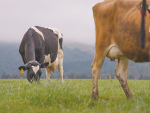
Paatara produced almost 1000kgMS/ha from a 115ha milking platform in 2011/12. The balance of the rolling to steep property is either retired and planted in natives, or used as support grazing.
BFEA judges say the farm was achieving above average production for the type of country. They praised the good stock health and conception rates on the property, noting that all waterways were either fenced or will be fenced according to documented plans.
Judges also commended the strong working relationship between the Marshalls and Te Uranga committee of management member Vonda Houpapa.
Dean says they entered the Horizons Ballance Farm Environment Awards because they wanted to get feedback on the operation "and gauge how we were doing compared to other farms".
He says winning the LIC Dairy Farm Award was a good endorsement of the management system employed on Paatara and the strong focus on sustainability.
"We run a low input system that capitalises on New Zealand's ability to grow grass. Pasture management is key and the aim is to fully utilise whatever we can grow."
The Marshalls, now in their 11th season with Te Uranga, also strive to support their staff as much as possible.
"We are full of encouragement for people who want to enter this industry."
Dean says being involved in the Ballance Farm Environment Awards was highly beneficial.
"We got some great feedback from the judges and the whole judging process was very constructive."
He and Lucy also enjoyed mingling with other competitors on awards night. "It was good to find out what other people are doing on their farms."
He says he would certainly encourage other farm owners and sharemilkers to enter the competition.
"Lucy and I learnt a lot from it. If you really want to make it worthwhile, the key thing is to be open and honest with the judges about what you are doing and what you hope to achieve."
Entries for the 2014 Ballance Farm Environment Awards are now open. Entering the competition is easy and entry forms are available at www.bfea.org.nz
Entries for the Horizons region close soon.
More information on the 2014 Ballance Farm Environment Awards, including regional closing dates, can be found on the New Zealand Farm Environment Trust website.