It's The Margins That Matter
OPINION: It appears to be difficult for people who haven’t tried to run a business to understand the difference between assets and cash.
 increase font size
 DairyNZ chair Jim van der Poel.
This week, leaders from DairyNZ, Beef + Lamb New Zealand (B+LNZ) and Federated Farmers met to discuss emissions pricing.
Leaving it until the last minute, the meeting comes the week before consultation closes on the Government’s proposed emissions pricing plan and follows some criticism that the three groups – via He Waka Eke Noa’s proposal to government – have not advocated strongly enough on farmers’ behalf.
DairyNZ chair Jim van der Poel says a united voice on emissions pricing is the best way to ensure positive policy outcomes for farmers.
“All three organisations have reaffirmed nine core principles that we will all be raising in our submissions and through the He Waka Eke Noa partnership,” he says.
The organisations claim the Government’s emissions pricing proposal differs significantly from the He Waka Eke Noa partnership’s recommendations.
The recommendations were designed as a whole-farm system approach to reduce emissions, meet targets and give recognition and reward for on-farm planting.
Meanwhile, the Government’s plan includes alternatives to He Waka Eke Noa recommendations, including an interim processor levy as a transitional step; some collective reporting to begin with; and sequestration recognised for riparian and indigenous vegetation.
“Our organisations are all united in our determination to get the best possible outcome we can and will continue to work closely together as we advocate for farmers,” says B+L NZ chair Andrew Morrison.
Federated Farmers chair Andrew Hoggard said individual organisations would continue to raise sector specific issues.
The nine core principles that will be raised directly with the Government are:
1. The current methane targets are wrong and need to be reviewed. Targets should be science-based, not political, and look to prevent additional warming.
2.The methane price should be set at the minimum level needed and be fixed for a five-year period to give farmers certainty.
3. Any levy revenue must be ringfenced and only be used for the administration of the system, investment in R&D, or go back to farmers as incentives. Administration costs must be minimised.
4. The future price should be set by the Minister on the advice of an independent oversight board appointed by all He Waka Eke Noa partners.
5. The system must incentivise farmers to uptake technology and adopt good farming practices that will reduce global emissions.
6. All sequestration that can be measured and is additive should be counted. We stand by what was proposed by the He Waka Eke Noa partnership on sequestration.
7. Farmers should be able to form collectives to measure, manage, and report their emissions in an efficient way.
8. Farmers who don’t have access to mitigations or sequestration should be able to apply for temporary levy relief if the viability of their business is threatened.
9. We will not accept emissions leakage. The way to prevent that happening is by getting the targets, price, sequestration, incentives, and other settings right.
OPINION: It appears to be difficult for people who haven’t tried to run a business to understand the difference between assets and cash.

The terrible floods that hit the Wairarapa may have subsided, but the danger to farmers still exists, according to local Federated Farmers president Rob Hickson.
Will a stronger, more coordinated voice help rebuild confidence and improve returns in the wool sector?
Farmers can spend less time on paperwork, thanks to a new data sharing agreement between DairyNZ’s DairyBase and LIC’s MINDA software.
New Zealand's pest problem has reached crisis point, according to Federated Farmers' second National Pests Survey, which shows farmers are spending more money and effort on control — yet pest numbers keep climbing faster than they were two years ago.

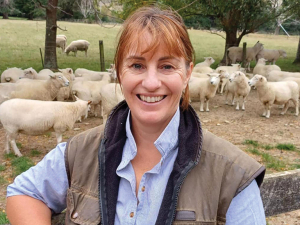
B+LNZ's Wormwise veterinarian Mary Bowron has won the Best Sheep and Beef Vet of the Year Award in recognition of her outstanding contribution to New Zealand’s sheep and beef sector.
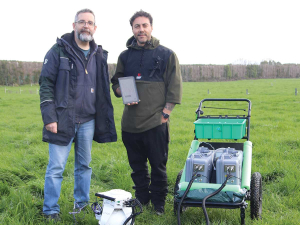
Researchers at Massey University are using a special piece of scientific equipment to improve the measurement of greenhouse gas emissions from pasture soils.
More signs of a booming kiwifruit sector.
OPINION: David Seymour and James Meager's plan to make it easier for farmers and orchardists to operate drones can best be described a 'courageous' move.
New Zealand wool is reaching new heights as air filtration companies move away from synthetic products to biodegradable alternatives.
Opuha Dam's ability to protect South Canterbury communities from major flooding has taken a significant step forward, with Opuha Water Limited (OWL) successfully commissioning a new outlet valve capable of releasing record volumes of water from the dam ahead of a weather event.