
Feds Back National’s 19 Farming National Standards
National’s pledge to introduce 19 new national standards shows the party is serious about getting Wellington out of farming, Federated Farmers says.
 increase font size
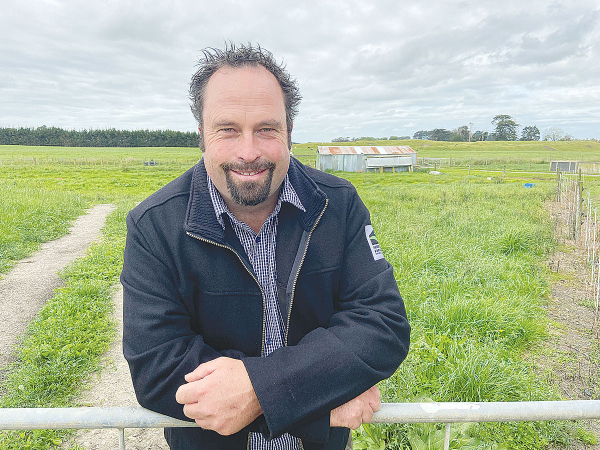 Federated Farmers banking spokesperson Richard McIntyre.
Farmers want the Commerce Commission to investigate whether pursuit of net-zero strategies and targets by New Zealand banks breaches competition rules.
In an eight-page letter to the Commerce Commission yesterday, Federated Farmers is requesting an investigation into potential anti-competitive and cartel-like behaviour.
The letter signed by Federated Farmers banking spokesman Richard McIntyre names five major banks that dominate the agricultural lending market: BNZ, ANZ, ASB, Westpac, and Rabobank.
“The alignment of net-zero strategies and targets among these five banks raises serious concerns about potential cartel-like behaviour and/or conduct that that could significantly lessen competition in the agricultural lending sector,” he says.
“Of particular concern are the banks’ commitments under the Net-Zero Banking Alliance (NZBA).
“The NZBA’s overarching goal of transitioning financial institutions to net-zero emissions by 2050 has introduced stringent guidelines that encourage alignment among member banks. This alignment risks creating coordinated lending practices that disadvantage high-emission sectors such as agriculture, transport, and mining. The consequential impact will likely reduce competition for banking products in these sectors, resulting in higher borrowing costs and stricter lending terms.
“This letter formally requests that the Commission investigates whether the coordinated pursuit of net-zero strategies and targets by New Zealand banks, including NZBA-aligned practices, contravenes the Commerce Act. I provide evidence to support these concerns.’
The Net-Zero Banking Alliance is a global coalition of financial institutions committed to aligning their lending portfolios with the Paris Agreement’s 1.5°C global target pathway and net-zero greenhouse gas emissions by 2050. (Link 1) The NZBA guidelines require members to address Scope 1 (direct emissions), Scope 2 (indirect emissions from energy use), and Scope 3 (emissions from financed activities) across most financed emissions.
In New Zealand, each of the five banks that dominate the agricultural lending market are either directly members of the NZBA or are indirectly affiliated with the NZBA through their parent companies: together these five banks make up 97.3% of the agricultural lending market.
Federated Farmers point out that these banks reference their NZBA obligations (as well as other net-zero strategies and outcomes) in various sustainability reports and other collateral which demonstrates a clear commitment to the NZBA's principles and targets. Some of the banks have already stated their targets for reductions in financed agricultural emissions by 2030.
The letter outlines each bank’s connection to the alliance.
BNZ, which has 21.4% share of the ag lending market, has set a dairy emissions reduction target of 11% for financed biological emissions by 2030 (against a 2022 baseline).
ANZ has 24% share of the agricultural lending market. ANZ has not yet set specific targets for agricultural lending. ASB has 16.7% share of the agricultural lending market. ASB has also not yet set specific targets for agricultural lending.
Westpac Group’s has set a 10% target reduction in scope 1 land management financed emissions for New Zealand dairy by 2030 (from a 2021 baseline) and a 9% target reduction in scope 1 land management financed emissions for New Zealand beef and sheep by 2030 (from a 2021 baseline): Westpac has 14.1% share of the ag lending market.
Rabobank has set a target of a 12% reduction in financed emissions for New Zealand dairy by 2030 and has 21.1% share of the ag lending market.
“It is clear that all five dominant banks have adopted NZBA-aligned practices, and some have published explicit and comparable emissions reductions targets.
“In our view, the way the banks have collaborated through initiatives like the NZBA in pursuit of these strategies and targets raises significant concerns about coordinated anti-competitive conduct in the agricultural lending sector. I request that the Commission investigates the banks’ conduct to determine whether breaches of the Commerce Act may have occurred.”
National’s pledge to introduce 19 new national standards shows the party is serious about getting Wellington out of farming, Federated Farmers says.

Mobile phone coverage and reliability are deteriorating in rural areas, and farming families are bearing the cost, according to a Federated Farmers survey.
Central Otago District Council (CODC) has voted against a plan to spread treated sewage sludge from Cromwell and Alexandra on farmland near Lauder, a decision Federated Farmers says reflects strong opposition from rural residents.
Federated Farmers has called on Central Otago District Council (CODC) to drop or vote down a plan to truck sludge from Alexandra and Cromwell to farmland near Lauder, warning it would compound an "outrageous" situation created by a separate council's decision weeks earlier.
Federated Farmers says new legislation replacing the Resource Management Act will cut red tape, unlock investment and help grow New Zealand's export-led economy, after the Planning Bill and Natural Environment Bill passed their third reading in Parliament yesterday.



National’s pledge to introduce 19 new national standards shows the party is serious about getting Wellington out of farming, Federated Farmers says.
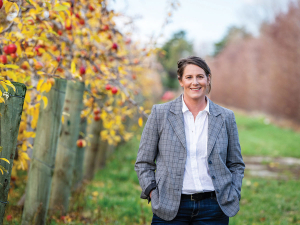
The National Party’s policies to make it easier to grow fresh vegetables, secure reliable water and energy and simplify farm planning are practical changes that will give growers the confidence to invest, according to Horticulture New Zealand (HortNZ).
Fonterra Co-operative Group chief financial officer Andrew Murray has resigned to take up a role outside the dairy giant.
A major move is about to get underway to improve the quality and viability of dairy beef and cattle in NZ.
Veterinarians say changes to the code of welfare for dairy cattle provides a positive foundation for improved cattle welfare across the country.
Today, 15 October, is the International Day of Rural Women, which recognises rural women’s contribution to farming, communities and the environment.