Southerly Winds Hit Taranaki Dairy Pasture Growth
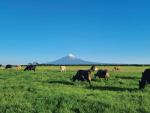
A spate of southerly winds bringing cold temperatures has presented challenges for Taranaki dairy farmers.
 increase font size
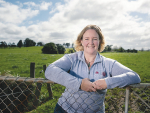
 Phil Journeaux.
A leading farm consultant says farmers are becoming frustrated at the confusing advice they’re getting on how to deal with greenhouse gas (GHG) emissions.
Phil Journeaux of AgFirst says, on the whole, farmers are willing to change. However, the advice they are getting is not helping them do this. He claims a lot of this advice is simplistic and shows a lack of understanding of how it can be applied on the farm.
Journeaux believes real effort needs to be made in presenting the known science on GHG emissions in terms of how it fits into a farm system. He says there is a lack of truly independent advice to farmers – something that used to happen in the old days of MAF.
He pointed to Ireland where there is Teagasc – a state owned advisory and research organisation, which still offers genuine independent advice to farmers.
“Farmers in NZ are getting bombarded from a whole range of information from different sources,” Journeaux told Rural News.
“I am involved in running some seminars for rural professionals at the moment on GHGs and I have to say at this stage some rural professionals understand it well, but most don’t. I think there is big learning curve for them so they – in turn – can then start and work with their clients and help them understand it.”
Journeaux has, for the last three years, been involved with developing and modelling a range of changing farms systems and how they might cope with the GHG targets and – in particular – what effect this may have on profitability.
“In a general sense, we have found that we can reduce GHG emissions by between 2 and 10% -- depending on how we change the system, which often involves reducing stocking rates,” he explains. “In some instances, we have found it is actually possible to improve the farm profitability, but in most cases the modelling suggests reduced profitability.”
Journeaux says to make any big reduction of GHG emissions on farm, improving animal performance and reducing stock numbers seems to be the answer.
The work he’s been doing is on both sheep and beef, and dairy farms. Journeaux adds that, in the absence of new technology, land use change – planting trees would be an option.
“There are big implications around that in terms of changing land use and – as people are well aware – there is a movement currently to buy sheep and beef farms and plant them in trees. But this comes with economic and social change.”
Journeaux says looking at the expansion of the dairy industry in the 1990s and 2000s it seems, in hindsight, that some farms ended up in places that were not particularly conducive to dairy farming.
A spate of southerly winds bringing cold temperatures has presented challenges for Taranaki dairy farmers.
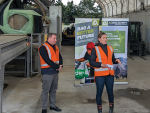
Environment Minister Nicola Grigg has announced details of a new rural plastics recycling scheme.
Surprised, humbled and quite thrilled. That’s the reaction of James Allen, one of the founding partners and now chief executive of AgFirst, on being made a life member of the Institute of Rural Professionals.
The Ballance Farm Environment Awards are coming to the West Coast of the South Island.
Climate, nature and animal wellbeing make up Fonterra's refreshed sustainability roadmap released last week.


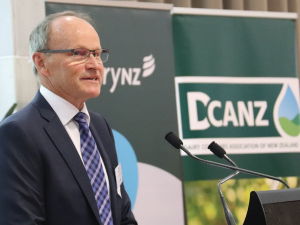
Dairy processors are ready to further boost New Zealand’s export earnings but want the incoming government to match their ambition with good policy.

Massey University is best placed to solve the “problems” facing the dairy industry, says vice chancellor, Pierre Venter.
Synlait's longest serving employee – a man who joined the Canterbury-based milk processor even before it began processing milk – is now its newest executive.
A dairy industry leader believes eradicating the common and costly disease, Bovine Viral Diarrhoea (BVD) is within reach.
A farmgate milk price of $10/kgMS this season is firming up as milk powder prices soar and the New Zealand dollar weakens.
Federated Farmers has welcomed new rural policies released by ACT, saying they align closely with its own election priorities.