Red Meat Farmers Welcome Labour's Emissions Pricing Pledge
Red meat farmers are welcoming Labour’s plan to review the Emissions Trading Scheme and not to campaign on pricing agricultural emissions.
 increase font size
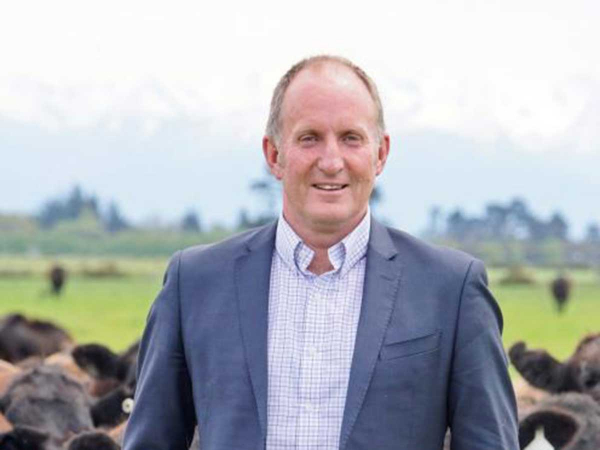 Beef + Lamb New Zealand chairman Andrew Morrison.
DairyNZ chairman Jim van der Poel claims not too many farmers are keen on an Emissions Trading Scheme (ETS).
He told Rural News that at the first few farmer meetings last week, "a vast majority" agreed with the other two options on the table - a farm-level levy and processor-level hybrid levy.
Van der Poel spoke at meetings in Waikato and Bay of Plenty last week. Discussions were "constructive".
"Once people get to know what we are seeking, they start to engage," he says.
Van der Poel says farmers realise that under an ETS, costs will escalate.
"It will become another tax; not too many people think an ETS is the best option."
The Primary Sector Climate Action Partnership (He Waka Eke Noa), which includes DairyNZ and B+LNZ, will report its recommendations to Ministers by May 31.
Van der Poel says the two options proposed by the partnership would deliver more positive outcomes for farmers and New Zealand than the NZ ETS.
"A farm-level levy and processor-level hybrid levy are more practical and reward positive change, while still achieving environmental outcomes.
"Some of the money raised will be invested back into R&D and on-farm work to reduce emissions."
Following initial farmer feedback on the options in December, the partners are also putting forward a two-phased approach, starting with the processor-level hybrid levy option and transitioning to a farm-level system in future.
B+LNZ chairman Andrew Morrison says doing nothing is not an option.
"If we don't move on this, the Government will put agriculture in the NZ ETS. They have already put this into legislation but have agreed to listen if we come up with a credible alternative," he says.
"We know this is a challenging and uncertain time for farmers but we need to keep going with this consultation and find the right solution," he says.
"We pushed hard for as long an extension as possible and the Government agreed to a month - this was the longest they felt fitted with their legislative timeframe. It's not ideal, but going for longer and ending up in the ETS is also far from ideal."
Red meat farmers are welcoming Labour’s plan to review the Emissions Trading Scheme and not to campaign on pricing agricultural emissions.
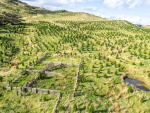
The New Zealand Institute of Forestry (NZIF) says unnecessary changes to New Zealand’s Emissions Trading Scheme (NZ ETS) will seriously erode investor confidence and result in significant reductions in forest planting rates.
New Zealand's Emissions Trading Scheme (NZ ETS) encourages afforestation while not achieving climate goals, says a new report released by the Parliamentary Commissioner for the Environment, Simon Upton.
Conversions of sheep and beef farms to forestry have slowed, however new research from Beef + Lamb New Zealand (B+LNZ) suggests land of value for food production remains at risk.
Dairy industry leader Jim van der Poel didn't make much of the invitation he received to the recent New Zealand Dairy Industry Awards in Rotorua.


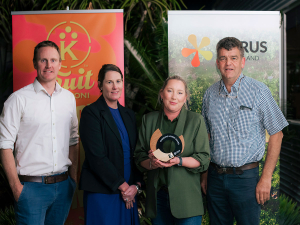
New Zealand's citrus growers were challenged to build their future on the value embedded in their fruit rather than the volume they produce, at Citrus New Zealand's annual gathering in Gisborne on 17 September.
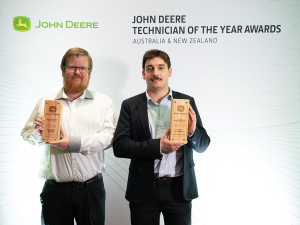
Leading John Deere technicians and apprentices from New Zealand and Australians were recognised at the recent sixth annual JD Technician of the Year Awards, held in Brisbane.
In Dacre, near Invercargill in New Zealand’s South Island, Bruce Dinnington is running a dairy operation unlike any other.
A free online platform aggregating governance vacancies across rural and regional New Zealand has been launched.
Environment Minister Nicola Grigg has announced details of a new rural plastics recycling scheme.
Agricultural drone operators say that a government decision to allow lower-risk drone work without certification won’t lower standards but drive innovation and efficiency.