Four Candidates Confirmed for Fonterra Board Election
Four candidates have been confirmed for two director positions on Fonterra’s board.
 increase font size
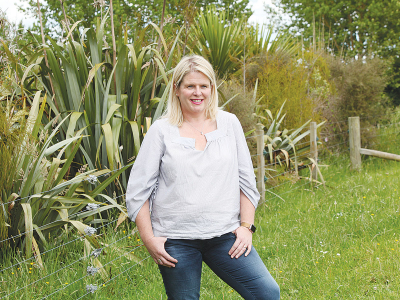 Fonterra’s Charlotte Rutherford.
All Fonterra farms will get a unique report about their biological emissions within 15 months.
The co-op says it will provide emissions profiles of its 10,000 supplier farms using data the farmers provide annually.
The profiles will be similar to nitrogen reports provided to Fonterra farmers for the past six seasons. They will be free and farmers will not be required to provide extra information or have a farm audit.
The dairy co-op believes on farm reporting will help show its leadership and progress against external targets.
Fonterra director for on farm excellence Charlotte Rutherford says a key part of achieving emissions reductions is clearly understanding where farmers stand today.
“New Zealand farmers are already some of the most carbon efficient in the world. This has come about through significant research and investment, and a willingness and ability to adapt over time.
“We still have work to do, so getting a clear baseline for each farm will be central to moving forward. We are proud to be able to provide these emissions profiles at scale -- a NZ first – to our farmers.”
Fonterra says its approach to on farm sustainability is an aspect of its guide ‘The Cooperative Difference’. This makes it easier for farmers to know what is expected of them, and it recognises farmers taking steps to produce high quality milk more sustainably.
“We are committed to helping our farmers reduce their emissions through changes to their farming practices,” said Rutherford.
She says farmers have little understanding of the sources of greenhouse gas emissions on their farms and how to mitigate their emissions.
In December 2018, the Biological Emissions Reference Group (BERG) found that 98% of farmers do not know their emissions and are uncertain what sort of mitigation strategies could be implemented. At least 40% of farmers did not know how to reduce emissions.
Meanwhile, Rutherford says the Dairy Action for Climate Change (DACC) is a project by DairyNZ, developed with Fonterra, to build a foundation for supporting dairy farmers and the wider dairy industry to address farm methane and nitrous emissions over the longer term.
In June 2017, under the DACC, Fonterra ran a pilot scheme with 113 farmers, each getting a biological greenhouse gas report. The farmers’ feedback was “exceedingly positive,” Rutherford says. At least 90% said the reports improved their understanding of biological greenhouse gases on farm.
No silver bullet
A Matamata farmer who chairs the DairyNZ Dairy Environment Leaders Forum, Tracy Brown, says there is no silver bullet for treating emissions from farms.
She says the industry needs to treat each farm uniquely – recognising its individual production system, climate, topography and location.
“On our farm we’ve done a number of things to reduce our emissions, but no one farm is going to have the same solutions as another.
“A significant NZ reduction will only come once all farms have done what they can, according to their individual production system, to reduce their emissions,” she explains.
Four candidates have been confirmed for two director positions on Fonterra’s board.
A record farmgate milk price and strong global demand is laying the foundation for continued growth of organic dairy farming in New Zealand.
Waikato milk processor Tatua has again declared a record milk payout to farmer shareholders, leaving other processors in the dust.
Fonterra has unveiled its annual results for the 2026 financial year, posting $27 billion in revenue and close to $20 billion returned to New Zealand farmer owners and unit holders.
Fonterra Co-operative Group has confirmed the independently assessed candidates standing for election to its board in 2026.


A major move is about to get underway to improve the quality and viability of dairy beef and cattle in NZ.
Veterinarians say changes to the code of welfare for dairy cattle provides a positive foundation for improved cattle welfare across the country.
Today, 15 October, is the International Day of Rural Women, which recognises rural women’s contribution to farming, communities and the environment.
Global dairy giant Lactalis has integrated its Australian operations with the Mainland Dairy consumer business it acquired from Fonterra earlier this year.
After almost two decades of sharemilking, saving and building equity, Aaron and Marcia Flay this year realised their long-held dream of settling on their first dairy farm.
Good medium to long term prospects for NZ beef, especially in the US, has heighted the focus on various initiatives to capitalise on this situation.