Esther Guy-Meakin Appointed Chief Executive of the NZ Meat Board
Esther Guy-Meakin has been announced as the new chief executive of the New Zealand Meat Board (NZMB).
 increase font size
 BLNZ chair Andrew Morrison says the board stood by its decision to include the director fee resolution at the meeting despite it being rejected by farmers.
A controversial move to increase the director fees was voted down by farmers at Beef + Lamb NZ’s annual meeting in Invercargill, last week.
As revealed in Rural News, on March 9, the resolution asking for a substantial increase in director fees for both directors of the Meat Board and Beef + Lamb NZ (BLNZ) had raised the ire of farmers. All BLNZ directors sit on both the Meat Board and BLNZ boards.
Levypayers were also concerned at the board’s sudden disestablishment of the Directors Independent Remuneration Committee (DIRC), set up in 2016 as an independent body to recommend any changes in director remuneration. The establishment of the DIRC was seen as a sound move and in line with how many other farmer-owned organisations operate – including Dairy NZ and Fonterra.
Chairman Andrew Morrison told Rural News the DIRC was disestablished primarily because both BLNZ and New Zealand Meat Board (NZMB) directors – basically the same people – agreed that the best approach in future was for the boards to actively take ownership of remuneration recommendations.
“The board has to make a final call on this, so we felt the extra layer [the DIRC] was adding complexity to a market-informed process.”
Rural News also uncovered that management consultants Mitchell Notley and Associates (MNA) had been hired by the BLNZ board to prepare a report on director remuneration. The MNA report suggested a substantial increase in Meat Board director fees and also a lift in BLNZ director payments.
This was then put forward in the board’s failed resolution at the annual meeting to substantially increase director payments.
In defending the proposed increase in director fees, Morrison said that farmers will ultimately have the final say on whether or not a controversial move to increase both BLNZ and NZMB director fees would go ahead. And farmers did reject the resolution – with 51.57% of levypayers who participated in the ballot, voting against any rise in the director fees. BLNZ says the proposed increase will now not go ahead.
“We stand by our decision to include the director fee resolution following the thorough review of NZMB’s director fees undertaken in 2020, which was independently reviewed by Mitchell Notley & Associates Ltd,” Morrison said in a statement.
“The final decision was always in the hands of voters and the ‘no’ vote shows we need to do more work to convey the increasing complexity of the NZMB’s role and the environment it operates in, and how this relates to director remuneration.”
Esther Guy-Meakin has been announced as the new chief executive of the New Zealand Meat Board (NZMB).
Matt McRae, a farmer from Mokoreta in Southland who runs a sheep, beef and dairy support business alongside a sheep stud, has been elected to the Beef +Lamb NZ Board as a farmer director.
Jane Mellsopp has been confirmed as the new Government Appointee to the New Zealand Meat Board (NZMB).
Red meat exports to key quota markets enjoyed $1.4 billion in tariff savings in the 2024-25 financial year.
The red meat sector is poised for a strong rebound this season, with export receipts forecast to top $10 billion and farm profitability to almost double.


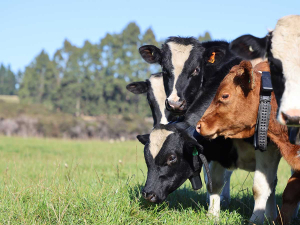
High country stations, mixed sheep and beef farms, Māori-owned farms, corporates and family operations are among the nine commercial farms taking part in the Livestock Innovation Farming Transformation programme, known as LIFT.
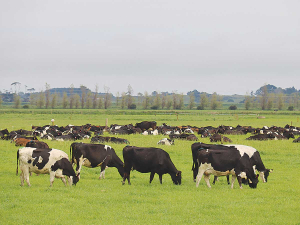
OPINION: New health and safety guidance unveiled by the Government recently provides farmers greater certainty about what is expected of them when managing risks on farm.
The National Animal Welfare Advisory Committee (NAWAC) is seeking public feedback on proposed changes to the Code of Welfare for Rodeos.
A New Zealand initiative supporting farmers to restore the health of grazing landscapes has received international backing through the Regenerative Fund for Nature, a global collaborative fund supporting regenerative agriculture and the communities that produce natural fibres for the fashion industry.
Combine premium New Zealand products, blend in a family ritual and what do you get? A world-class functional drink.
Entries are now open across eleven regions for the 2027 New Zealand Dairy Industry Awards (NZDIA).