
Westpac Urges Farmers to Prepare Now for El Niño Drought
Westpac NZ is calling on farmers and growers to start preparing now for the possibility of a dry summer, as likely El Niño conditions raise the risk of drought across parts of the country.
 increase font size
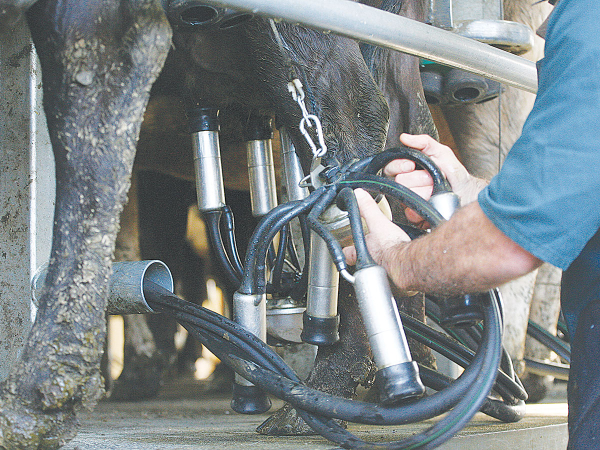 Last week’s Global Dairy Trade (GDT) auction saw prices drop 2.8%, with the key whole milk powder (WMP) prices falling 4.2%.
Dairy prices are easing but cost inflation is down across the board, providing some relief to farmers.
Last week's Global Dairy Trade (GDT) auction saw prices drop 2.8% and the key whole milk powder (WMP) prices fell 4.2%. Most products posted price falls - the exception being anhydrous milk fat which rose 2.5%. The auction was notably weaker than pre-auction expectations and futures market trends.
Westpac chief economist Kelly Eckhold notes that support from the three main regions that usually pick up the bulk of product in the auctions was weaker this time.
"Chinese buyers pulled back further as did Middle Eastern buyers a touch. In contrast to the weaker auctions last year, this time we saw regions that don't usually feature in the top three purchasers have to pick up the slack in the auction - which presumably contributed to the weak result."
However, he says Chinese demand remains around the 10-year average.
Overall, dairy prices remain around long-term averages, but on-farm costs have increased significantly over this time.
But Eckhold says latest data shows cost increases on-farm normalised in 2023 and came in close to their forecasts at an average of 2.4% over 2023.
He points out that cost inflation fell almost across the board. The only main area where costs inflation increased in 2023 compared to 2022 was with respect to central government and local authority rates and fees.
"These high and sticky cost increases have also been felt outside the farming sector. Significant declines in costs were seen in fertiliser, feed and fuel which was in large part due to the easing in supply-chain pressures seen globally now that Covid and the impact of the Russian war in Ukraine are a bit further behind us."
However, debt servicing costs remain elevated and are expected to remain high over 2024 as the RBNZ brings inflation under control.
Eckhold believes a saving grace is that interest rates currently look to have peaked. Wages costs are expected to moderate from the very high levels seen in recent years as the labour market continues to ease.
"The outlook for on-farm costs is relatively flat from here. As most cost categories have now normalised, we now see on-farm inflation trending close to aggregate economy inflation rates in the coming couple of years. That means on-farm cost inflation at around 3% in 2024 and 1.9% in 2025," he says.
Westpac NZ is calling on farmers and growers to start preparing now for the possibility of a dry summer, as likely El Niño conditions raise the risk of drought across parts of the country.
Milk powder prices are keeping farmgate prices up, helping processors offset the dip in milk fat prices.
OPINION: With 10,500 dairy farms, New Zealand continues to punch above its weight around the world.
A milk glut around the world shows no sign of easing, putting downward pressure on farmgate milk prices for the next few months.
Fonterra has reduced its forecast 2026/27 Farmgate Milk Price.



Federated Farmers has welcomed new rural policies released by ACT, saying they align closely with its own election priorities.

Rural Contractors NZ says proposed changes to land transport rules for agricultural vehicles are a welcome response by the Government to out of date regulations which have seen members hit with huge fines.
Alliance is calling for final applications for its 2027 Graduate Programme, with applications closing on Sunday 25 October.
Decades piloting planes has ensured vet and farmer David Hayes is focused on safety. So, after a serious accident while welding on farm, he is sharing his experience so others can learn from it.
Canterbury milk processor, Synlait Milk has confirmed Leon Fung as its chief executive officer.
OPINION: Making it easier to collect rainwater and use it to grow crops and livestock is a no brainer.