Taranaki dairy farmers dealing with the effects of the weekend's storm are advised to remember cows are resilient and careful management will get them through any missed milkings.
DairyNZ regional leader Jo Bishell says DairyNZ research has shown that delays of up to a week can be tolerated by mid-lactation herds, and with careful handling, they can return to full or near-full milk production.
"Managing potential spikes in somatic cell counts (SCC) is the priority for farmers who have missed milkings. Farmers should try to milk their cows at least once-a-day, however if missed milkings have occurred, expect fluctuations in SCC and the likelihood of increased numbers of cows with clinical mastitis," says Bishell.
"Attention to hygiene is very important, apply cups to clean, dry teats and wear gloves or keep hands clean. Teats should be sprayed manually after each milking.
"Look for signs of soreness and 'off-colour' cows, along with clots in foremilk and milk that is an unusual colour or consistency."
Farmers should make sure the cows are milked out fully and any showing clinical signs of mastitis are stripped out by hand. Typically, bulk milk SCCs take two to five days to recover from a spike, depending on the period without milking.
If farmers are milking multiple herds through one dairy shed, they must keep penicillin cows and their milk separate and ensure that the milking machine is washed inbetween different farm herds.
Many maize crops have suffered significant damage – their ability to be harvested for maize silage will depend on the amount of damage and the maturity of the crop. Farmers are advised to treat on a case-by-case basis and contact their local advisor. "There is no need for instant action prior to a crop inspection by a maize advisor and contractor," says Bishell.
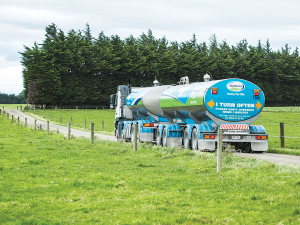
DairyNZ will stay in touch with farmers by email and text. Information sheets will also be delivered direct to famers through their tanker pick-up. Information can also be found at www.dairynz.co.nz/taranakistormrecovery.
Farmers can also contact their local DairyNZ consulting officer (Jo Bishell 021 276 2395, Tessa Tate 021 246 5663, Alicia Newport 021 276 5832, Katrina Knowles 021 831 944) or the DairyNZ Farmer Information Service on 0800 4 DAIRYNZ (0800 4 324 7969).