
China No Longer Just A Commodity Story - Luxon
China remains New Zealand’s biggest market, taking $23 billion of our exports, but it’s no longer a commodity story, says Prime Minister Christopher Luxon.
 increase font size
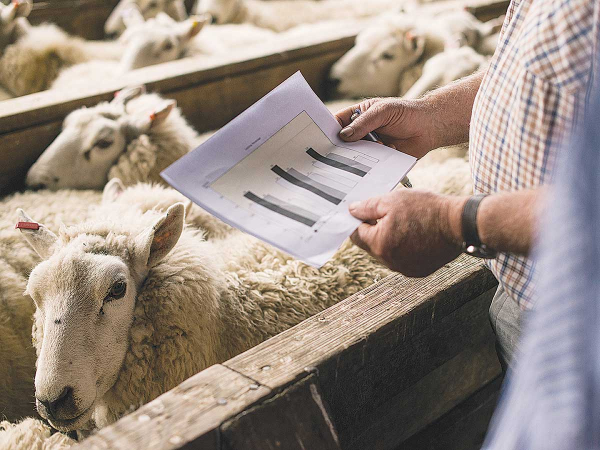 China remains the biggest market for NZ sheepmeat. Photo Credit: Kieran Scott.
The country's red meat sector exports continued to hold up during February reaching $906.7 million, analysis from the Meat Industry Association (MIA) shows.
The New Zealand meat sector body says the overall value of exports in February 2021 was the same as February 2020. However, it points to major shifts in the destinations for products - with exports to China increasing 124% year-on-year, but dropping for most other markets.
MIA says this highlights the New Zealand red meat sector's diverse market strategy.
"Twelve months ago, we witnessed the early impact of Covid-19 in China and the industry moved decisively to shift New Zealand beef and lamb products to other markets in line with where the demand was," MIA chief executive Sirma Karapeeve says.
"Ultimately, the February 2021 results show a return to more recent 'business as usual' level of demand with ongoing high volumes to China and steady exports to other markets as we come into the peak of the processing season."
During February 2021, NZ's overall beef export volume of 47,467 tonnes was the highest for this month in more than 20 years.
Karapeeva says this was partly supply-driven, with high numbers of steer and heifer sent for processing in later January and early February, coupled with demand from China.
Meanwhile, the overall volume of sheepmeat exports also increased by 10%, with the 28,080 tonnes sent to China = the highest monthly export to that market.
China remains the biggest market for NZ sheepmeat, followed by the UK and US. Volumes of sheepmeat exports to the US rose by 8% to 2,959 tonnes.
Karapeeva says it's encouraging to see signs of an increase in food service sector demand in the United States, particularly for frozen racks.
"That can be attributed to the ongoing rollout of the Covid-19 vaccination programme there."
NZ red meat exports to Australia in February increased by 6% to a value of $16.7m. While the majority of New Zealand meat exports to Australia are co-products, beef exports rose by 172% compared to February 2020, to 508 tonnes. This is put down to Australia currently undergoing a major herd rebuilding phase with significantly reduced cattle processing in that country.
In the meantime, Karapeeva says the MIA is continuing to monitor supply chain issues caused by Covid-19.
"This is an area of growing concern with port-related issues both at home and overseas," she adds. "Many of our members are seeing shipping delays and increased costs."
China remains New Zealand’s biggest market, taking $23 billion of our exports, but it’s no longer a commodity story, says Prime Minister Christopher Luxon.

Fonterra is strengthening its foodservice presence in China with the launch of a new cream for professional bakeries at Bakery China 2026 in Shanghai.
The Meat Industry Association of New Zealand (MIA) today announced that Chief Executive Officer Sirma Karapeeva has resigned from the role.
While things are looking positive for the red meat sector in 2026, volatility in global trade remains a concern, says the Meat Industry Association (MIA).
OPINION: What does the birth rate in China have to do with stock trading? Just ask a2 Milk Company.


Waikato milk processor Tatua has again declared a record milk payout to farmer shareholders, leaving other processors in the dust.

A Labour-led Government won’t be bringing back the controversial freshwater rules of 2020.
National’s much-touted free trade deal with India featured in the Rural Issues Debate at Mystery Creek, Hamilton on Wednesday night.
New Zealand's 2026-27 freshwater fishing season has opened, with anglers encouraged to head to rivers and lakes over the coming days as conditions look favourable across much of the country.
Central Otago District Council (CODC) has voted against a plan to spread treated sewage sludge from Cromwell and Alexandra on farmland near Lauder, a decision Federated Farmers says reflects strong opposition from rural residents.
Pāmu has released its FY26 Integrated Annual Report, reporting a Net Operating Profit of $113 million, more than double the $49 million recorded in FY25.