Environment Southland Urges Vigilance After New Old Man's Beard Infestation Found Near Dipton
Environment Southland is calling on residents to be vigilant and check their properties after a new Old Man's Beard site was discovered near Dipton.
 increase font size

THEY'RE CREEPY, they're crawly, and they're on display in the Environment Southland marquee at Southern Field Days.
Following on from biocontrol success in several areas, a raft of biocontrol agents including Dung beetles, Broom galls mites, Green thistle beetles; Gorse soft shoot moths and Ragwort plume moths are making an appearance in the council's tent this year.
Senior biosecurity officer Randall Milne says it's an opportunity to educate the public about biosecurity and biocontrol agents.
"Biocontrol is about introducing a pest's natural enemy to help minimise the impact of that pest over time. It is important people know what we are trying to achieve with biocontrol across the region."
Some recent breakthroughs include the discovery of broom plants dying at a broom gall mite release site in Manapouri, and the confirmed establishment of the Ragwort plume moth at sites on a Tuturau property.
Randall says information about the Clover root weevil is on display, as Environment Southland needs Southlanders' help to map their spread across the region.
"This pest has a major impact on clover production and therefore significantly affects the feed quality of pastures. It's important that people know about clover root weevil and what the damage looks like so they can manage their pastures to minimise the harm it causes."
Environment Southland has been an active and long-time proponent of the use of biocontrol agents to help combat pest plants and was among the first regional council's to back the introduction of Dung beetles, with recent releases onto Southland properties.
It is estimated that animal dung covers 700,000ha of pastoral land in New Zealand. Dung beetles use the faeces of animals for food and reproduction, eventually breaking it down into a sawdust-like material. The process not only gets rid of the dung, it also improves soil health and pasture productivity, reduces water and nutrient runoff, and has been shown to reduce parasitic infection in livestock.
Randall says he hopes his creepy crawlies would prove popular with the field day crowds, and was looking forward to showing off the benefits biocontrol agents provide to the region.
Southern Field Days are on at Waimumu. They run for three days until tomorrow, February 14. The Environment Southland marquee is on site 286, in Violet Lane.
Environment Southland is calling on residents to be vigilant and check their properties after a new Old Man's Beard site was discovered near Dipton.

Southland farmers staring down a May deadline to submit freshwater farm plans under current regional plan rules have been given an 18-month reprieve by the Government.
Southland farmers are being encouraged to get ahead of the winter grazing season by attending a practical field day in Pukerau next week.
Ravensdown's next evolution in smart farming technology, HawkEye Pro, was awarded the Technology Section Award at the Southern Field Days Farm Innovation Awards in February 2026.
While mariners may recognise a “dog watch” as a two-hour shift on a ship, the Good Dog Work Watch is quite a different concept and the clever creation of Southland siblings Grace (9) and Archer Brown (7), both pupils at Riverton Primary School.


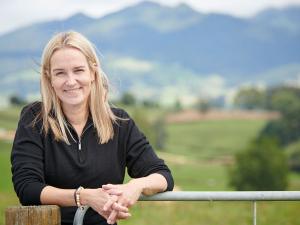
Minister of Conservation Hon Tama Potaka has appointed Susan O'Regan as Chair of the Queen Elizabeth II National Trust (QEII) for a three-year term.
Red meat farmers are welcoming Labour’s plan to review the Emissions Trading Scheme and not to campaign on pricing agricultural emissions.
Where any worker in the kiwifruit industry is mistreated, we expect the authorities to take action.
Mid Canterbury Federated Farmers arable chair, Bevan Lill, said Beef + Lamb NZ data indicated that for the last six years, the average arable return on investment was about 0.8% while inflation ran about 4% - so the average arable farm was going backwards at about 3% a year.
Seed and grain companies share the concerns of arable farmers about the viability of their sector, says Seed and Grain New Zealand chief executive Dr Sarah Clark.
The New Zealand Institute of Forestry (NZIF) says unnecessary changes to New Zealand’s Emissions Trading Scheme (NZ ETS) will seriously erode investor confidence and result in significant reductions in forest planting rates.