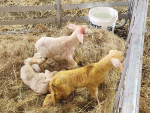
Beef + Lamb NZ's Lambing Kit Checklist for a Tough Season
With lambing underway in many regions, Beef + Lamb New Zealand is encouraging farmers to put together a wellequipped lambing kit to help minimise lamb losses, particularly in bad weather.
 increase font size
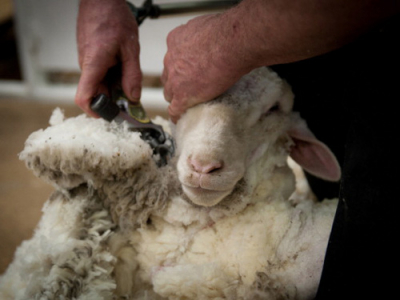 The Merino Championships in the Central Otago town of Alexandra has begun.
One of the biggest seasons in New Zealand shearing sports has begun with the national Merino Championships in the Central Otago town of Alexandra today and tomorrow.
Five national titles will be decided in what is the country’s only finewool event, where the biggest challenge of all will be the bid to stop West Australian shearer Damien Boyle winning the glamour title, the Open shearing championship, for a seventh year in a row.
Other features will include the Open woolhandling event in which local Pagan Rimene will be out to hold-out 2012 and 2014 winner and former World champion Joel Henare, of Gisborne, to retain the title she won for the first time last year, and a transTasman merino shearing test in which Boyle and fellow West Australia shearer Mark Buscomb will be out to make it a double after beating New Zealanders Nathan Stratford, of Invercargill, and Grant Smith, of Rakaia, at the Royal Perth Show last weekend.
Also to be decided are the Senior shearing and Senior and Junior woolhandling titles, while up to 24 teams will contest the annual shearing and woolhandling teams event.
Woolhandling started about 7am today and will continue throughout the day with the shearing events held tomorrow, the Open heats being the first round of the country’s top multi-wools event, the PGG Wrightson National Circuit, which ends with a final at the Golden Shears in Masterton in March.
Also at stake in the Open shearing is a place in a three-man New Zealand team for the home-and-away transtasman shearing series, joining Golden Shears champion Rowland Smith, of Hastings, and National Circuit champion Tony Coster, of Rakaia, in the first test in Warialda, NSW, just a week later, on October 8.
More than 60 shearing sports competitions will be held throughout the country during the seaso, including the 17th World Championships in Invercargill on February 9-11, marking the 40th anniversary of the first World Championships held in England in 1977. The championships have already attracted entries from a record 32 countries.
Other features include the New Zealand team machine shearing, blade shearing and woolhandling World Championships team selection series, which started in Lumsden last January and ends at the Canterbury Show in November, the 57th Golden Shears International Championships in Masterton on March 2-4, and the New Zealand championships in Te Kuiti on March 30-April 1.
Rowland Smith, winner of the World shearing championship in Ireland in 2014 and both the Golden Shears and New Zealand championships Open finals last season, will shear at Alexandra tomorrow in only his second attempt on the finewool title, at the start of a season shaping as even busier than last year when he had 19 Open final wins.
Acclaimed a Master Shearer by Shearing Sports New Zealand’s annual meeting last month, Smith will be out to retain all three of the big titles, and plans a serious bid for the PGG Wrightson title, one of the few not among his 87 Open final victories since first competing in the top grade in 2006 as a teenager based in Northland.
With lambing underway in many regions, Beef + Lamb New Zealand is encouraging farmers to put together a wellequipped lambing kit to help minimise lamb losses, particularly in bad weather.

New Zealand wool is reaching new heights as air filtration companies move away from synthetic products to biodegradable alternatives.
Will a stronger, more coordinated voice help rebuild confidence and improve returns in the wool sector?
OPINION: Confidence in the wool sector is rebounding as prices hit levels not seen in more than 15 years.
The recently signed free trade agreement with India is an invitation to strengthen relationships between the New Zealand and Indian strong wool industries, says Wool Impact chief executive Andy Caughey.


Federated Farmers has welcomed new rural policies released by ACT, saying they align closely with its own election priorities.

Rural Contractors NZ says proposed changes to land transport rules for agricultural vehicles are a welcome response by the Government to out of date regulations which have seen members hit with huge fines.
Alliance is calling for final applications for its 2027 Graduate Programme, with applications closing on Sunday 25 October.
Decades piloting planes has ensured vet and farmer David Hayes is focused on safety. So, after a serious accident while welding on farm, he is sharing his experience so others can learn from it.
Canterbury milk processor, Synlait Milk has confirmed Leon Fung as its chief executive officer.
OPINION: Making it easier to collect rainwater and use it to grow crops and livestock is a no brainer.