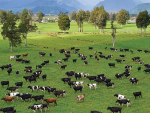
DIRA Review: Open Country Dairy Warns Against Regulatory "Complacency"
The country's second largest milk processor is warning against 'complacency' during a review of competition regulations in the dairy sector.
 increase font size
 Minister of Agriculture Damien O’Connor.
The Minister of Agriculture has entered the debate on the actions of the banks labelling them as fair-weather friends.
A new report by the Ministry for Primary Industries reveals that more than a quarter of NZ’s dairy farmers have debt to equity ratios of more than 70%. Some have as little as 4% equity in their properties.
The report also reveals that the average debt per hectare on dairy farms is now three times what it was 20 years ago. Read more here.
Minister of Agriculture Damien O’Connor says the debt levels in the dairy industry have been rising for a long time.
He claims that six years ago the banks indicated they wished to reduce their exposure to agriculture. But were unable to because of low prices in the sector and were forced to back farmers.
O’Connor says in the present crisis, banks need to share some of the responsibility for what’s happened.
“They need to take a partnership approach to the solution and not put all the pressure on farmers. It’s an outrageous excuse on the part of the banks for them to complain about the Reserve Bank asking them to hold a bit more equity in their business – while at the same time creating this pressure on farmers to do the same thing,” he says.
O’Connor says the partnership deal which farms had with the banks must continue but it must be a fair partnership.
The country's second largest milk processor is warning against 'complacency' during a review of competition regulations in the dairy sector.

OPINION: Clicking through some news of late, I have noted the odd headline referring to credit card debt.
Farmers are throwing their support behind the Farm Debt Mediation Scheme.
A debt mediation scheme to help farmers in financial distress deal with their lenders starts today.
Dairy farmers can unlock capital in their dairy herds in a $1 billion herd leasing scheme launched last week.
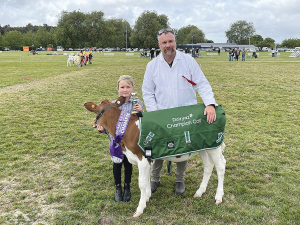
For eight-year-old Myra Smith, weeks of caring for and preparing her Red Holstein Friesian calf, Bell, have paid off, with the young Te Pahu handler taking home the Champion Dairy Type title at the recent Waikato A&P Show held at Claudelands.

A titan of the meat industry but a humble and generous guy.
In line with New Zealand’s strategy to open up new markets, the Ministry for Primary Industries (MPI) his extending its diplomatic footprint.
Demand for dairy products over the next two decades will increasingly be shaped by demographic shifts, rather than population growth alone.
The global dairy industry is fighting back against alternative proteins masquerading as dairy products.
Fonterra farmers are happy to see the board tackle the issue of shares from former milk suppliers.