
Rural NZ Welcomes $8.5m Government Health Package
Rural New Zealand is welcoming the Government’s recent package of rural healthcare initiatives.
 increase font size
 RWNZ says rural communities are being ignored as Kiwibank moves to close five banks in regional areas.
Rural Women New Zealand (RWNZ) says rural communities are being ignored as Kiwibank moves to close five banks in regional areas.
The news that Kiwibank was consulting with staff members and communities over the potential closure of seven branches, including branches in Balclutha, Gisborne, Matamata, Waihi and Waipukurau, was announced February 25.
“Reductions in services in rural communities is causing a deeper inequity of the provision of those services, compared with urban communities, adding pressures that are just not needed in this current social and economic climate,” says RWNZ national president Gill Naylor.
She says her organisation hopes that Kiwibank will use the agency model for other businesses to make sure banking services remain available in rural centres.
“There needs to be continued support for people to transact their daily lives in dignity.”
Naylor adds that an agency model would need to provide spaces for private, complex discussions.
“It is not acceptable for people to be discussing their personal banking requirements with staff, while standing in a line with others who just want to pay a bill,” she adds.
“RWNZ believes that rural communities need services close to where they live – this is particularly important for those where distance and lack of internet connectivity are more sharply felt.”
However, a Kiwibank spokesperson told Rural News that over-the-counter transactions in branches have declined.
“In some areas we now have half the number of customers visiting our branches as we did five years ago,” they said, adding that since Covid lockdowns came into play in 2020, visitor numbers in branches have not recovered.
“For every 1,000 transactions at Kiwibank, 977 are now digital, 15 are via ATM, five are in branch and three are through our contact centre.
“We are mindful this proposal may create uncertainty for some.”
The spokesperson says the bank has informed branch staff and are contacting community groups seeking feedback.
“We want to hear how our customers and community is using branches, what banking services they value, and what support they may need to be able to access banking services.”
Kiwibank say feedback can be submitted by email or mail by close of business Friday 12 March.
A final decision on the branch closures is expected in late March.
Rural New Zealand is welcoming the Government’s recent package of rural healthcare initiatives.

Deputy Prime Minister and ACT Party leader David Seymour says advocacy group Rural Women New Zealand (RWNZ) has submitted against a controversial bill without consulting its members.
Women up and down the country are the glue that hold rural communities together, giving so much to so many, says the inaugural Rural Woman of the year award winner Kate Acland.
Rural Women New Zealand has announced the winners of the 2026 NZI Rural Women Business Awards.
Rural Women New Zealand this month submitted on the Draft Mental Health and a Wellbeing Strategy 2026-2036, because a person's postcode should not determine the quality of their mental health support.



During the nesting season, from September to December, industrious starlings can quickly build nests in the darker areas behind tractor and vehicle, usually close to hot engines, typically resulting in localised damage or in some cases complete write-offs.
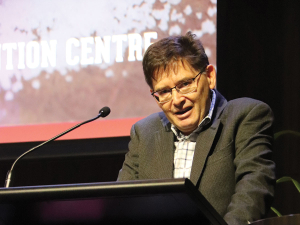
The meat processing industry is much more collegial than it was in the past and is now more focused on common goals.
With the last couple of months having seen some potential tractor purchases put on hold with the impending election and continued input cost rises, year-to-date figures, ending September, has seen deliveries up around 5% over the same period in 2025, with a total of 2026 units.
Beef+Lamb New Zealand is calling for nominations for director roles in the Northern South Island and Northern North Island electoral districts.
Fonterra chief executive, Richard Allen says being resilient has helped the dairy industry overcome extreme volatility in recent years.
The head of the Ministry for Primary Industries (MPI) trade and international relations group says New Zealand is well-positioned to secure trade access and compete internationally as the world becomes more complicated, demanding and uncertain.