Kilter AX-1: First Autonomous Weeding Robot Lands in NZ
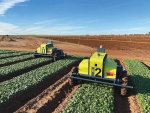
Claimed to be the first autonomous robot for New Zealand vegetables growers, the first Kilter AX-1 unit has arrived in the country.
 increase font size
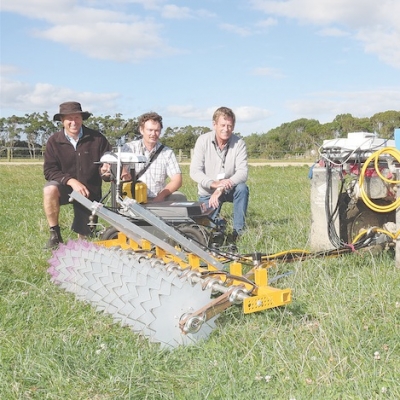 Bert Quin, Geoff Bates, and Peter Bishop show off their device.
A new device which combines robotics, mechanics and chemistry is set to hit the market to combat one of the biggest problems on dairy farms – nitrogen leaching from cow urine patches.
Mini-Me is a robotic device that tows Spikey, which detects urine patches and then sprays them with a liquid nitrogen inhibitor to defuse the patch and encourage greater grass growth around it.
It’s the work of three men: Bert Quin, well known in the fertiliser industry; Geoff Bates, a robotic specialist; and a soil chemist, Peter Bishop.
They demonstrated the device at the recent Fertiliser and Lime Research Centre conference at Massey University last week.
Bates says the pollution source on dairy farms that hasn’t been able to be controlled until now is leaching nitrates; the worst culprit is cow urine patches. “The urine patches are concentrated and the grass can’t absorb it,” he says.
Spikey is fully operational, for towing around paddocks by a quad. Mini-Me, the robot, is in the final stage of development. The plan is to hitch Spikey to Mini Me and unleash them on paddocks.
Quin says the spikes on Spikey cut through herbage in a paddock and ensure the sensors and the spray equipment work properly. The prototype on show has the spikes exposed, but in the commercial version these will be covered, much like a lawn mower.
Claimed to be the first autonomous robot for New Zealand vegetables growers, the first Kilter AX-1 unit has arrived in the country.
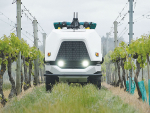
Tauranga-based Robotics Plus has launched its autonomous multi-use, modular vehicle platform for agriculture.
Global giant Deere and Co has acquired Silicon Valley start-up company Bear Flag Robotics, which specialises in autonomous driving technologies for existing plant and machinery.
A small Waikato dairy farm with one Lely Astronaut A4 robot has proven that robotic milking is also effective with a small herd.
Delaval says its latest addition to the VMS product line, the new V310 detects heat and pregnancy automatically during the milking process.


Farmers are being encouraged to rethink how they manage waste on farm with the launch of ruralwastesorted.co.nz, a new website bringing together practical tips, real farmer experiences and resources.

New Zealand Winegrowers (NZW) is celebrating the India-New Zealand Free Trade Agreement (FTA) coming into force today, bringing New Zealand wine improved access to one of the world’s fastest-growing economies.
New Zealand’s red meat sector has welcomed the India-New Zealand Free Trade Agreement taking effect, which removes India’s 33% tariff on New Zealand sheepmeat.
More than 95 per cent of New Zealand’s forestry and wood exports to India can now enter tariff free as the New Zealand-India Free Trade Agreement comes into force today.
Federated Farmers is backing Feilding High School’s call to keep Agriculture and Horticultural Science as a standalone subject in Year 11.
Food and fibre exports have returned a billion- dollar bonus to the country.