SWNZ Strengthens People Pillar for Global Markets
With ethical employment practices a "hot topic" in key markets, Sustainable Winegrowing New Zealand (SWNZ) is strengthening its People Pillar.
 increase font size
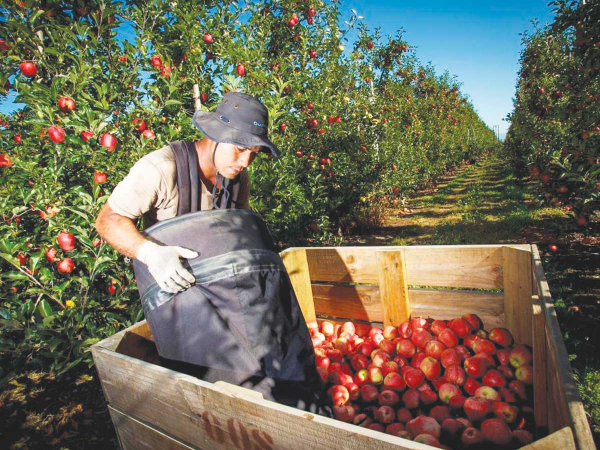 “The report says many in the primary sector will need to mechanise some of the highly physical processes required as part of producing food and fibre.”
Industries that depend on migrant labour – like many in NZ’s primary sector – will need to find alternatives, according to a new report.
The need for alternatives is one of the key findings of the latest report on the agribusiness sector by KPMG in the wake of the Covid-19 pandemic. The recently released 2020 KPMG Agribusiness Agenda says that there is a stigma attached to a career in the production and processing of food and fibre products.
“The jobs are seen as being low skilled, low paid roles which are done by those for which there are no other employment options,” the report says. “While such perceptions are a million miles away from the truth, they have made it difficult for organisations to recruit the labour force they need, even in countries with significant levels of unemployment.”
Lead author of the report – KPMG’s head of global agribusiness – Ian Proudfoot says travel restrictions will present challenges to those industries that place significant reliance on transitory labour – be that foreign migrants or people taking working holidays or gap years.
“If borders are closed and travel is less free and significantly more expensive, it will mean transitory labour will not be available to organisations, requiring them to rethink their resourcing strategies,” he explains.
“The probable lift in unemployment levels around the world will also see an expectation being placed on organisations to make efforts to employ locals whenever possible.”
Proudfoot believes that this will be a big challenge and require careful management.
“Trying to fit the newly unemployed workforce into vacancies in primary production sectors will be akin to fitting square pegs into round holes,” he adds. “The immediate impact of the pandemic on labour availability, in particular the loss of seasonal and migrant labour, has required some businesses to prioritise available resources to process volume at the expense of producing premium products that require more time and specialist handling.”
Proudfoot believes many in the primary sector will need to prioritise the opportunity to mechanise some of the highly physical processes required as part of producing food and fibre, which he claims has not been done in the past.
“The availability of relatively low-cost migrant and casual labour has reduced the incentive to accelerate commercialisation,” he adds. “With the structural changes to labour availability, the pandemic will create the incentive to develop robotic and mechanised solutions to some of the physical labour challenges which now exist.”
However, the report notes that while some premium activities may be able to be mechanised in future, the reality is that people with the right skills will continue to be required if market premiums are not sacrificed in future seasons.
“The gap year student yearning for some pocket money, the research scientist seeking overseas experience, the migrant dairy worker looking to create a better future for their family or the winemaker travelling the world to participate in vintage have all contributed to the success of New Zealand’s agri-food sector,” it says.
“The border restrictions in place mean these labour resources are not available to the industry in the short to medium term, requiring alternatives to be found if the sector is to continue to grow, particularly in light of the productivity impacts social distancing requirements will have on businesses for the foreseeable future.”
Proudfoot believes there is a need for a public/private alliance to establish pathways that enable unemployed New Zealanders to take up opportunities in the primary sectors, including providing retraining and relocation support.
With ethical employment practices a "hot topic" in key markets, Sustainable Winegrowing New Zealand (SWNZ) is strengthening its People Pillar.
According to new research, industry leaders have ranked world-class biodiversity as the number one priority for the 16th year in a row.
OPINION: Farmers have been clear: it is getting harder, not easier, to find and keep good people.
Biosecurity remains the top priority for agribusiness leaders, according to KPMG’s 2025 Agribusiness Agenda released last week.
OPINION: In the same way that even a stopped clock is right twice a day, economists sometimes get it right.


Pāmu has released its FY26 Integrated Annual Report, reporting a Net Operating Profit of $113 million, more than double the $49 million recorded in FY25.

Meat Industry Association data, released alongside the Red Meat Sector conference in Wellington, shows export value climbing across the US, China, UK and Canada.
Applications are set to open for the 2027 Zanda McDonald Award, a trans-Tasman award recognised for identifying and fast-tracking talented young leaders in agriculture and agribusiness.
The Royal New Zealand College of General Practitioners (the College) and Hauora Taiwhenua Rural Health Network are calling for investment in a proposed new training pathway for rural GPs, warning that many rural practices are struggling to recruit while a large share of the existing workforce nears retirement.
Federated Farmers has called on Central Otago District Council (CODC) to drop or vote down a plan to truck sludge from Alexandra and Cromwell to farmland near Lauder, warning it would compound an "outrageous" situation created by a separate council's decision weeks earlier.
Synlait has swung to second-half profit as operations stabilise, but the dairy processor still posted a $75.4m annual loss.