M.I.A.
OPINION: The previous government spent too much during the Covid-19 pandemic, despite warnings from officials, according to a briefing released by the Treasury.
 increase font size
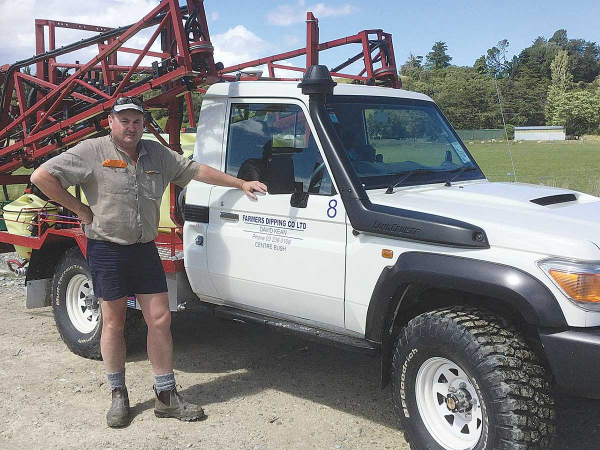 RCNZ president David Kean says ag contractors are only able to provide services that are essential to supporting food production during the lockdown.
Rural Contractors NZ has confirmed that agricultural contracting is regarded as an essential service through the COVID-19 shutdown.
RCNZ president David Kean says the essential services list produced by the Government allows rural contractors to continue to support farmers as entities involved in food production.
“That’s the vast majority of our work and many of us are still flat stick with work including maize production, grass harvesting, sheep dipping and other tasks.”
Many agricultural contractors report that their operations are still in full swing, with maize cropping and grass harvesting, in particular, still to be completed.
A number of contractors around the country are dependent on mostly Irish and English contract recruits to fill out a shortage of skilled machinery operators. Some of these have left for home as the COVID-19 crisis bites, but many still have a month, or more’s work and are opting to see that out.
RCNZ chief executive Roger Parton said the Approval in Principle to bring in operators for the 2020/21 season was progressing.
As for the risks posed by COVID-19, Kean says contractors were taking the same sorts of precautions as most employers, urging use of hand sanitisers and soap as well as encouraging staff to take leave if they felt unwell.
He noted that contractors were at much less risk than many people.
“We’re often working alone a lot of the time and effectively that’s self-isolation.”
Kean pointed out that both farmers and contractors need to be aware, that contractors are only able to provide services that are essential to supporting food production over the next month.
“This will include crop protection and grass production, but not at this time spraying a paddock of thistles.”
Waikato-based RCNZ vice-president Helen Slattery says the drought was hitting farmers hard and creating major concerns for their mental health.
Contractors were also facing pressure with maintaining skilled operators some of whom had returned home early to Europe. However, she said Kiwi operators from industries such as forestry seemed to be more available than previously.
Slattery says rural contractors expected to be affected by COVID-19 but less than other sectors.
“Farmers have to keep going as they are an essential industry and we have to support them.”
Conference off
Meanwhile, Kean says the RCNZ Board met via an urgent video conference last month to consider a range of issues arising from the COVID-19 crisis.
“We took the decision that putting off the conference for a year was the only option. We will look to have the conference in June 2021 in the same Rotorua venue.”
He says the RCNZ Board has also halted its plans to recruit a new chief executive to replace Roger Parton, who was due to retire in September.
“We were just about to start advertising but in the current circumstances we felt it was best to put a hold on a new hire. Roger confirmed he could stay on for a year to provide continuity through the Corona crisis and we’re very pleased to retain him.”
OPINION: The previous government spent too much during the Covid-19 pandemic, despite warnings from officials, according to a briefing released by the Treasury.
OPINION: Labour leader Chris 'Chippy' Hipkins is carrying on the world-class gaslighting of the nation that he and his cohorts started after their disastrous Covid response; now trying to undermine the Covid inquiry to protect his own backside.
OPINION: Did former PM Jacinda Ardern get fawning reviews for her book?
OPINION: Welcome to the second annual NZ Dairy Expo at Matamata – an event created to bring together the best of the New Zealand dairy industry in a focused, grassroots environment where dairy farmers and rural professionals can meet, talk, compare products, and make smart decisions for their farms.
It's a bloody tough year for sheep farmers, but the worst may be over, and the future looks optimistic.



LIC shareholders have elected a new North Island representative to the co-operative's Board, along with five representatives to its Shareholder Reference Group (SRG), following the company's Annual Meeting held in Invercargill.
Farmers across parts of Southland and South Otago are continuing to deal with difficult conditions after a prolonged run of wet weather, with pressure building around feed supply, stock management, pasture damage, farm infrastructure and everyday workloads.
Federated Farmers says it welcomes Labour's commitment to reviewing the Sharemilking Agreements Act, calling on other major parties to do the same.
For Canterbury dairy farmers Sian Meijer and Rick Wobben, wearable technology has become one of their most valuable on-farm tools - helping manage 1850 cows across an expansive, high-performing dairy operation while improving efficiency, mating outcomes and day-to-day decision making.
Fonterra has unveiled its annual results for the 2026 financial year, posting $27 billion in revenue and close to $20 billion returned to New Zealand farmer owners and unit holders.
The first major update to the Dairy Cattle Code of Welfare in more than a decade has been released, marking what DairyNZ describes as an important step in ensuring animal welfare standards continue to evolve alongside scientific evidence and on-farm realities.