Farmers Warned Over Track Dangers After Wairarapa Floods
The terrible floods that hit the Wairarapa may have subsided, but the danger to farmers still exists, according to local Federated Farmers president Rob Hickson.
 increase font size
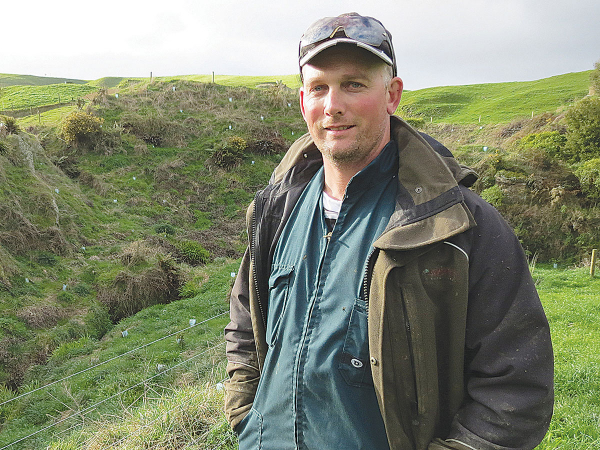 Federated Farmers national board member and employment spokesman Chris Lewis.
Federated Farmers are joining the fight against Fair Pay Agreements (FPAs), saying they are unnecessary and inflexible.
“There’s nothing fair about so-called Fair Pay Agreements,” says Federated Farmers national board member and employment spokesman Chris Lewis.
“They’re just a straitjacket that lock employers and employees into a national set of pay and conditions rules that might suit a minority but remove all ability of businesses and staff to agree on terms that suit their own needs and conditions.”
The threshold for initiating an FPA is 10% of workers or 1,000 workers in the identified group, whichever is less. Once an FPA is agreed, all employers and employees across an entire industry or occupation are locked into the conditions of that FPA.
Lewis says there is little or no collective bargaining in the agriculture sector, yet workers’ pay is well above minimum wage, above the living wage, and in most areas, above the median wage.
The 2022 Federated Farmers-Rabobank Farm Remuneration report shows 13 percent average growth in pay packages for farm workers over the last two years. Average reported hours worked fall below the International Labour Organisation recommended maximum standard working time of 48 hours per week (for full-timers - dairy 47.2 hours, sheep/beef 44.8, arable 46.2.
“This is off the back of farm and business owners negotiating with their staff what will work to retain those workers in a competitive marketplace and keep the business profitable.
"Our industry isn’t perfect on this front. But we’re working hard to get it right with programmes such as Good Boss, the Sustainable Dairying Workplace Action Plan and a mountain of other resources for farmers," Lewis says.
He adds that staff can get free employment, legal and other advice through the Rural Employment Supply Hub (RESH).
“I think the fact that RESH only gets a dozen or so calls a month, when there are tens of thousands of employees in the sector shows that we’re getting a lot right.”
However, farmers are concerned that other sectors they rely on – such as transport – will get bogged down by FPAs, reducing flexibility, raising costs and destroying productivity.
"It will be a powerful message if all food sectors from farm gate to plate step up and state they don’t want a bar of this. Feds agrees with Business NZ - and more than 20 other major sector organisations - that compulsory FPAs are a step backwards, a solution looking for a problem," Lewis says.
An open letter to Workplace Relations and Safety Minister Michael Wood, signed by Federated Farmers national president Andrew Hoggard, states a better option would be to identify sectors facing wage challenges through a market test and fix particular issues in particular sectors.
“We don’t need a one-size-fits-all sledgehammer of a solution across all sectors,” says Lewis.
"Feds recommended all employers and employees take a look at the website yourworkyourway.co.nz and make up their own minds. You might also consider signing the letter to Minister Wood yourself."
The terrible floods that hit the Wairarapa may have subsided, but the danger to farmers still exists, according to local Federated Farmers president Rob Hickson.

Will a stronger, more coordinated voice help rebuild confidence and improve returns in the wool sector?
New Zealand's pest problem has reached crisis point, according to Federated Farmers' second National Pests Survey, which shows farmers are spending more money and effort on control — yet pest numbers keep climbing faster than they were two years ago.
Despite political shenanigans in Wellington, farmers are confident that Resource Management Act (RMA) reforms will get over the line in this term of Parliament.
The Government has announced it will pause key parts of Waikato Plan Change 1 (PC1) in a decision that is set to give Waikato farmers a reprieve from new consenting and farm-planning requirements while the wider resource management system is overhauled.


The Government is introducing a new nationwide rural recycling scheme that will significantly increase the recovery of farm plastics from March next year, Minister for the Environment Nicola Grigg announced today.
B+LNZ's Wormwise veterinarian Mary Bowron has won the Best Sheep and Beef Vet of the Year Award in recognition of her outstanding contribution to New Zealand’s sheep and beef sector.
Researchers at Massey University are using a special piece of scientific equipment to improve the measurement of greenhouse gas emissions from pasture soils.
More signs of a booming kiwifruit sector.
OPINION: David Seymour and James Meager's plan to make it easier for farmers and orchardists to operate drones can best be described a 'courageous' move.
New Zealand wool is reaching new heights as air filtration companies move away from synthetic products to biodegradable alternatives.